Crianlarich
Crianlarich has long been a meeting point for routes through the Highlands. Roads connect the village with Loch Lomond, Killin, Oban and Fort William, while the railway divides here for journeys north and west. Ben More and Stob Binnein rise to the southeast, and a spur path links the village with the West Highland Way.
The stories gathered here reveal the everyday life behind this familiar junction: railway families, journeys to school, work on the farms and evenings in the village hall.
Moira Robertson, who came to live here in the early 1980s, remembers a distant signpost that gave some visitors unexpected ideas about the village:
“People used to get up here and they'd ask where the shops were. They took that sign down, I think, probably about 30 years ago. It really used to confuse people because having a sign that big so far away, they thought they were coming to a town, not a wee village.”
A railway village
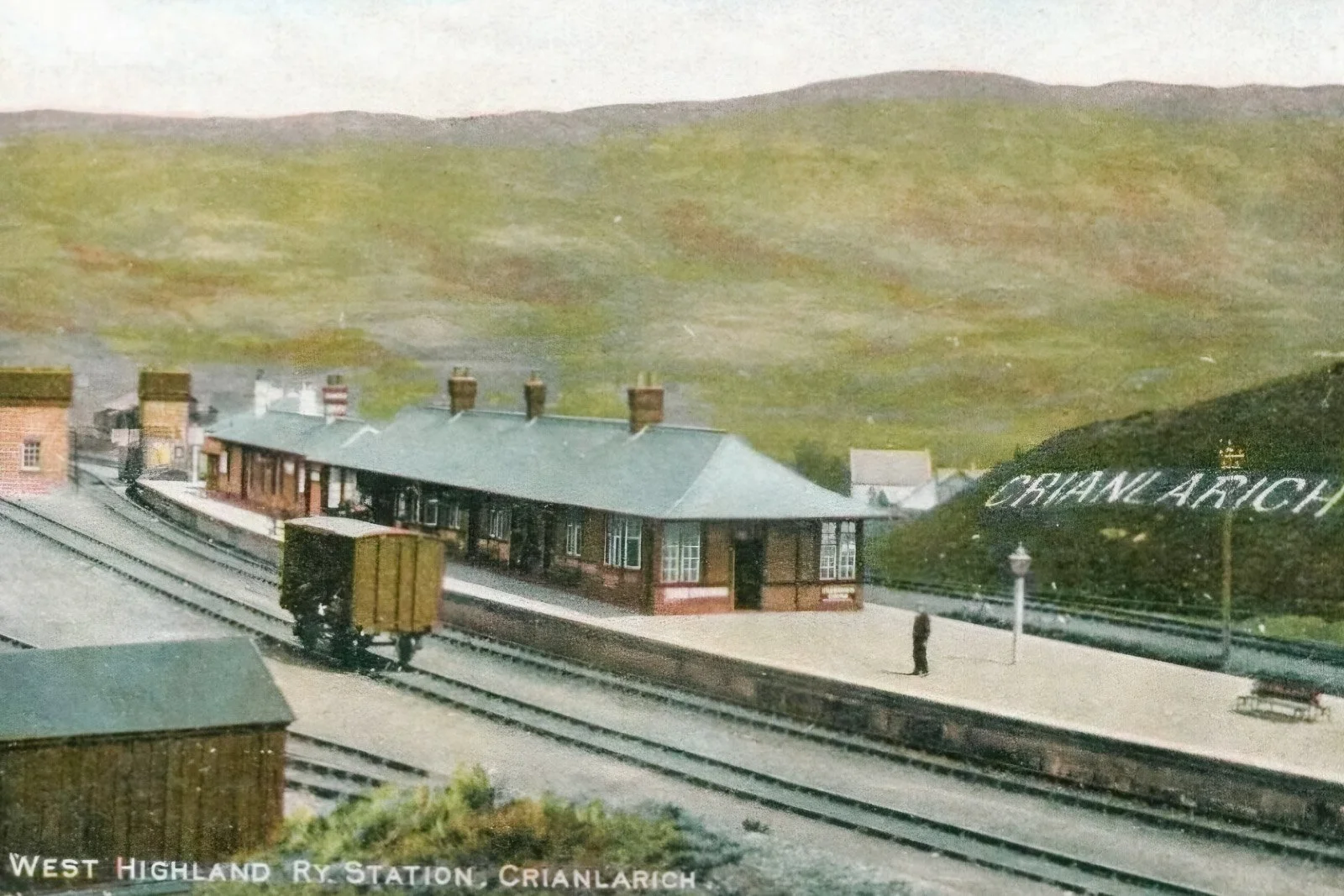
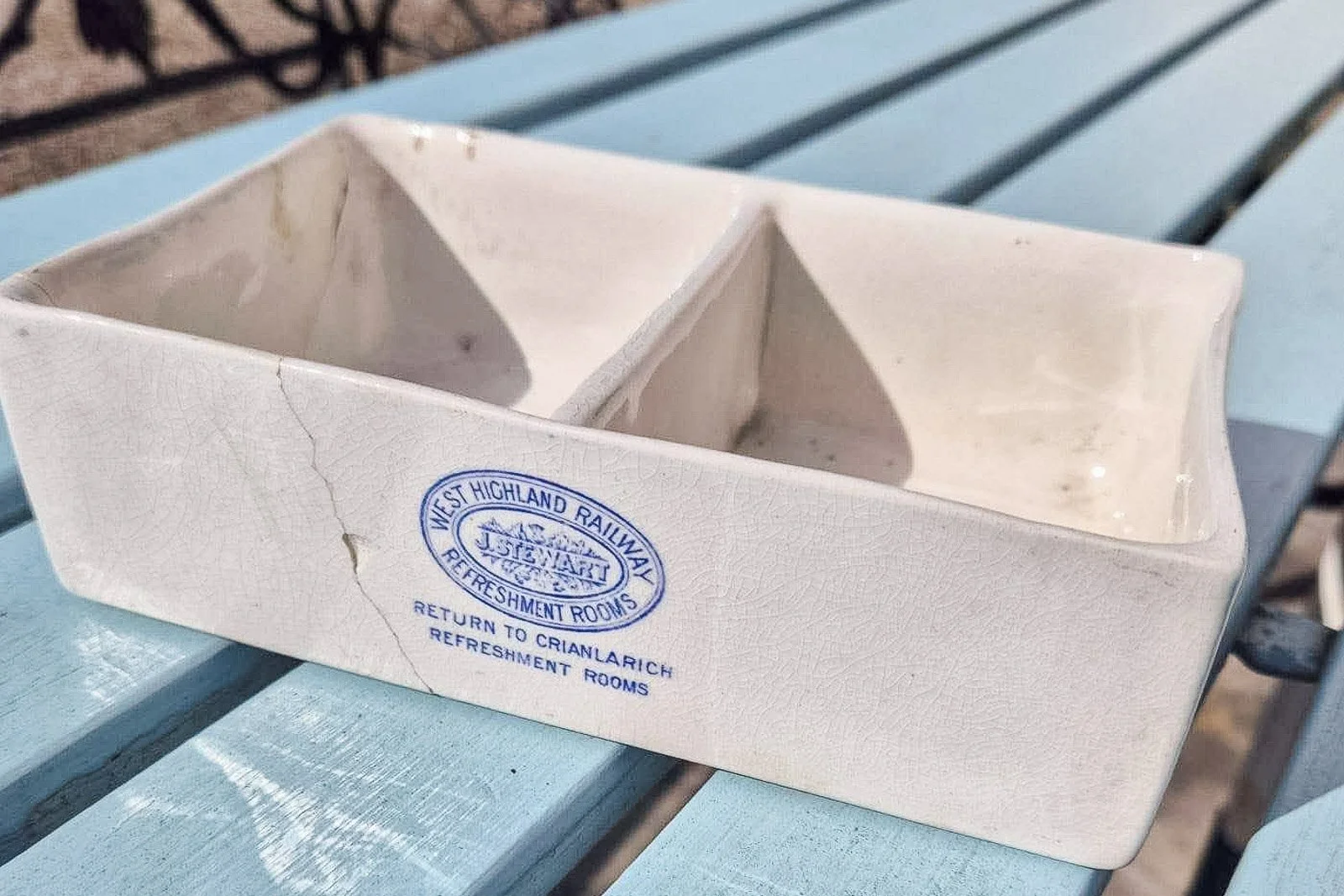
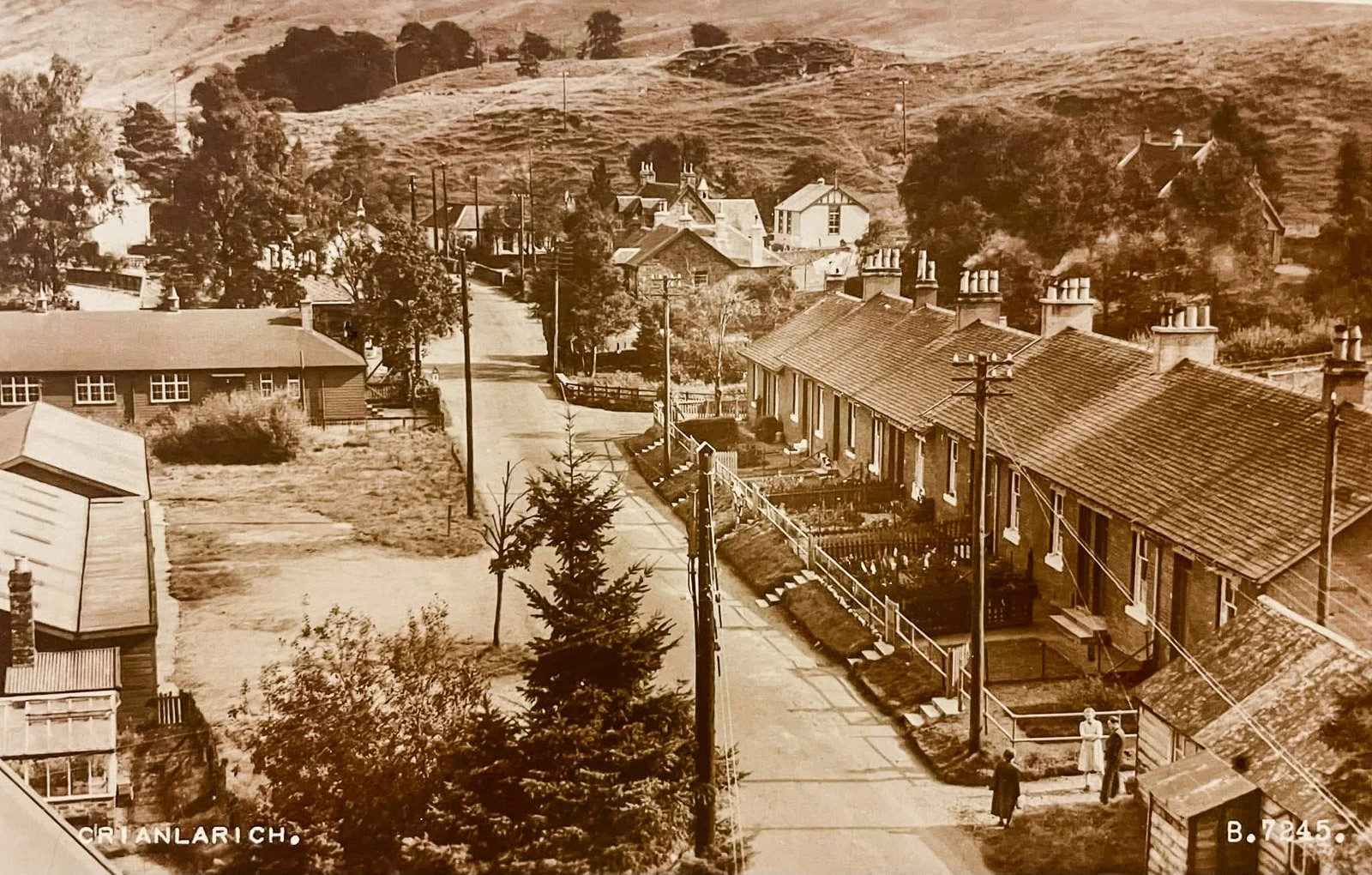
The railway brought jobs, homes and new families to Crianlarich. Jimmy Allardice, who worked as a signalman at the junction for many years, remembers how closely housing and employment were connected:
“All the houses in Crianlarich, except about five, belonged to the railway. The railway owned 32 houses in Crianlarich, for signalling, signal and telegraph, permanent way, and outdoor superintendents. So Crianlarich is the railway. Was, is, not so much now.”
The arrival of the Callander and Oban Railway, followed by the West Highland Railway, gave Crianlarich two stations. Workers maintained the track, operated signals and handled the daily movement of passengers and goods.
Jimmy recalls how rail travel changed journeys that had previously taken days:
“If you were to travel from Fort William to Glasgow, it would take you four days to get there and back. But when the railway started, you got there and back more or less in a day.”
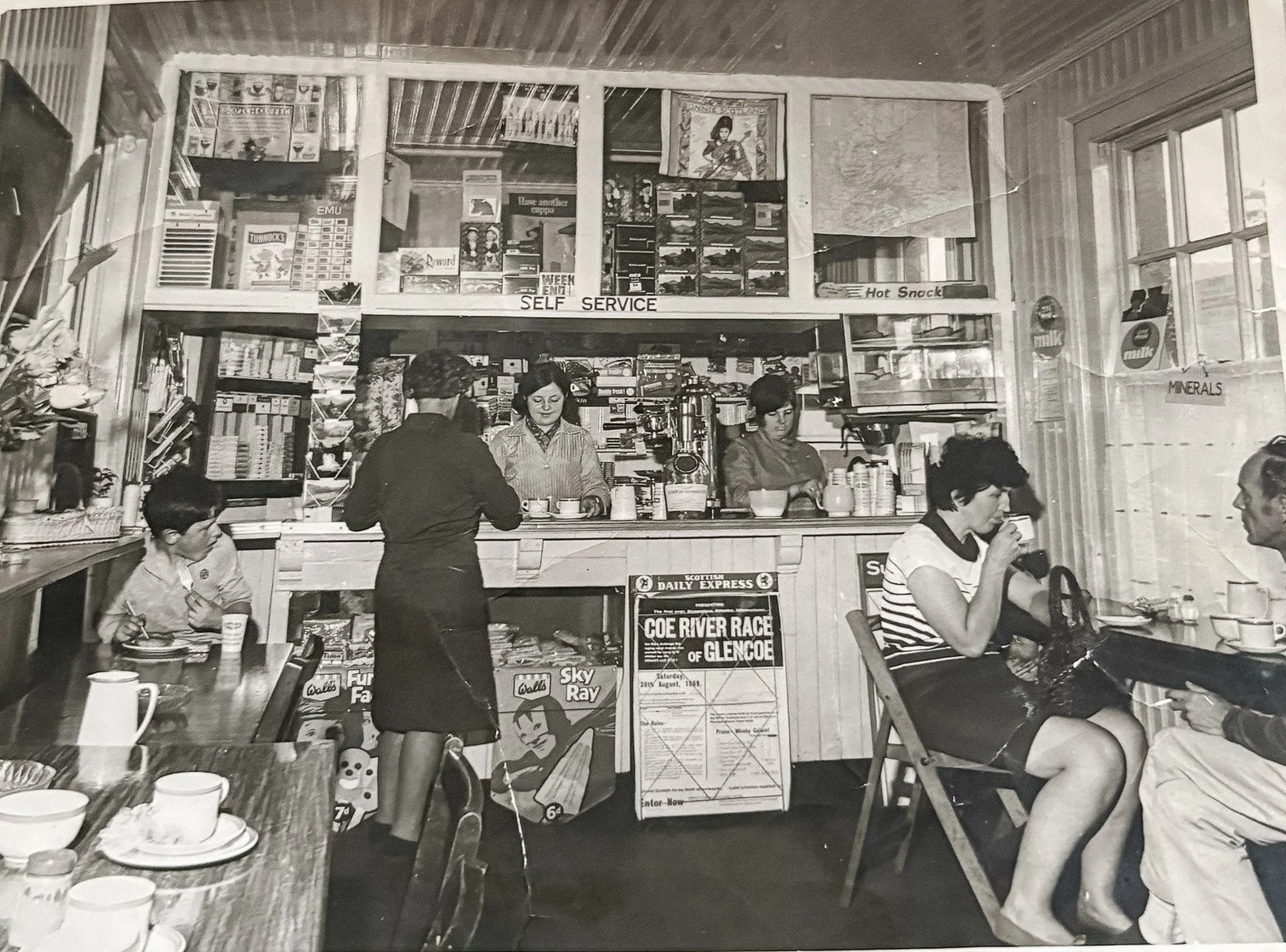
The station was also a place to meet and work. Sheila Macdonald’s father was the stationmaster at Crianlarich in the early 1960s. By the end of the decade, her mother had taken on the station tearoom. Sheila has shared a photograph of the tearoom, and if you click the link below, you can read her memories of her fourteen happy years in the village.
Growing up and gathering together
Billy Ronald grew up nearby and attended the local primary school, which he remembers having as many as forty-two pupils. His childhood memories include the station tearoom, the signal box with its fire roaring in winter, and a village hall with activities throughout the week:
“There was badminton on Monday night, and there were bowls on Tuesday night. There was kids' badminton on a Saturday afternoon, boys' brigade on a Thursday, and youth club on a Friday. There was something to do every night.”
School, work and these regular gatherings brought families together. For children growing up around Crianlarich, the hall provided somewhere to play, meet friends and join in village life.
Farming and a changing landscape
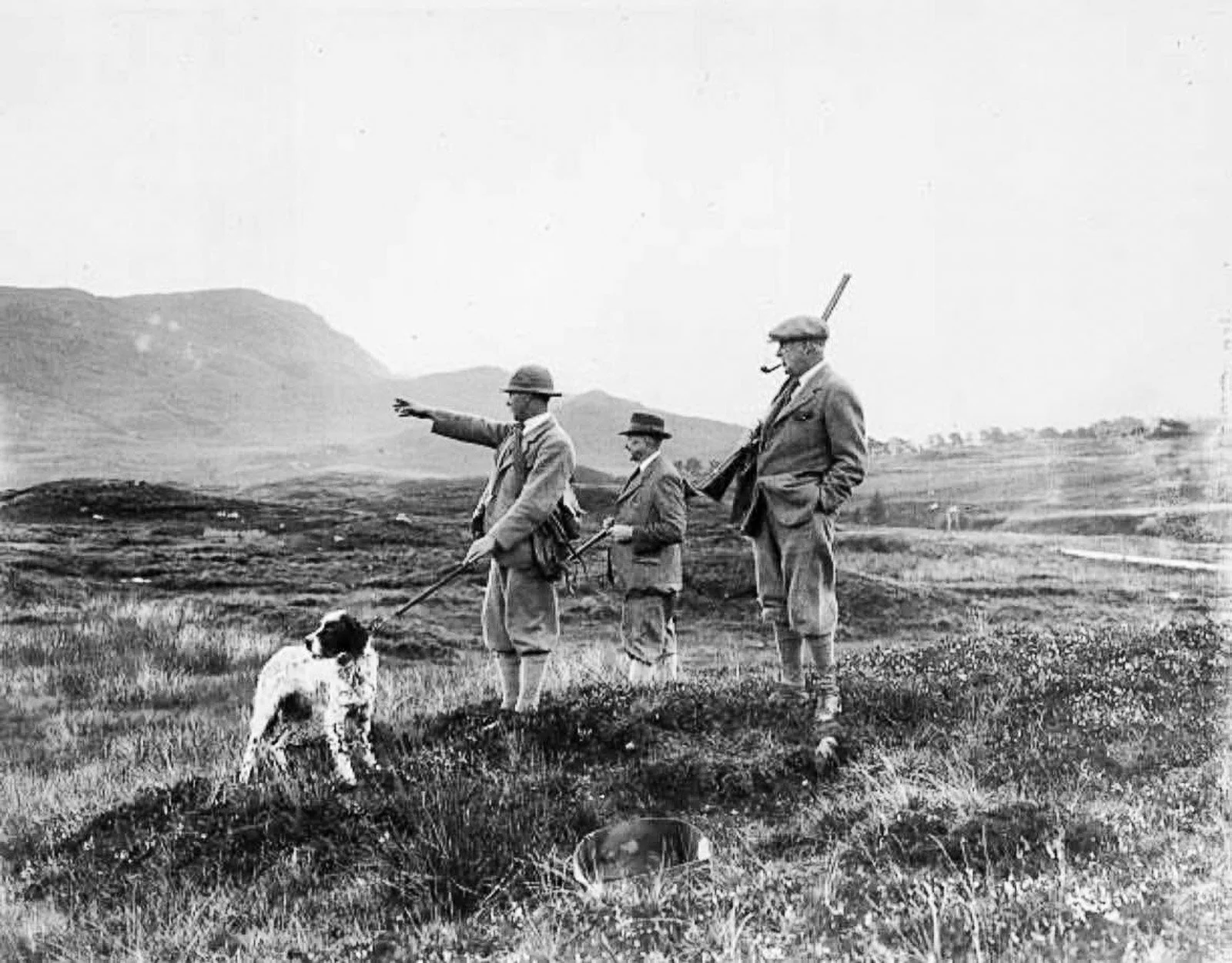
Farming employed the hills and glens around Crianlarich. Dick Stevens, who arrived in the area in 1958, remembers the number of working farms between Loch Dochart and Tyndrum:
“When I first came, from Loch Dochart up to Tyndrum, there were about twelve to fifteen farms, all active, employing two, three, four people each, with big numbers of sheep.”
By the time of his interview, he felt that the number of substantial farming operations had fallen considerably. His recollections describe changes in both agricultural work and the number of people employed on the land.
John Burton, who farmed in the area for decades, remembers land passing into forestry and the effect he felt this had on the farming community:
“When the Forestry Commission took over, it broke up the community hugely. People who had gathered together for the same work no longer met at the gatherings, in the pub, or at socials and whist drives.”
For John, the change involved more than the replacement of grazing land with trees. It also altered the working relationships and shared occasions that had brought people together.
Billy Ronald recalls open ground where plantations now stand. His memories, alongside those of Dick and John, record how residents experienced changes in the landscape and the livelihoods it supported.
Walking the hills
The hills continue to draw people to Crianlarich, both as visitors and as new residents. Rebecca Turner moved here from Devon and found a place where she could enjoy the outdoors and become part of village life.
At the time of her interview, she described how tree felling had changed the appearance of the hillsides beside the West Highland Way. She also expressed concern about erosion on paths towards An Caisteal:
“Paths are getting torn up, even going up towards An Caisteal. In the time I've been here, the ground has become badly scarred; that makes it wetter; then people divert to avoid it, and that scars more ground.”
Her observations add another perspective to the stories of landscape change: that of someone who came for the hills and has grown familiar with them through regular walks.
Then and Now - Crianlarich
Slide across the pictures to see how much has changed
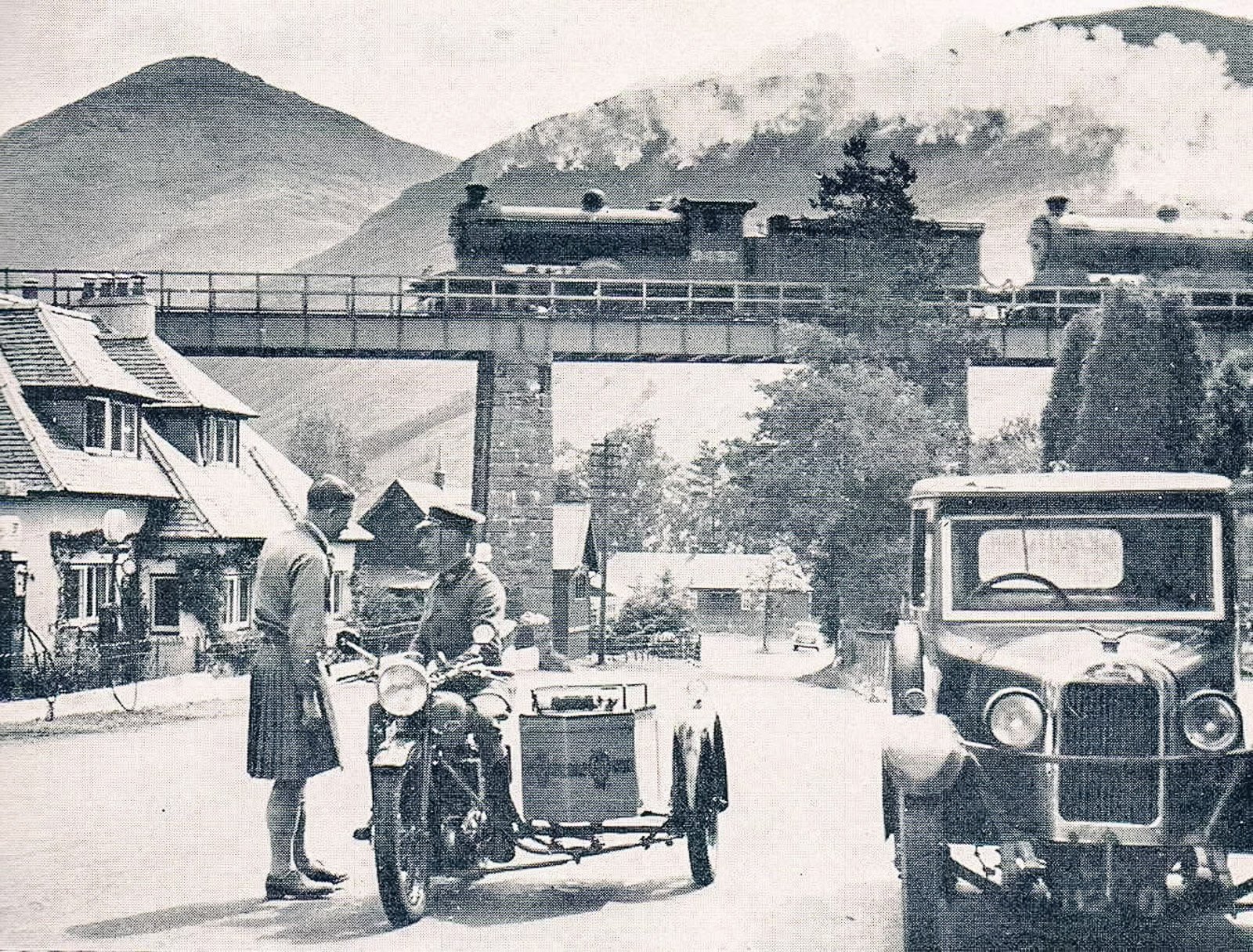
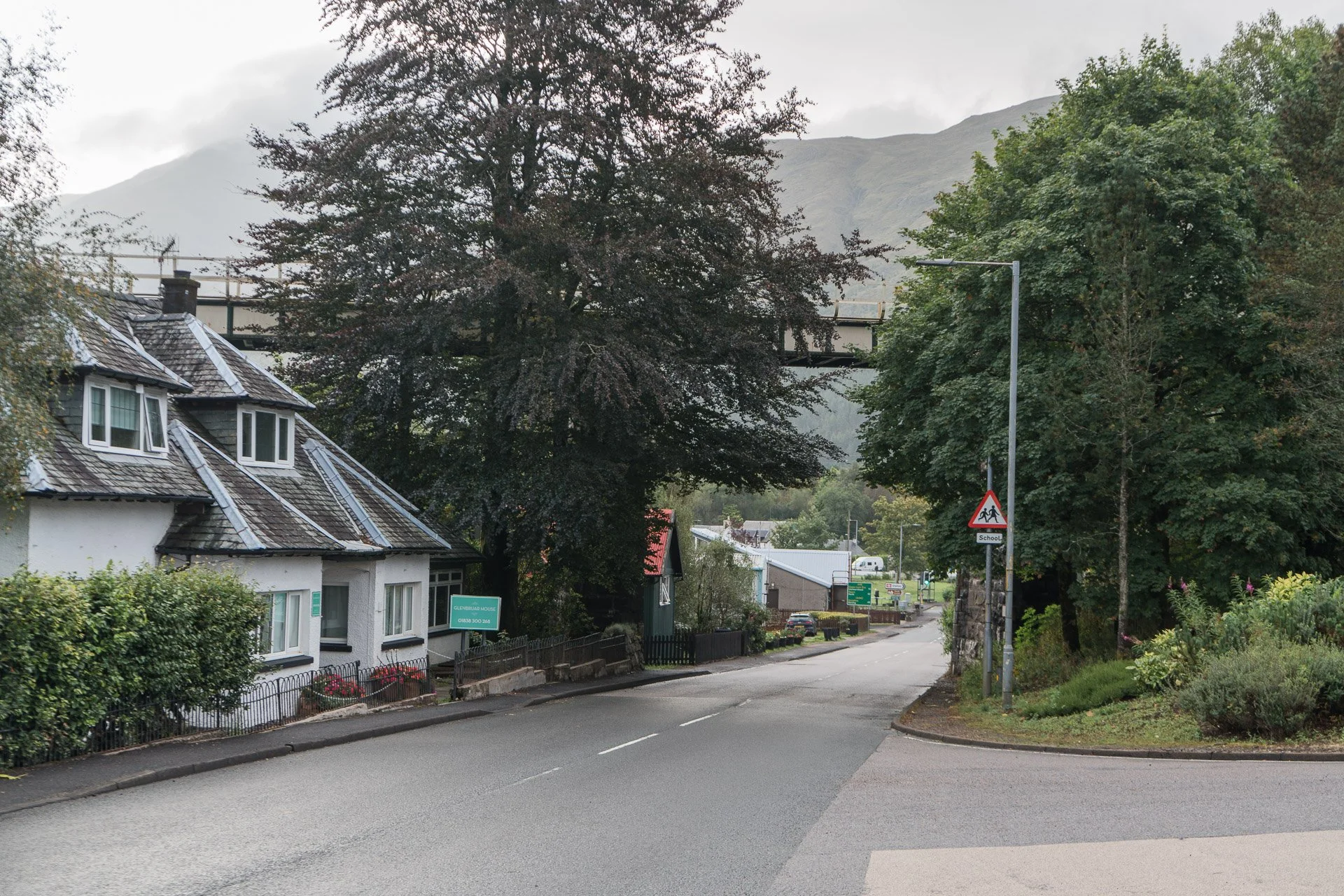
Classic picture: Callander Heritage, modern one, Paul Saunders
Community life today
For Rebecca, the village shop became an important place to meet people. She credits Andrea, with helping her get to know the community:
“For me, the shop is the hub. Andrea has introduced me to pretty much everyone. She even talked me through who lives on Willow Brae because she knows everybody.”
The railway, farms and surrounding hills feature throughout Crianlarich’s stories, but so do the everyday encounters that help people feel at home. Rebecca describes why her connection to the village lasted even when she could not get out into the mountains:
“It's a local village; people hang out and do things together. I moved here for the hills, but even when I couldn't walk, I still wanted to be in Crianlarich because the community is so fantastic.”
If you have a connection to Crianlarich and a memory to share, we would love to hear from you.