
Farming-themed Stories
Farming has supported families across Strathfillan and Glen Dochart for generations. The stories gathered here recall tending sheep, moving cattle to market, making hay and helping neighbouring farms with the gathering and clipping.
They also describe changes within living memory: fewer workers, smaller flocks and farms passing into other uses. Farmers and their families share what those changes have meant for their work and the communities around them.
An ancient landscape
The hills above Strathfillan carry the evidence of a way of life that predates large-scale sheep farming entirely. John Holland, research scientist at Kirkton Farm, has had an archaeological survey done on the upper ground and found more than two hundred shieling sites, the remains of summer dwellings used by families who moved with their animals through the seasons.
-
We have what's called Glenaclachan, which means Glen of the Stone Buildings, and we had an archaeological survey done there a few years back, and the archaeologists recorded more than 200 shillings.
So these shillings are the remains of summer dwellings, so what happened before the sheep arrived from the south is that prior to that you had this sort of transhumance type of agriculture, where people would take the cow, the pony, the goat, perhaps sheep, up to the hill pastures in the summer, and they would stay with their animals in these stone buildings called shillings, and then in the winter they would come off the hill, bring their animals off the hill, and live and come to the low ground, and so with there being, as I say, over 200 of these buildings up there, it just indicated they wouldn't have all been occupied at the same time, but it just shows that in the past people lived and worked up in the hill, which is now barren of people living there, and almost certainly there would have been a different landscape.
There would have been trees and shrubs much more than there are now, but because of the way that it's grazed, and it would have been mainly a cattle economy rather than a sheep economy, they grazed differently so that the vegetation would have been very different, and so what we've ended up with now in terms of the vegetation is anything but natural.
The hill grasslands that you see on the farm now are a result of 250 years of grazing, and they're dominated by species which the sheep don't eat, and that's why they're the dominant species, because the sheep don't eat them, they eat the bits in between these species, so I think the landscape has changed quite dramatically over the last 250 years.

Viaduct near Auchtertyre Farm c.early 1900s (John Burton)
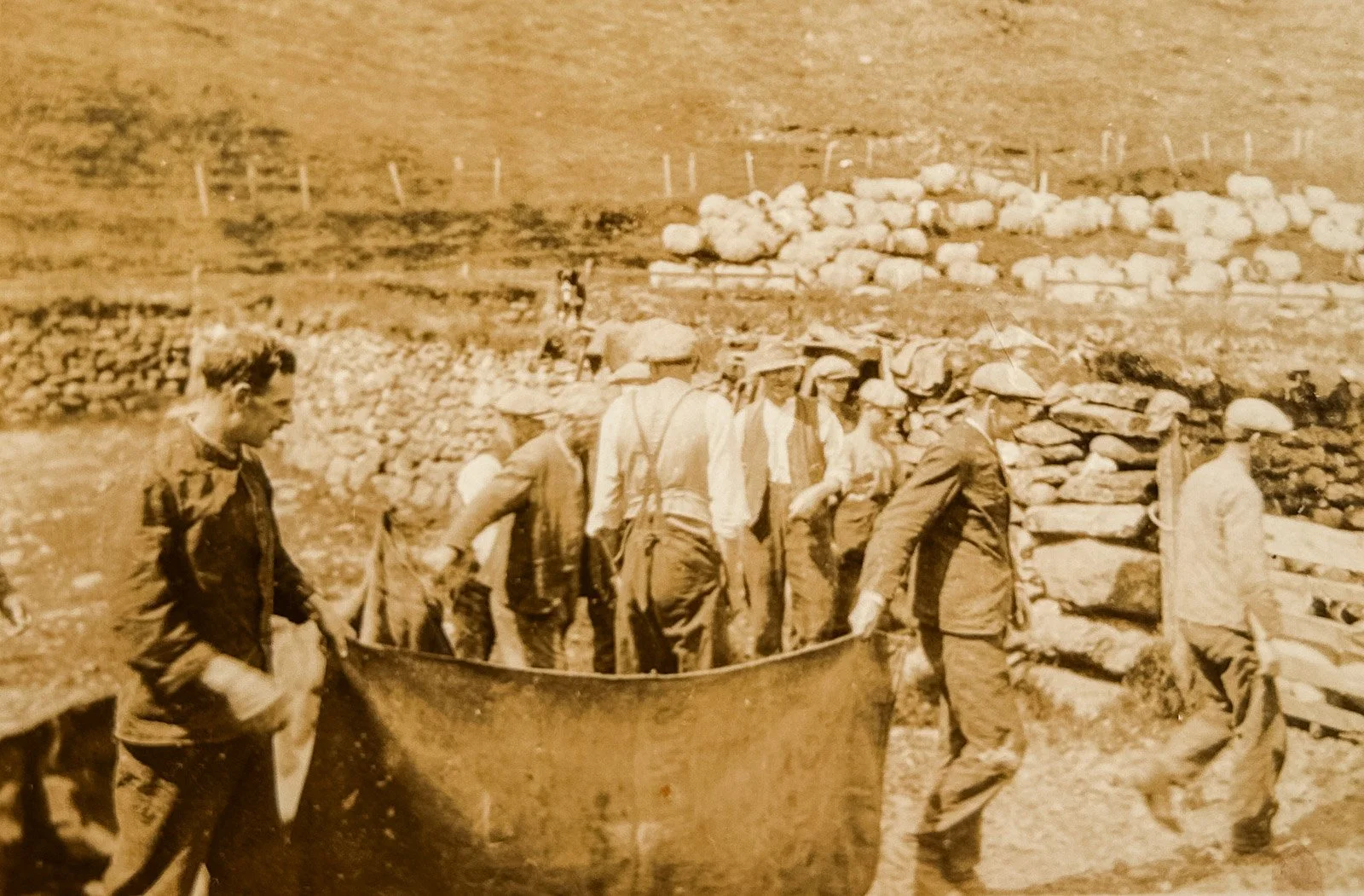
Auchtertyre Farm preparing sheep c.1920s (John Burton)
How sheep farming worked
When the sheep came, they came in vast numbers, and the way they were farmed changed gradually over two centuries as markets shifted from wool to mutton to lamb. John Holland has records going back to 1869 that trace that story at Kirkton Farm.
-
We've got numbers from right back in 1869 and then for about 20 years from 1897 to 1923 and then more recent numbers, but what we can see is that on the farm there were about 2,000 ewes back in 1869, sorry, 2,000 sheep in 1869 and that was about 1,300 ewes but also about 700 weathers, so back in the day people would keep the weathers because you know, people weren't, people didn't have sheep for lamb originally, you know, the sheep were originally here for wool and then it moved from wool to mutton, so the price of wool dropped because of merino wool imports from Australia, so then there was this shift in the sort of late 1800s to mutton, so they would have the weather sheep, so the castrated male sheep, and they would have those because they were able to cope with the rougher vegetation and produce the meat,
but then over the years into the early 20th century, there's this move away from mutton to lamb, so the weather numbers dropped and so they were selling the animals as lamb rather than for mutton, and the number of sheep that we have now on the same sort of area is, so certainly back in the 1990s was very similar, we've reduced them since then, but it's interesting again to see that those sheep numbers were maintained,
and the fact that the way we manage sheep on the hills here really hasn't changed since 1750s, you know, the 1750s is when the sheep originally came into this area, the big flocks, you know, and the sort of extensive flocks of either Scottish Whiteface or Cheviots have been managed more or less the same ever since,
and it's interesting that, you know, John Paterson was from the south of Scotland, from Ayrshire, and he moved up here, and really that's what happened from 1750 onwards, as it was farmers from the south of Scotland who moved into the highlands bringing their flocks of Cheviots or Scottish Whiteface, which they used to call Linton,
and it's interesting you can look at the statistical accounts for the Killyn parish and see how, you know, how the number of these Linton sheep just sort of mushroom, you know, when, I suppose you would call it after the clearances, you know, when these sheep came in, but the way we manage them has hardly changed, apart from the use of ADVs, and that's about it.
Elizabeth MacLellan, now in her late eighties, was born on a small farm at Portnellan and grew up as a shepherd's daughter during the war. The farm had a cow, her father tended the sheep, her mother milked each morning, and there was no electricity until 1950.
-
I was born in a little farm down in Crainlarich called Portnellan and I was, my father and mother, he brought me to Tyndrum when I was six weeks old and my two brothers were married, were born in a house, in a house we lived in for a long, long time. My father was a shepherd in a local farm and we lived there all, during the war, all the time.
The little farm had a cow and my father tended to the sheep and my mother milked the cow each morning and my brothers and I, we, there was no electricity, we didn't have electricity till 1950, so it was like tilly lamps and lantern lamps we had, we had no light. And the vivid memory I have of the war was, I was about seven, was the fact that we weren't allowed to have the lights on at night, we had to have the lights out at night and it was quite scary because we, my mother would say, oh they might come over and bomb us if we keep the lights on, so we had to keep the lights out all night, you know.
But life was good and we never were without money, Christmas came and went but we always got something, but that was the only time we got presents, we never got presents when it was birthdays or anything, we would get a birthday card, but just at Christmas we would get presents and it would be something that an older person in the village would have left with my mum for us, because there was no money, there wasn't a lot of money. My father was paid once a month and my mother had to sort out all the, what was to be paid for the groceries and whatever, you know, so yeah, the coal for the fire and all that, all that kind of thing in these days, you know.
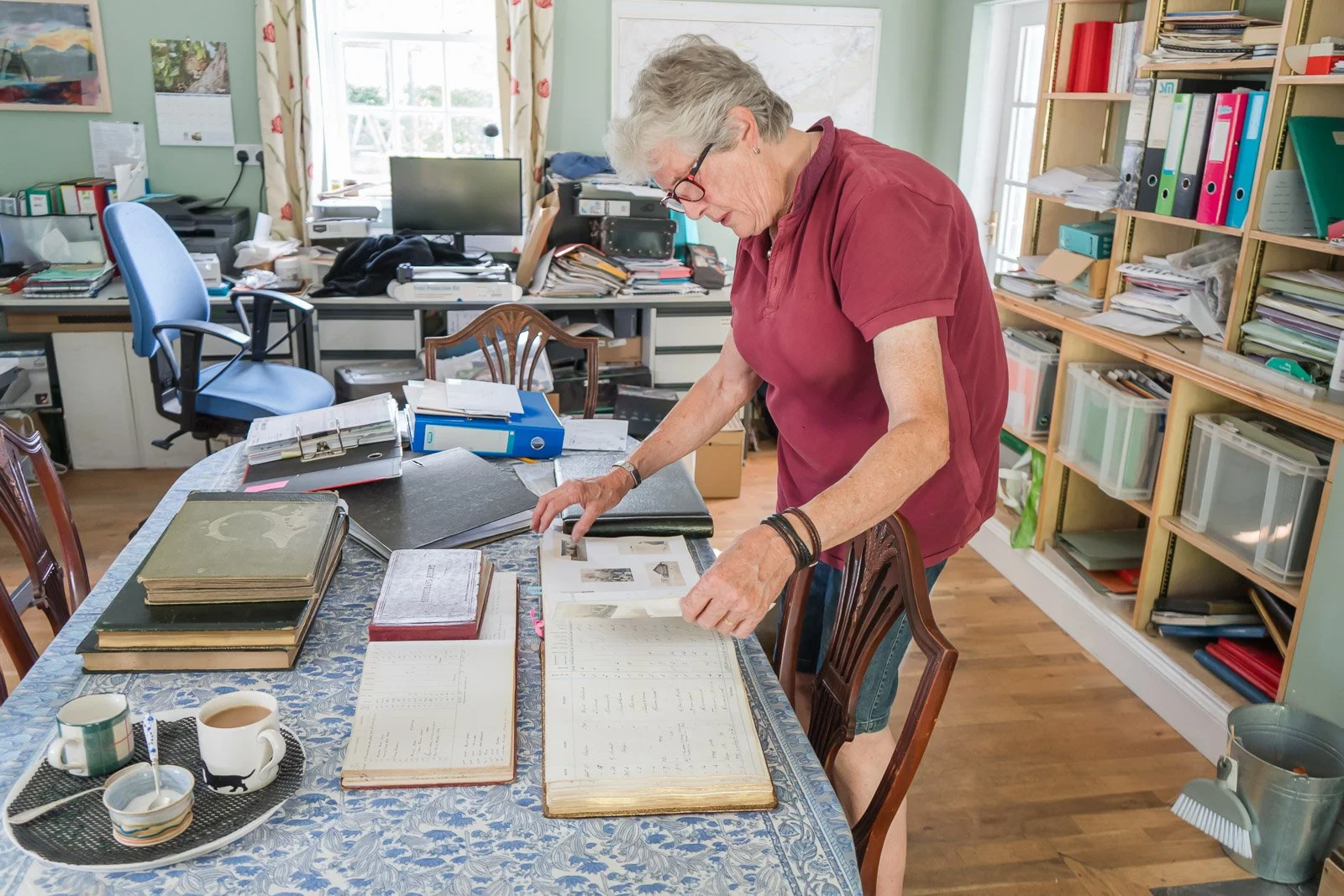
Emma Paterson (Paul Saunders)
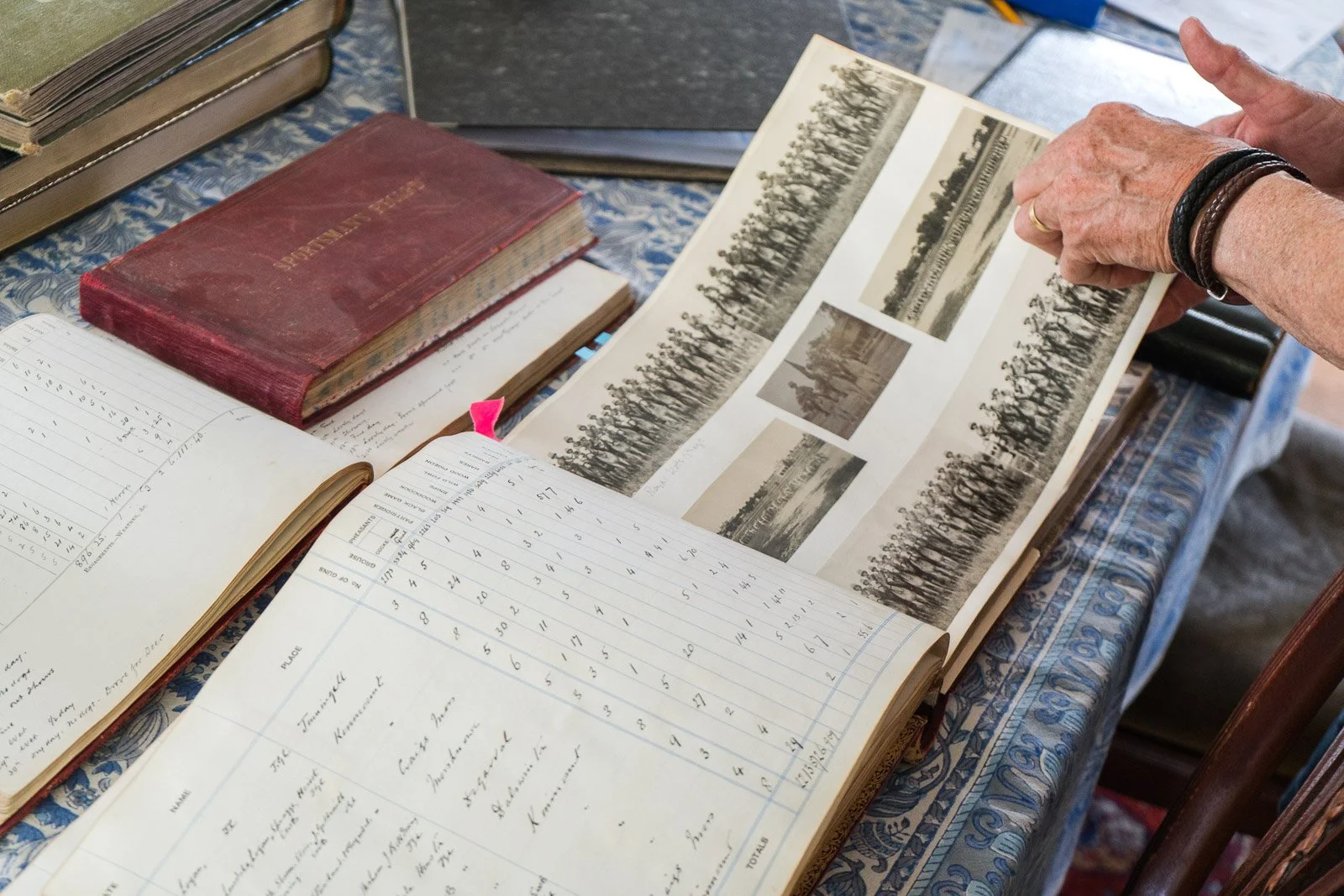
Looking through the estate's game book from the 1880s (Paul Saunders)
Estate farming
Emma Paterson's family association with Auchlyne Estate dates to 1888. The estate began as a grouse moor. It was her mother, given the estate for her twenty-first birthday in 1946, who brought the farming back and established the fold of pedigree Highland cattle that the family still runs today.
-
Well, when my great-great-grandfather rented the place, he rented it because of the Grouse shooting. It was mainly the Grouse shooting that occupied the family in those days, which is back in the late 1800s. Deerstalking didn't become a thing until probably the 1940s, 1950s. Farming, I'm not quite sure how much farming was done when my great-great-grandfather first rented the place.
My mother was given the estate for her 21st birthday (in 1946), things happened in those days. And it was she that started up the fold of Pedigree Highland Cattle, which we still have to this day. So, I suppose it was probably her that got the farming sort of back in hand. I mean, in those days, I think there were two rented farms. There's now only one rented farm. And farming, yes, has changed. I mean, I remember when I was a child, there was corn grown in the Glen and hay was made. And now it's mainly silage and there'll be less sheep on the hill now.
Growing up on the estate meant growing up working it. Emma Paterson remembers being pulled into the hay, the clipping and the fencing from childhood.
-
When I was sort of little or younger, my mother would drag us up to the farm and get us to help making the hay or help, I remember clipping time, I was the one who filled the wool bag. And then when I got a bit older, I was rolling wool and I can lend a hand at fencing, I'm sort of firewood, chopping sticks, yeah, digging ditches, I mean, I'm not so able nowadays but yeah, I mean, you know, if somebody needed a hand up at the farm working with cattle or sheep, then I was quite happy to go up and do that.
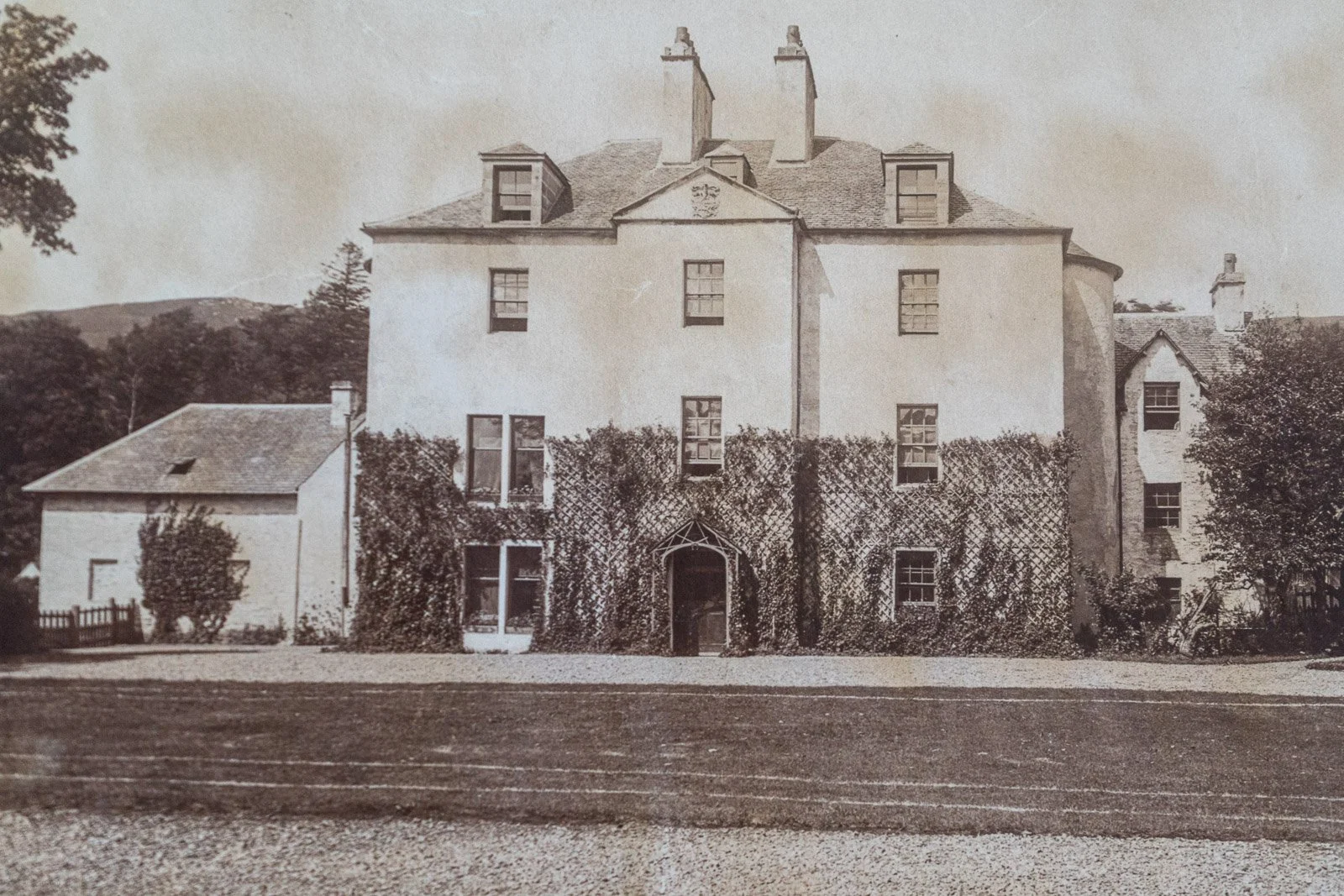
Auchlyne House c.1880s (Emma Paterson)
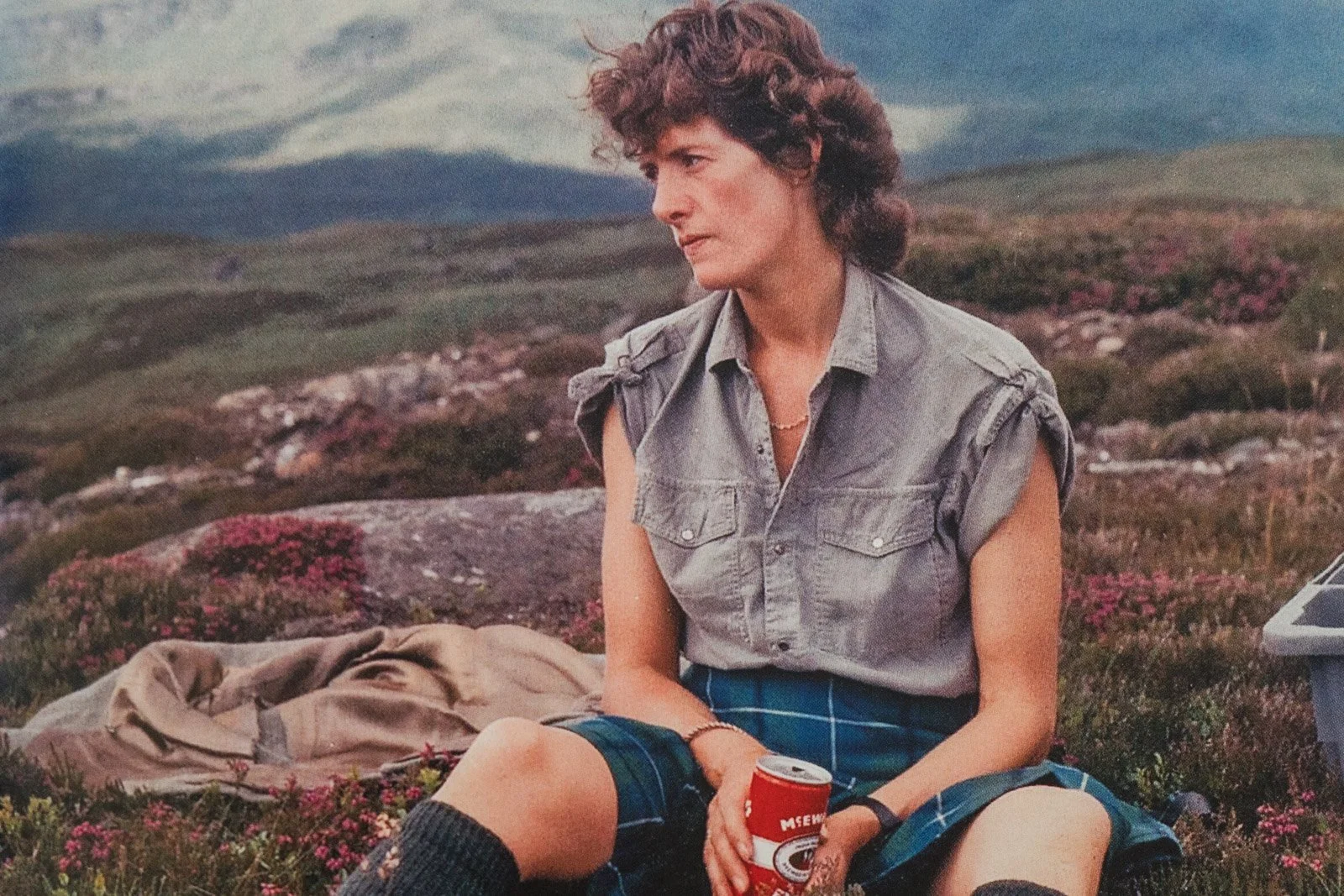
Emma Paterson on Auchlyne Estate c.1970s (Emma Paterson)
Taking stock to market
Before the livestock lorry, animals moved on foot. Margaret Taylor grew up at Mid Lix farm near Killin remembers the cattle sales at the village market as a whole-family event, with the children running ahead through the village to block the gaps. (Thank you to Killin Media Team for this interview)
-
We all mucked in when we got a wee bit older, you know, and that was a great thing when there were sales in the market in the village. My brother, we would walk the cattle and the sheep down from Mid Lix to the market. Just imagine that happening nowadays, be a bit chaotic, but…. And our job, being the young ones and supposed to be fleeter, was Donald and I had to run down through the village to make sure all the gates, any gates or any gaps were blocked.
The cows - it was really calves and when they were speaned off their mothers, so they were quite kind of wild. But we had them to keep out the gardens, and I remember one time they got into - it was an artist called Gibson, Gibson Brown, he lived at Millmore - up at the bridge. He was quite a keen gardener, and I remember the calvers getting into his garden and I can still remember him - it was actually my brother who was on guard there and they had got past him - and the artist was jumping about a bit like Rumpelstiltskin! He was a wee bit angry. Then we went down to the market.
The neighbouring system
Farming in this glen worked because farms worked together. When it was time to gather or clip, neighbours came. No contractors, no payment: you helped them, and they helped you. John Burton at Cononish describes how that system functioned at its height.
-
Sheep came from the Borders. Now, the Borders north of England and Wales had sheep farms on hills, you know, long, long before that. But the Highlands really hadn't been captured by sheep, and unfortunately, of course, there was a lot of people who downed the little crofts and things to make way for the sheep, because the tenancies were worth a lot more money to the landlords, which was a bit sad.
Now, sheep was a very successful business, really, and it was a very good community business, because each farm helped each other. So when they were gathering in the sheep, the neighbouring farms congregated together. So you'd have a team of six or eight people to gather in the sheep. And then the next time it was somebody else's turn, and it was done in rotation. It worked very well.
I mean, the costs were really nil as far as the bank was concerned. You know, the only cost would have been the men and any odd ladies had to be fed, and of course they would get a wee dram or a pint of beer, or whatever it was as well. And that worked really well up till about the early '70s.
And then there was a very large farming group called the Ben Challum Company, who decided to sell part of an estate, which was the one at this end, which included Arrivain farm, Tyndrum Hill, Auchtertyre and Kirkton. And Auchtertyre and Kirkton were two very good farms. Arrivain was a big farm, maybe not so good, but it was very extensive. And that was all sold to the Forestry Commission.
So there was a huge change, and at that time it rather broke up the neighbouring system. So it was more of a struggle to get men to come and, you know, gather in your sheep.
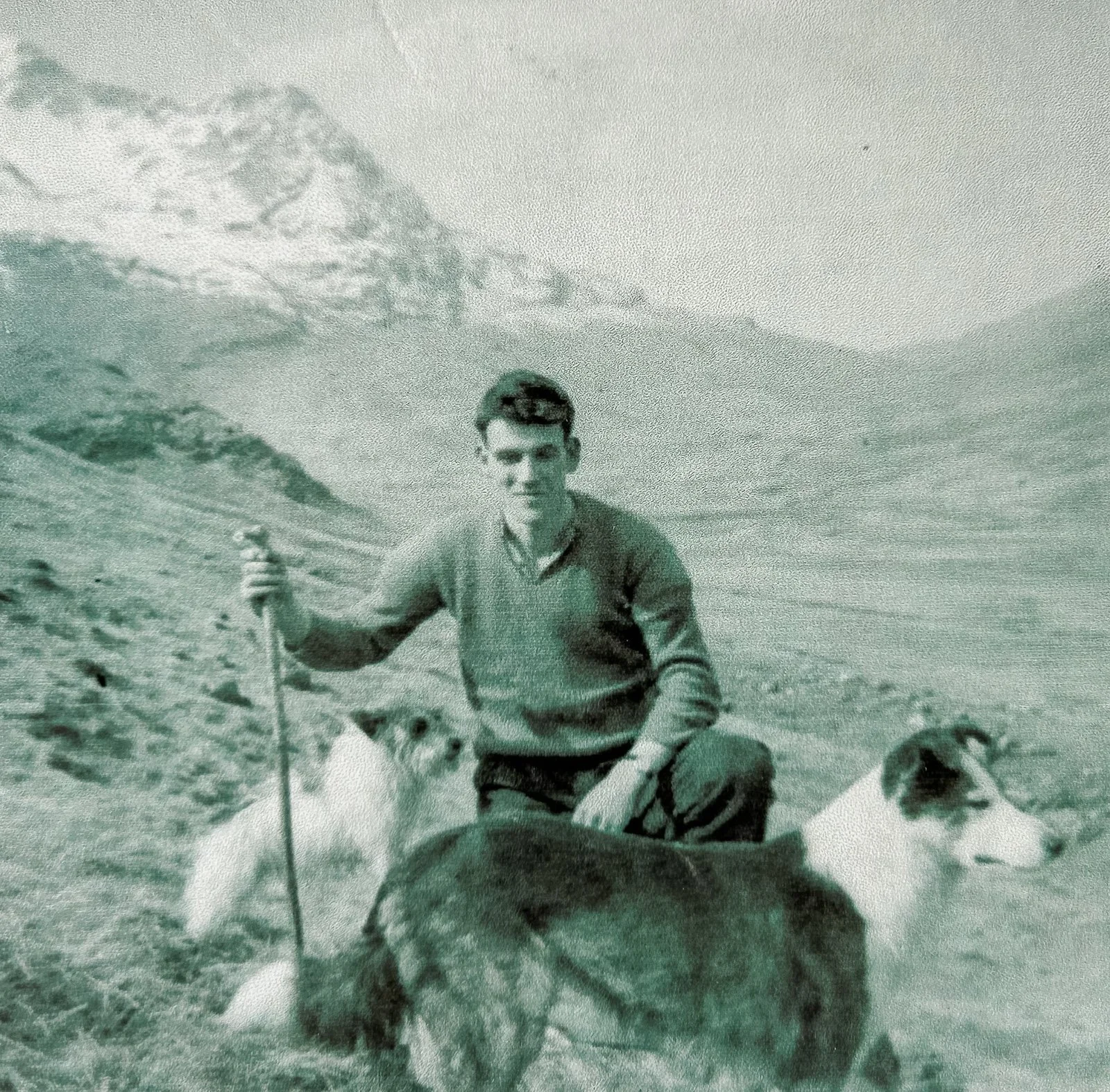
John Burton in the 1950s on Cononish Farm (John Burton)
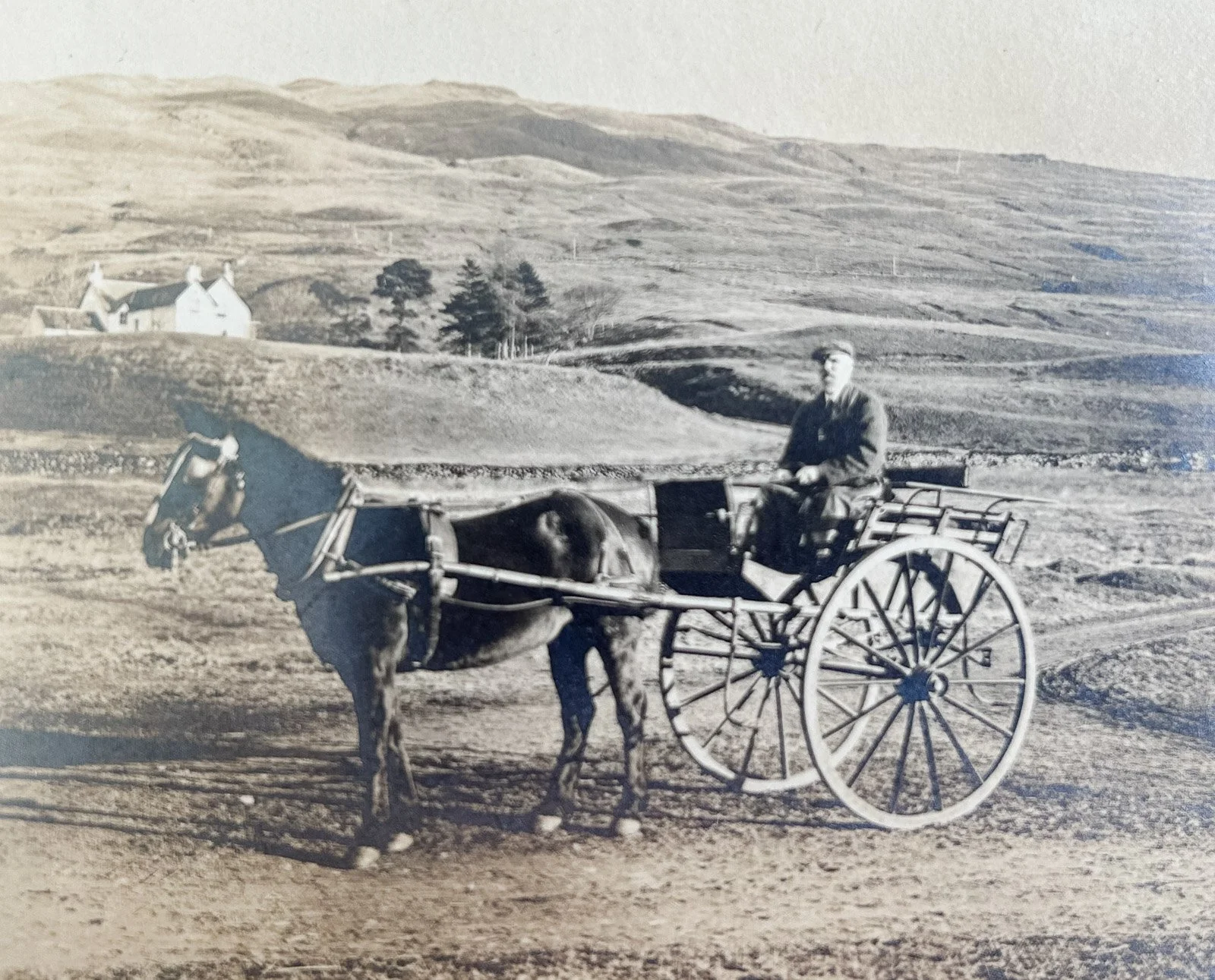
Walter Burton, Auchtertyre Farm c.1915 (John Burton)
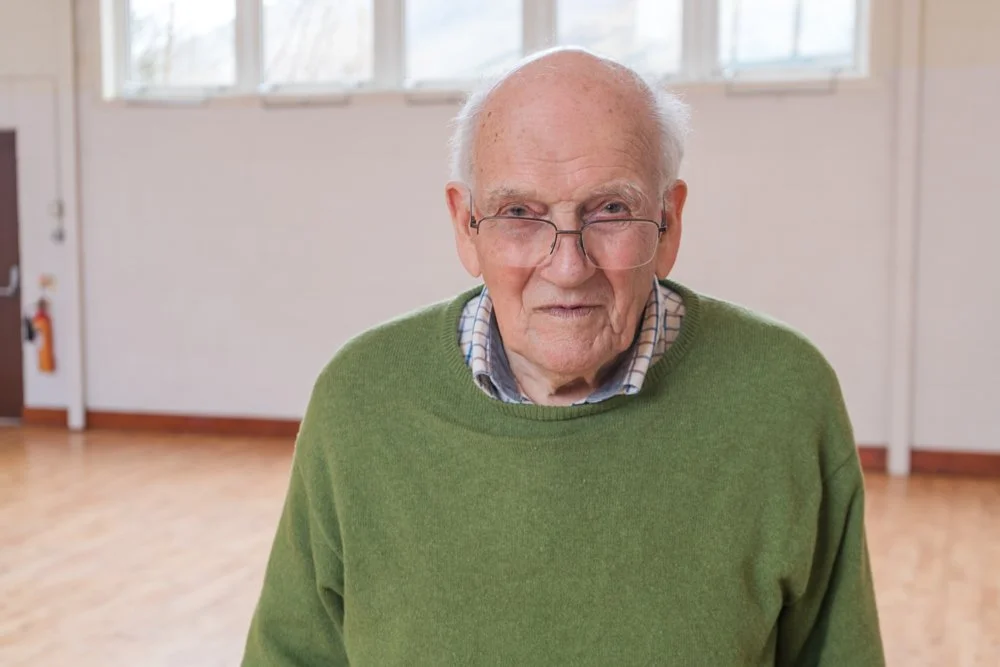
A lifetime with Swaledale sheep
John Burton (pictured) has been closely associated with Swaledale sheep in Scotland for more than sixty years. In 1966, looking to improve lambing rates in his flock at Cononish, John travelled to the Kirkby Stephen sales and bought fourteen Swaledale rams. He returned to the sales every year and built lasting friendships with breeders across the north of England.
John believes his was the first Scottish flock to be registered with the Swaledale Sheep Breeders Association. At its height, the farm sold around 500 draft ewes and gimmer shearlings each year, while the annual gathering and sale of sheep remained an important part of life at Cononish.
John and wife Deirdre later established the John Burton Award, supporting a young member who has demonstrated enthusiasm and commitment to the Swaledale breed. Presented annually at the Kirkby Stephen ram sales, the award reflects John’s desire to encourage a new generation and give something back to the farming community that welcomed and supported him throughout his working life.
Stuart Christie farms in Glen Dochart and has lived through its decline. In his father's time, every farm had two or three workers, and the glen was full of people. By the time he was farming himself, the neighbours were gone, and the contractors had taken their place. (Thank you to Killin Media Team for this interview)
-
Probably the most visible thing is there are far fewer people about. Just about every farm, even in sort of the 1975 onwards generation I’m talking about, there would be two or three people in every farm. And we used to sort of what was described as neighbour with each other which would help each other out at different times of the year. So there was always somebody would come and give you a hand to gather and clip sheep. You didn’t really have to employ contractors to do that.
You just, your neighbours helped you and you helped them. So less and less people, there wasn’t enough people to do that anymore. So now basically you have to employ contractors to do like the gathering of sheep and just about all jobs really.
How it fell apart
As farms around him destocked, Stuart Christie found that the sheep themselves became harder to manage. Without neighbouring flocks to define the boundaries, his own sheep began to wander further and further, drawn by better grass on the other side of unfenced marches. (Thank you to Killin Media Team for this interview)
-
With other farms round about you destocking, the sheep just wander further and further away from home, and it just gets harder and harder to keep your own ones on your own ground, and it just becomes very hard to get them in, very hard to manage the sheep after that, really.
Glen Lochy that like behind this hill here is you’re into Glen Lochy. Well, virtually all the sheep are out of Glen Lochy now apart from one farm. And traditionally there would be 5000 sheep at the top end of Glen Lochy and another 3 or 4000 at the bottom end of Glen Lochy and the place that was immediately behind us would have 6 or 700 ewes in it, and we had 700 ewes. And literally I’ve seen me out gathering the sheep, and you met the shepherd from that side coming up and you up this side and you met at the top and your sheep just split and went home like his sheep went down into Glen Lochy and my sheep came back into Glendochart and you maybe had to change over maybe a dozen sheep that had strayed onto each other’s grounds.
But eventually once the sheep are gone from that side of the glen, the sheep from this side wander over the top and wander down the other side. And of course the further down the other side you go, the better the grass gets. So they just keep going down and down till they’re basically down in the fields at the other side. And even once they’re down a wee bit, they won’t come back up over the top into this glen. From the management point of view, it’s just, it becomes a nightmare really. The system that worked when both sides were stocked doesn’t work anymore because they just keep wandering, it’s unfenced marches and they just walk for miles.
Jamie Elliott's father was a shepherd who spent his working life on these hills. Towards the end of his career, the work had changed so much that he felt less like a shepherd and more like a rancher: covering more ground, with fewer people, managing stock bred to need less attention.
-
I would say he felt that he wasn't so much shepherding, more ranching towards the finish up. The amount of area he had to cover, with less people, there's a limit to what you can do, so they adapted the stock to suit. The stock was bred so it was more self-supporting, it didn't need such intensive care, and it changed agriculture quite seriously. Still has, when you look at the way it is now.
At the time of his interview, Stuart kept 350 sheep, compared with 750 previously. The arithmetic of hill sheep farming has simply stopped working. (Thank you to Killin Media Team for this interview)
-
We have sheep. I had 750 sheep traditionally. But it got harder and harder to keep them. So we’re down to 350 sheep, and I’ve still got about 50 cows, which basically takes up most of my time in the winter time producing store cattle that we sell a year old to finishers to produce beef.
Conclusion
The people interviewed describe a time when farms employed more workers and neighbours regularly helped one another. They remember the hard work, friendships and shared tasks, and explain how farming has changed during their lifetimes.
Farming continues in Strathfillan and Glen Dochart. These stories record both the difficulties farmers face and the knowledge and experience they carry.
Thank you to everyone who shared their stories about farming in Crianlarich, Tyndrum and Killin.