
Railway-themed Stories
The railway came to these villages and shaped everything about them. Two competing companies pushed lines through some of the most demanding terrain in Scotland, and the glen that had been a week's journey from Glasgow became a matter of hours. The timeline below traces how that story unfolded over 100 years.
What follows is the voices of the people closest to the line: families born into railway cottages, men who spent their working lives in the signal boxes, children from Strathfillan and Killin who rode the line to secondary school in Callander. They describe a community built around the railway, and what it means now that one line is gone and the other has become one of the great scenic railways of the world.
Discover Railways Stories
Jimmy Allardice on the significance of the railways coming to these villages
John Burton on the jobs the railways brought to the villages
Jimmy Allardice ‘a life on the line’ - working on the railways
Catherine Macmillan on the end of an era of railway village life
John Burton talks about sending livestock to market via train
Peter Henderson recalls the night Queen Elizabeth II spent the night at Crianlarich Station
Moira Robertson remembers the landslide at Glen Ogle in 1965
Jimmy Allardice reflects on what was the end of a golden era of railways
Sarah Heward talks about the ability to travel easily and directly to London by train
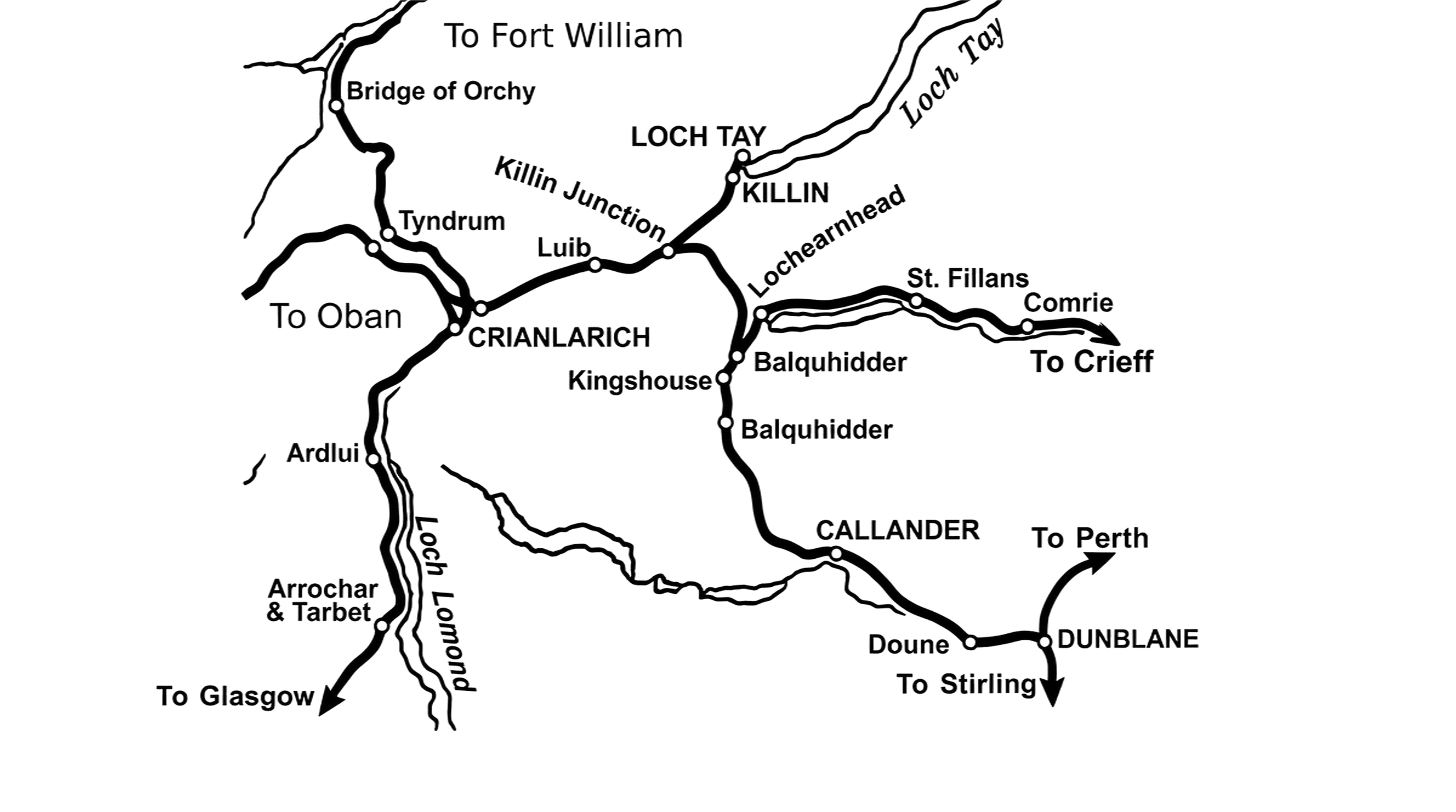
Railway Map - Strathfillan, Killin and connecting routes
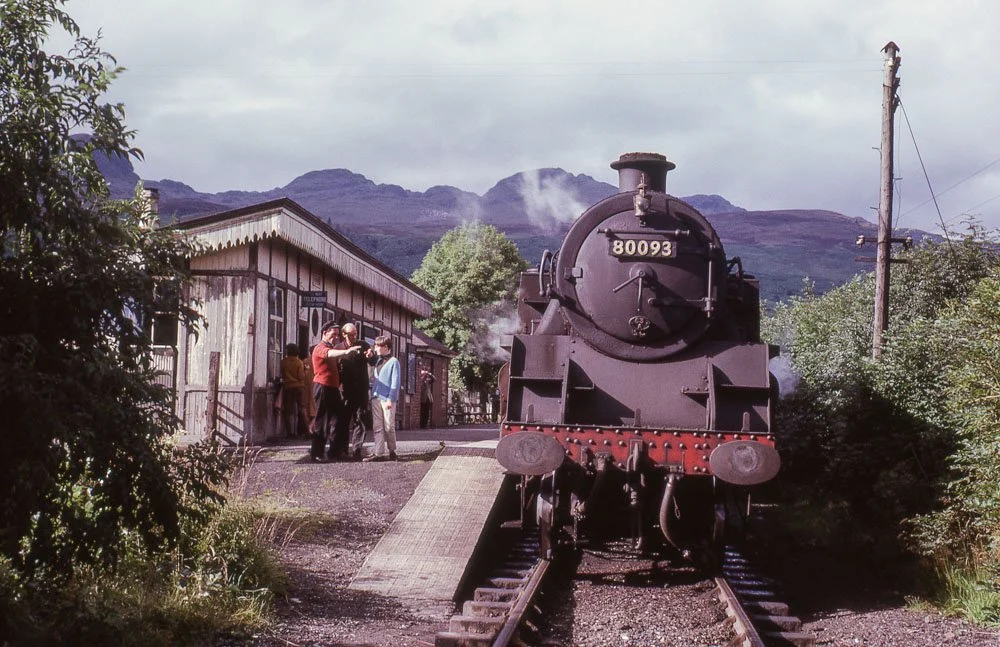
Steam train at Killin Junction, year 1965 (The Transport Library)
The significance of the arrival of the railways
The first tracks into these villages belonged to the Callander & Oban Railway. Expanding west from Callander, the line reached Crianlarich and , and was finally completed through to Oban. In 1886, a short branch was opened from Killin Junction, on the main line, down the steep descent into Killin and on to the pier at Loch Tay, built to open the village up to Victorian visitors coming to see the Falls of Dochart and cruise the loch.
Then in 1894, the West Highland Railway, built by the North British Railway Company, added its own line north from Glasgow through Crianlarich and on to Fort William (and later, in 1901, to Mallaig). Crianlarich, already an important point, became a junction where two great routes crossed. Tyndrum, remarkably for a village of its size, ended up with two stations, Tyndrum Lower on the Callander & Oban line, and Tyndrum Upper on the West Highland.
Jimmy Allardice, who started on the West Highland in 1973, spent a working life in the signal boxes from Crianlarich to Tulloch. He has as clear a sense of what the railway meant when it arrived, and of how it was forced through the glen in the first place.
-
It's unimaginable nowadays to us what impact it did have. I mean, if you were to travel, say, from Fort William to Glasgow, it would take you four days to get there and back. But when the railway started, you get there and back more or less in a day. And a quarter of the price, and even less than a quarter of the price. The price of goods dropped fantastically. The price of coal dropped by a quarter. So I don't think we can realise really how much it changed life. It really did change life quite a bit.
There was great opposition to it. Understandable opposition to it as well. The local landowners around here, they fought tooth and nail, not to have it. But the Cali was already through here, Caledonia. And there was questions why we should have another railway. They wanted the railway to join the West Highland at Tyndrum lower rather than join it at Crianlarich. But it couldn't be done because of gradients. They had to put it in the viaduct at Crianlarich. So yeah, there was great opposition from landowners who have a great power in the House of Lords and such like.
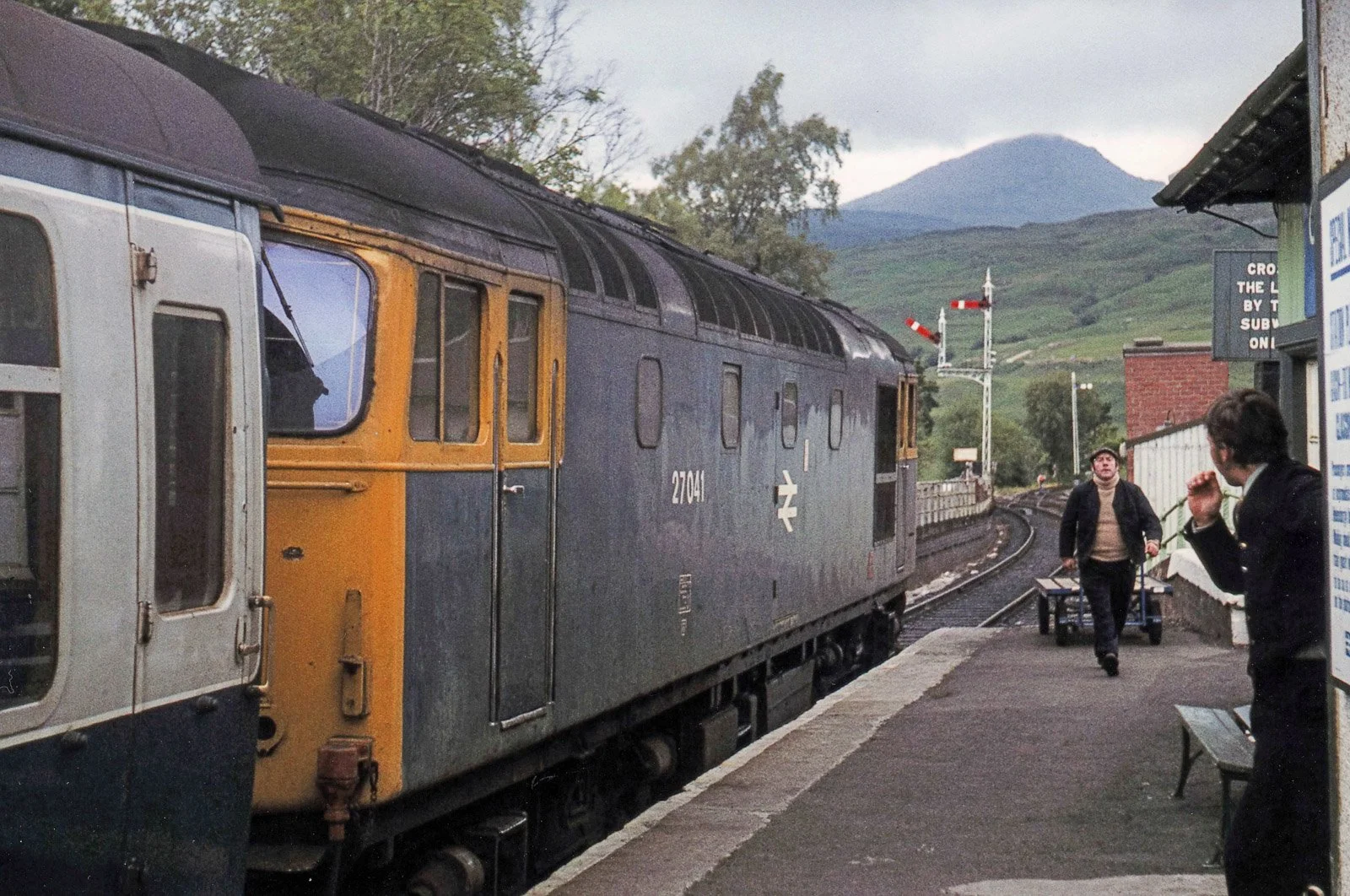
This photograph shows the morning Oban-bound service at Crianlarich. The Secondman is Willie Power of Oban, pictured walking towards the camera, heading for the tearoom for his free cup of tea and roll, a perk of the job. Signal Jimmy Allardice is on the right. C.1982 (Graham Maxtone)
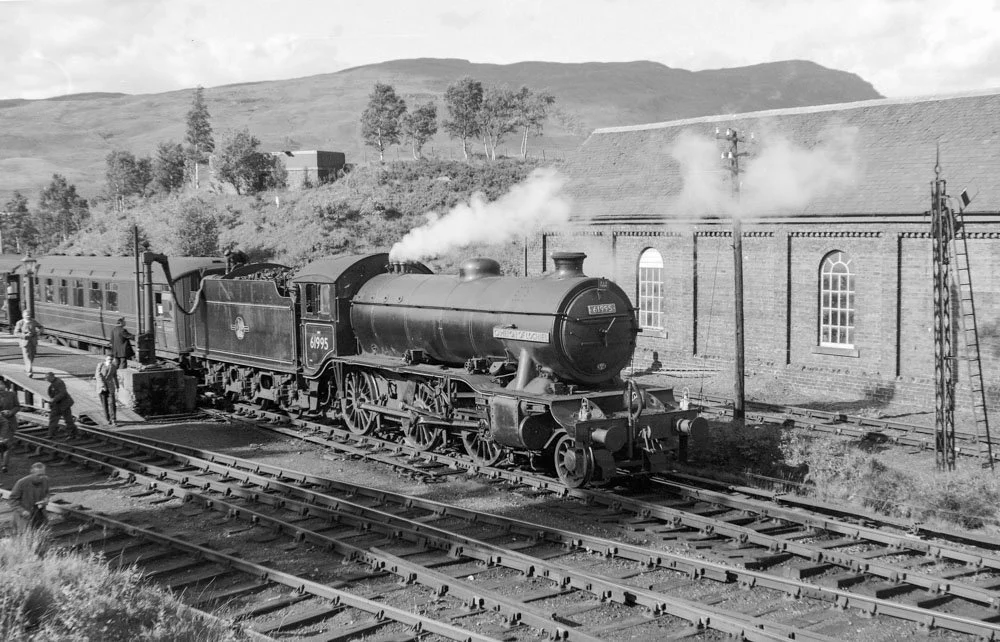
Steam locomotive at Crianlarich Upper Station in 1960 (The Transport Library)
Jobs that shaped village life
At its peak, the railway was not just a set of tracks through the glen. It was a large, visible, organised presence, with a structure of jobs that shaped village life. John Burton farmed at Cononish, just above Tyndrum, for most of his adult life.
-
There were a lot of jobs committed to the railway companies. I mean, take the village of Tyndrum for a start. There would be four people who would be gangers on the old LMS line. That was like the one from Stirling to Oban. And then the Glasgow to Fort William line had another four gangers. And there would be a station master and possibly a couple of porters. So, you know, there was a big lot of people.
And Crianlarich was basically the same. Both villages had two stations. Tyndrum, believe it or not, is one of the few towns or villages in the whole country that's got two stations. I mean, I know London will have more, and Glasgow. Other than that, it's a very famous village because it's got two railway stations.
But the most of people now that are employing the railway come from further away because transport is so easy. Not many people in this area actually work on the railway, which is a bit sad, I think. So it's completely changed.
The people who did the work were not all from Strathfillan. As the lines expanded, labour came in from wherever it could be found, much of it from the West Highlands and from the Hebrides. Billy Ronald grew up hearing the older generation slip into Gaelic without thinking about it.
-
I knew people when I was younger here that were born in the 1800 and-something . When I was younger, we used to have a wee touch of the Gaelic because all the older ones that were here came from the islands, you know, worked from the railway and that.
A lot of them came from the islands, and they had the Gaelic. When I was younger. It was quite common. It was like, even just normal conversation. It was Gaelic words stuck in there.
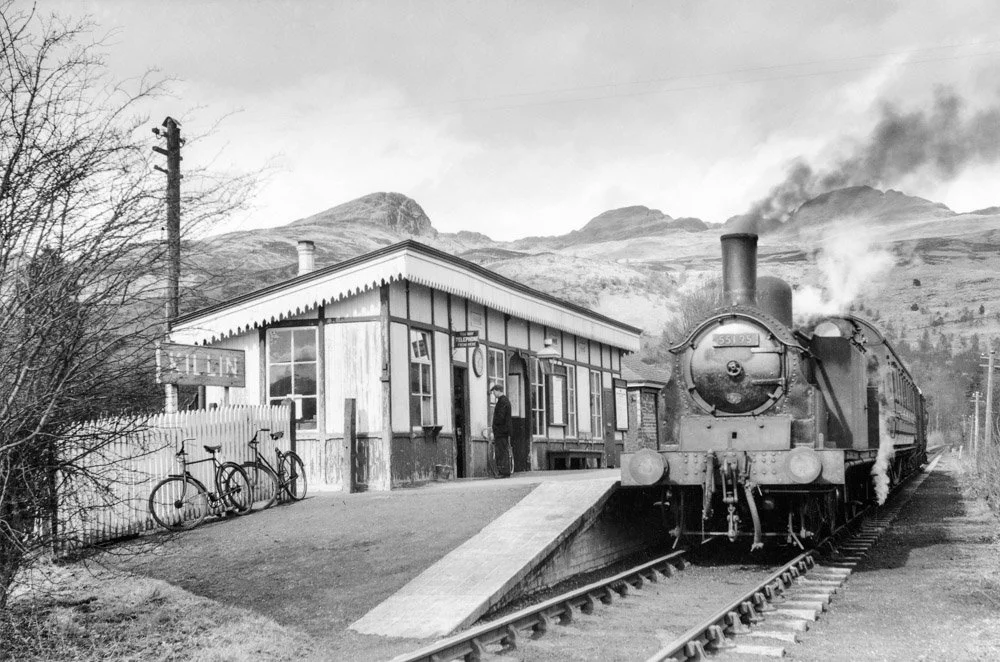
The Caledonian Railway at Killin - April 1959 (The Transport Library)
A life on the line
Jimmy Allardice joined the West Highland in 1973, first as a permanent-way man and then, unusually, "jumping the dyke," as the railwaymen called it, transferring into the signal boxes. He trained in Glasgow, then came straight back up the line.
-
Well I first started in the railway in a permanent way, and the job that I got was a job that was more or less given to me by a man called Walter Anderson. He was the engineer for the West Highland Way Line from Crianlarich to Tulloch. And I think maybe the engineering job being too much or too physical for me, I got the idea of going into the signal box, which was probably the best decision I've ever made, going into the signal boxes.
And I got a start, and it was very unusual at the time to transfer from one department to the other department. It was deemed as jumping the dyke. Nobody liked anybody jumping the dyke. But I managed to get permission to go to the traffic department, and I started my career in the Crinalarich upper signal box.
I had to train for two months, under the supervision of another signal man of course. And after two months, you get sent down to Buchanan Street, and you went through four hours of intensive training. Your understanding of the rules and regulations was the standard. You had to do that before you passed the very basics, and were deemed fit enough to operate the signal box on your own.
I managed to pass, and come up on the train, and was informed that I was on duty for the next three hours. That was your first shift. It was at two o'clock in the morning
As Jimmy explains, West Highland was not quite the same as working on any other railway. It was a calling, with its own uniform and its own way of carrying yourself through the world.
-
Well, there's one word for that, it's dedication. If you worked in West Highland, you didn't work in the railway, you worked in the West Highland Railway. And it was dedication, it really was. You were privileged; you really were privileged. And you only got to know that as the more and more you worked there. Because the more you worked, you got to know the drivers and the guards, how they worked, whether good, bad or indifferent. There was plenty of them, indifferent drivers. And it was a privilege. In fact, Control, who were supposed to be the overall, we were the understudies, Control were the guys that called the shouts, they never phoned us, they never ever phoned us. If they phoned us and they were told that they had no right to bother or interfere with West Highland running the traffic, we ran it as we thought fit. And Control didn't like that very much, but still, no matter.
But it was a privilege to work there. It was hard at times, it was hard. We always started to work half an hour before we really should be there. So if your start time was two o'clock, you start at half past one. And you get your list of orders for the evening. The first, well we had one, two, three, six freight trains from two in the morning until seven in the morning. That's four all at once. And then we had another four freight trains Oban to Glasgow. And we had 0100 left, Queen Street 0100 in the morning. It was a mail train that got to Crianlarich, didn't stop to go to Crianlarich with all the mail.
But it was a hard job. It could be a hard job. And it was a job that you took great pride in. I mean you couldn't but take pride in the job because the rest of the people did too. And we had a uniform to wear. You had your coat and your tails and you wore them because it was your badge of authority. You didn't wear it. And anyway, they didn't wear it. They were dismissed as a bit of slovenly workers, you know. But most drivers, guards and signalman always had a collar and tie, white shirt every day. And you were dressed for the position. They don't do that now. And I think they've lost something with that, like, you know, they don't.
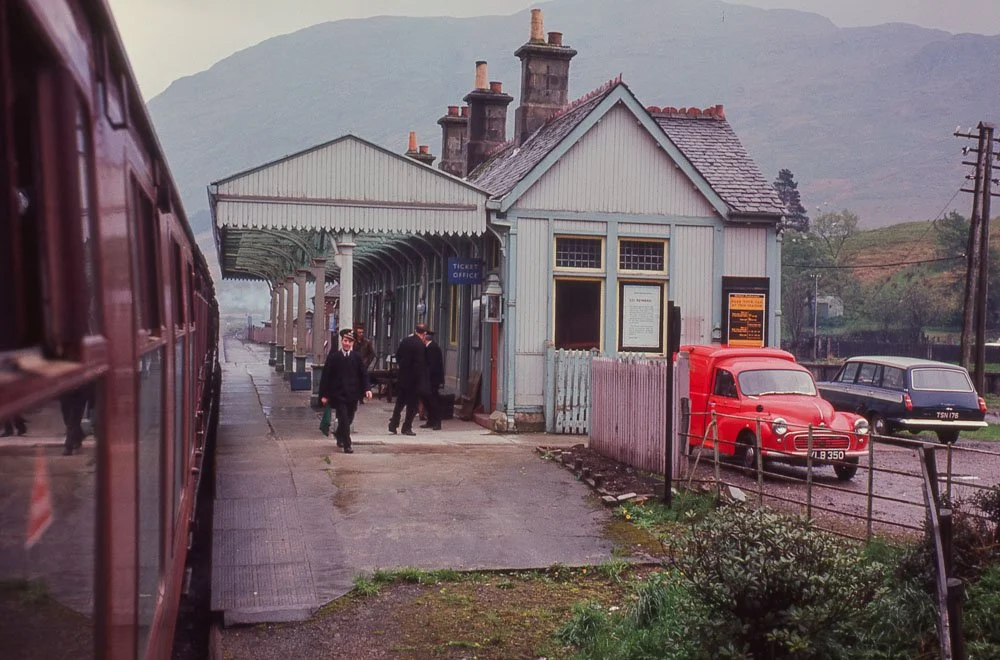
Crianlarich Station - May 1964 (The Transport Library)
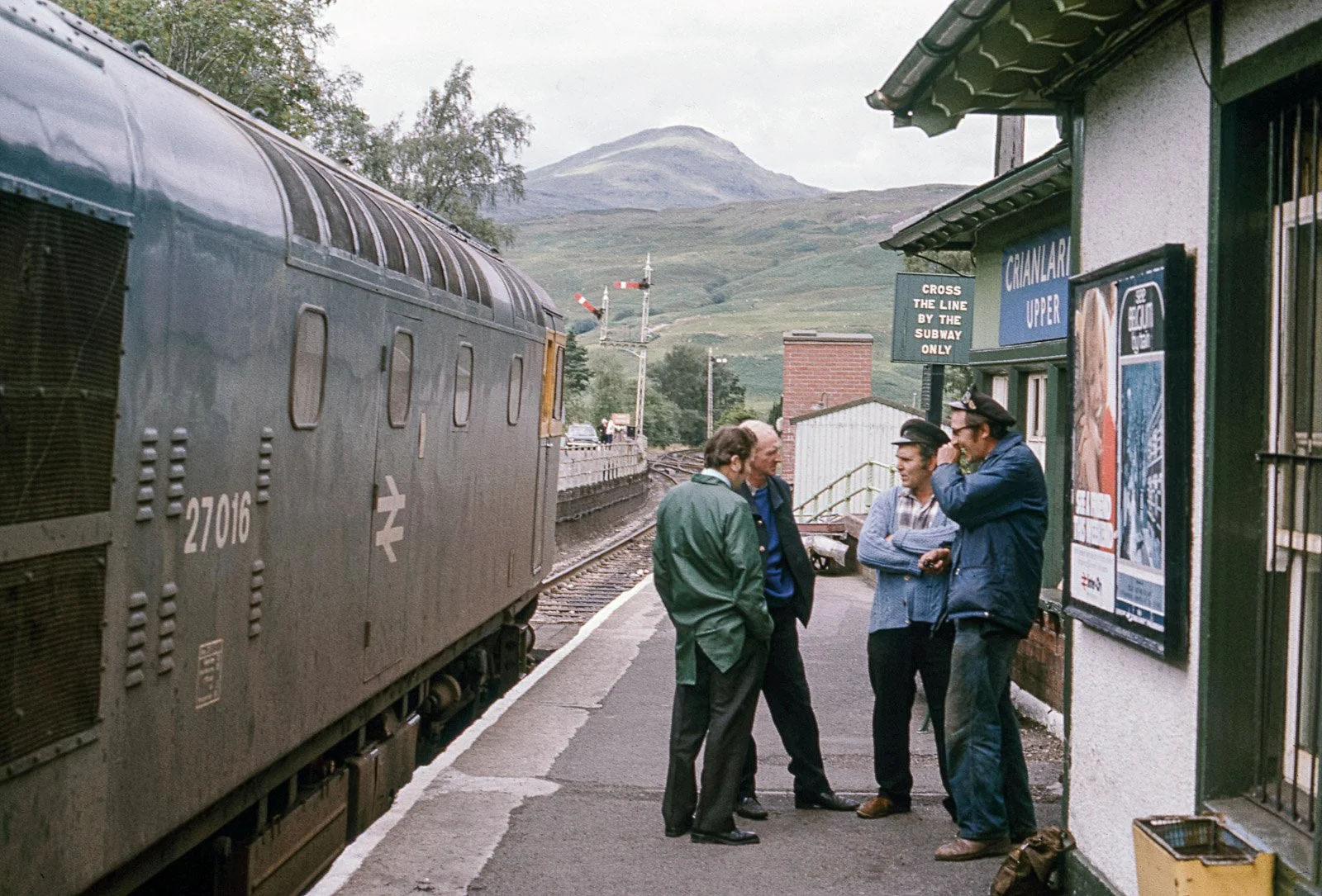
Peter Henderson (left) - 1976 (Graham Maxtone)
Peter Henderson, who also worked on the railways, talks about the immense pride that the workforce had.
-
In my time it was all steam engines, and I would be at Crianlarich Station, and the drivers would get out, dusters out, polishing their engine, which that's changed totally now, you know. They changed on to the diesel, and then of course laterally it was the wee units as we called them. I don't know what the right name we called them, the wee units. But yes, I enjoyed my time. In fact, of all the jobs I had, other than when I became self-employed, the railway was my favourite job.
Jimmy says that the signal box could generally be a lonely place. However, Crianlarich, as the busiest box on the West Highland, provided plenty to think about.
-
Well, you must remember that a signalling job is a very isolated job. If you work as a signalling specialist, rather than carousel jobs, you might only see railmen, no one else. Corrour might get one passenger then a week if you were lucky. But you had no interaction with the public in these stations. In Crianlarich, we were only signalling, we weren't signalling plus ticket sellers. But if you were in Tyndrum, or any other outlying station, you sold tickets as well. So you were actually in charge of the whole station. You sold tickets, you got rid of the parcels, you made up the parcels, you phoned people to say the parcels were here. Everything was done with the exception of Crianlarich, where it was so busy that you had to concentrate on the signaling rather than other duties that was in the station you know.
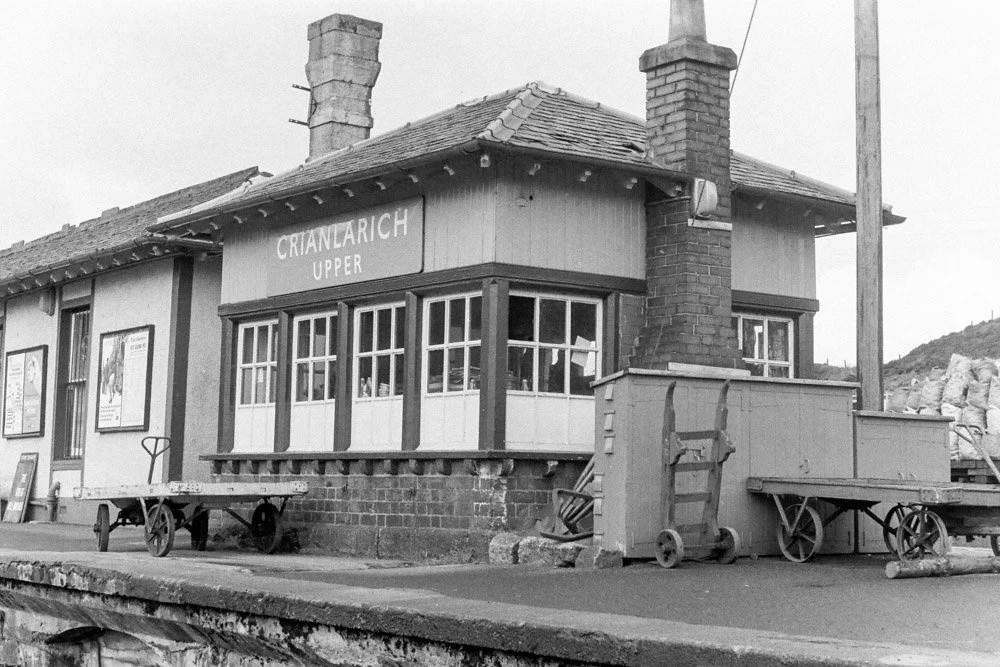
Crianlarich Signal Box c.1970s (The Transport Library)
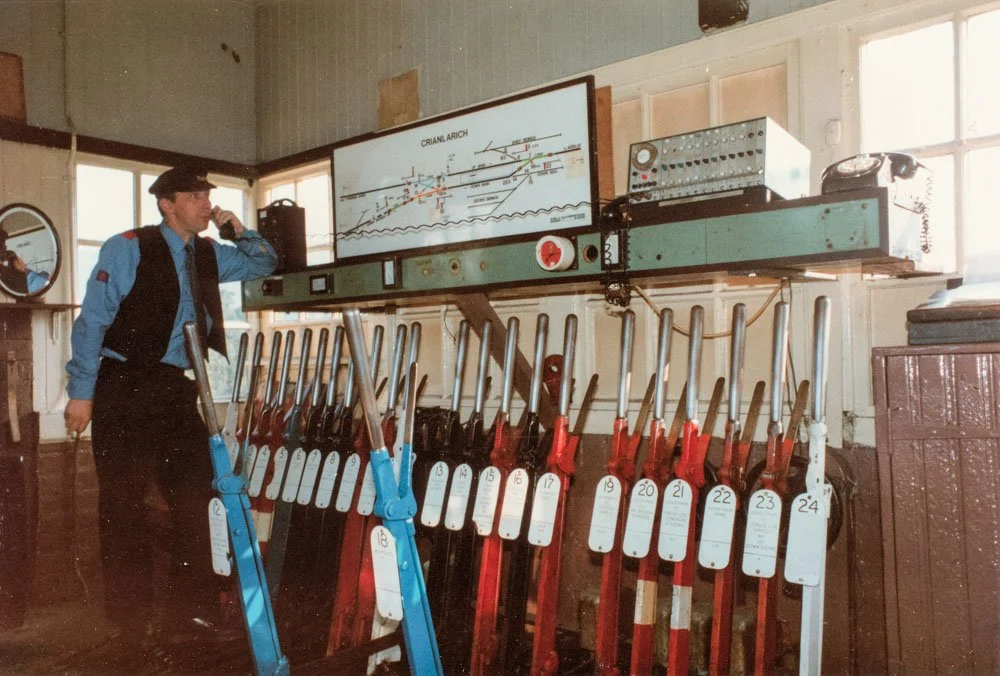
Jimmie Allardice in the Crianlarich signal box (Graham Maxtone)
Rival railway companies
For a good half-century, the two lines were run by rival companies, the Caledonian on the older Callander & Oban route, and the North British on the West Highland, and each had its own people, its own liveries, and its own way of doing things. After 1923, the Caledonian became part of the LMS and the North British part of the LNER, but the old loyalties lasted much longer than the company names.
Alan MacLennan's family were North British through and through. His father was born in No. 1 Brick Row, the NB's railway cottages, in 1932.
-
So that’s my great-grand father and mother they came here to work with the railway, like so many other people. In those days we had two railways here one now gone of course and the vast majority of the people in the village worked for the railway. The houses up the road where I live — Strathfillan Terrace — they were built for the railway, so what’s known as the Brick Row railway cottages, I think Block House up by the station for workers and never mind all the other some of the wee buildings and cottages that all that workers worked in if they looked after the line.
Here you would have, not so much drivers or things like that, it was mostly if you got to the railway station it's got a local shed, and, locomotive shed, and sidings beside it, and what's known as the pee way works where the permanent way now, I mean, it looked after the line. So we had a station up there, the present station, my relations all worked for what was then the North British Railway.
All worked up there. The other railway line down here, near this hall that runs along the back of the we used to run along the back of the hall, and the station was there, and it was a not that I remember this, of course, and it was a row of cottages over there where the workers, and that was for the Caledonian railway. The Cali, as it was known. There was great rivalry in the village between the Cali and the NB. And, uh, right down to between the kids, and, playing football against each other, and it was great rivalry between the two railway companies. So you can imagine between rail railway companies, there was a huge workforce in those days, practically everybody in the village worked for the railway.
So, and, and on one side was the NB. So my father was born here in ’32, and I reckon my granny must have been born here, and I in I think it was the 1890s, but I'm not quite sure. The date now, it would have been 1890s, I think, to she was born here, which means it must have been quite soon after the railway opened.
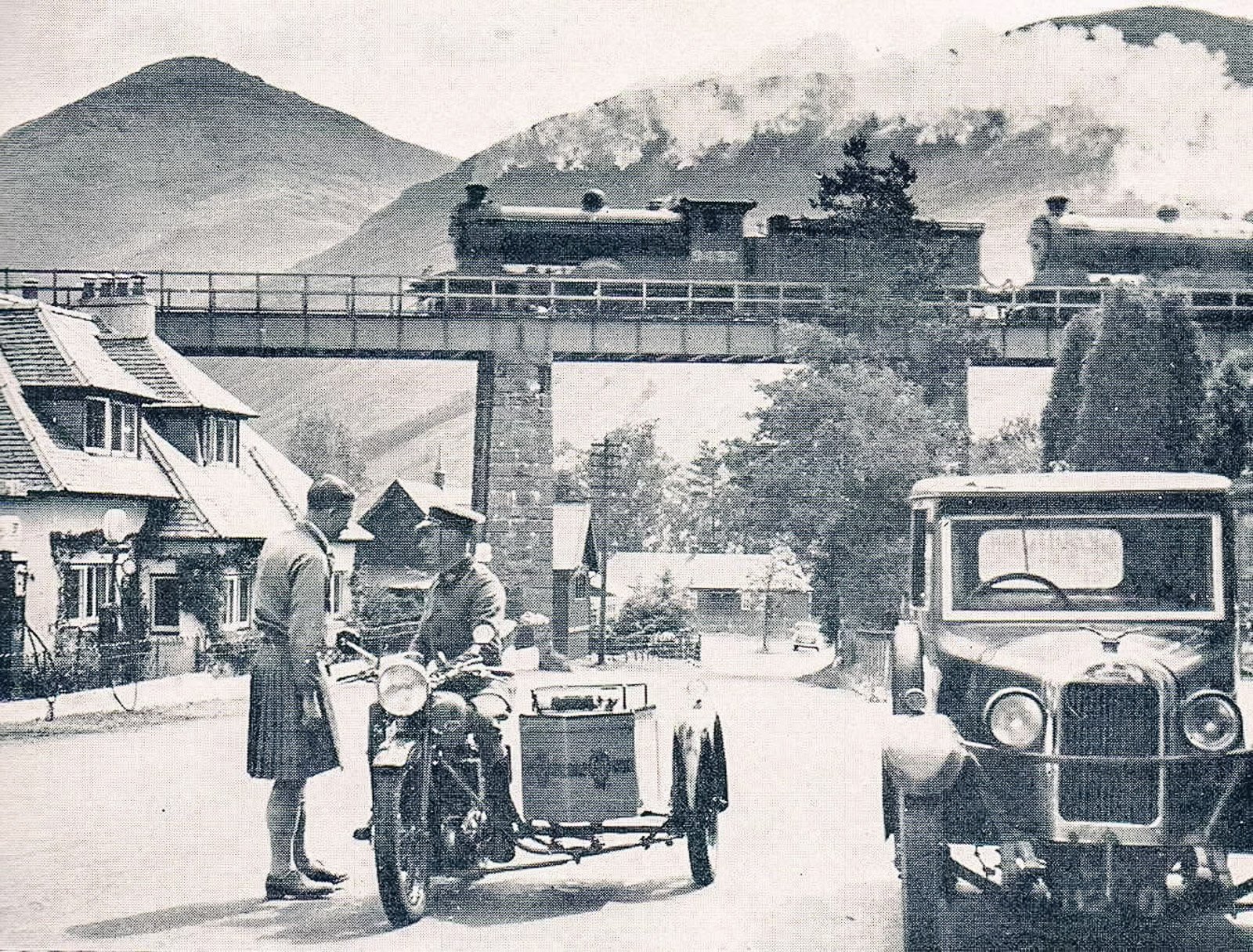
Crianlarich (Callander Heritage)
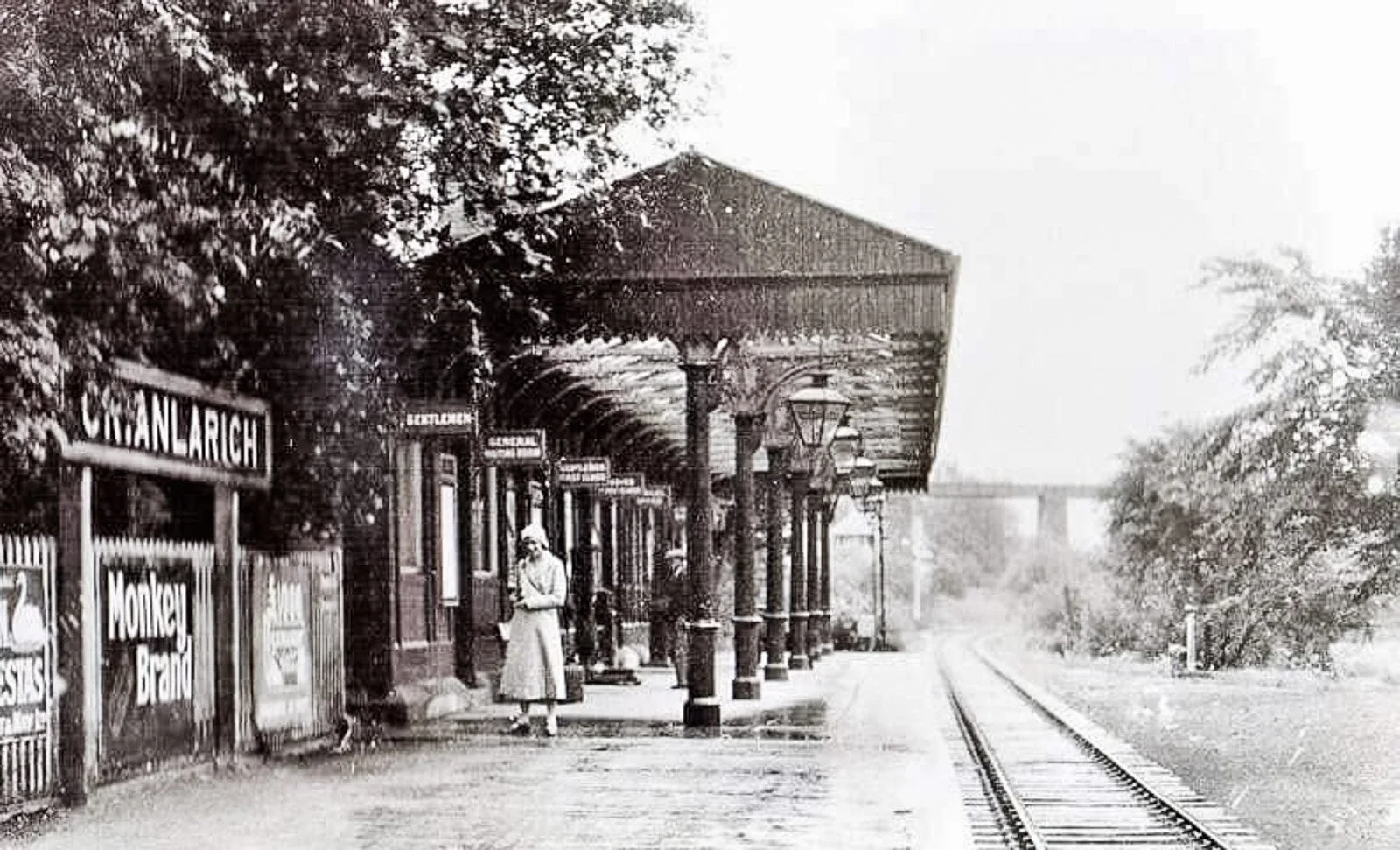
Crianlarich Lower Station c.1920s (Callander Heritage)
The end of an era of railway village life
In Crianlarich, most of the houses belonged to the railway. The remainder, barely a handful, did not. This was a settlement built for the line.
The same was true in Tyndrum, where whole rows of houses were let to signalmen, gangers, permanent way men, porters and their families. The cottages carried names. Families were born in them.
Those houses are still there. Many are now sold on, some into private hands, some into holiday lets. A village that once housed a working rail depot now houses, in part, people passing through. Catherine Macmillan, whose family have been in the village for generations, experienced the end of that era.
-
Everyone locally would have worked on the railway — all the men. Not now. In actual fact my husband has just retired and he would have been the last railwayman here from the actual village, which is incredible because we went to Crianlarich School we were all railwayman’s children and it just shows you over that period of time, the whole thing’s changed. All the work is hired out now — if they’re changing rails, a squad comes from Glasgow, that kind of thing.
So the signal boxes at the station were still on the go then, and you could go in while waiting for a train. It was just such a friendly place — every single person knew us and the hotel was a big thing, a couple from Pollo right up from the north of Scotland. My brother was really friendly with their son and so we would have spent lovely times there. Mum worked there and all the local ladies you know if they weren’t teaching and stuff like that would have worked in the hotel.
So we would have have nice ceilidhs there and when it was Michael’s birthday he was kind of spoilt he was an only child about him and you can imagine the staff were mad about him you know so we would have been all around there and he had lots of ground up the back with pigs and stuff like that so that was a magnet for us you can imagine.
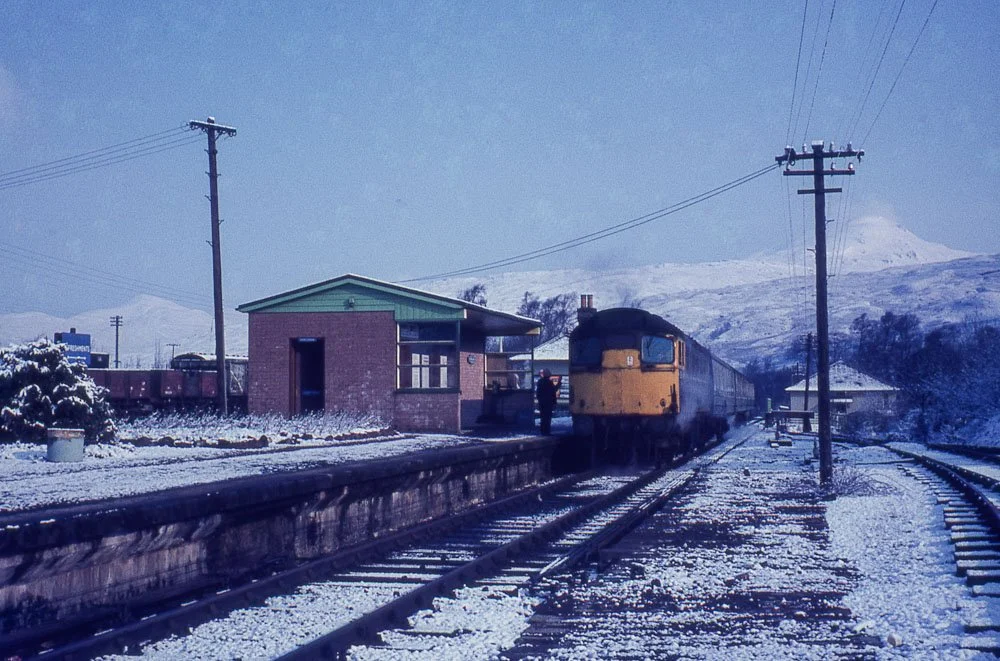
Crianlarich Station - 1970 (The Transport Library)
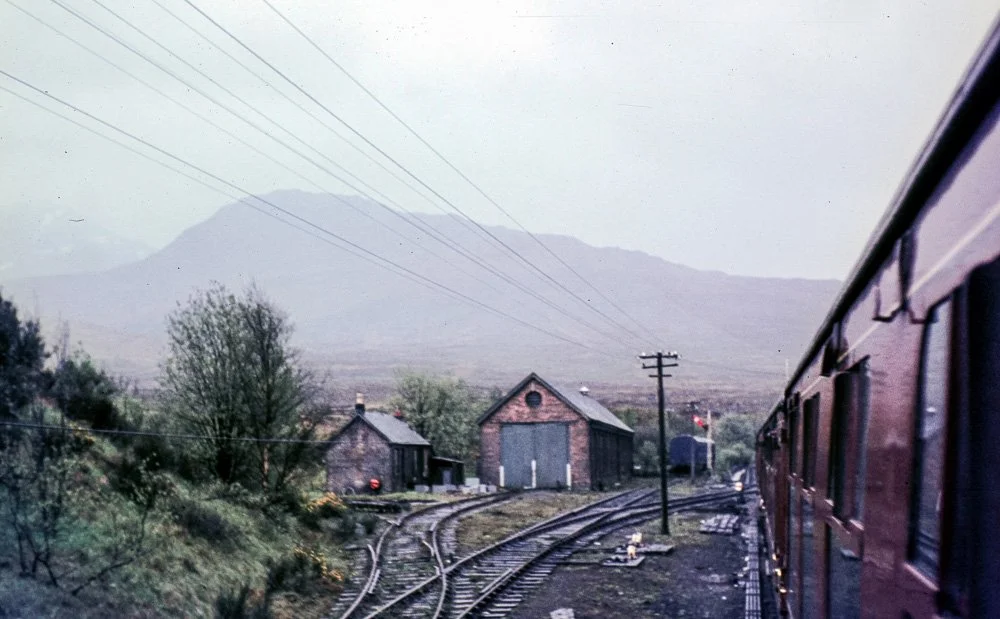
Crianlarich Station - 1967 (The Transport Library)
Getting to school
Before the Killin branch closed, the line was how teenagers from Strathfillan and Glen Dochart travelled to secondary school. It meant very long days. Peter Henderson, who we heard from earlier as a railwayman, was first a passenger as a schoolboy.
-
I went on the Callander to Oban Railway to Maclaren High School every morning, back at night. Shunted into the sidings if a passenger train was coming. We'd leave maybe sometimes at twenty past seven in the morning and we'd be lucky if we got home at eight o'clock at night.
Luib Station
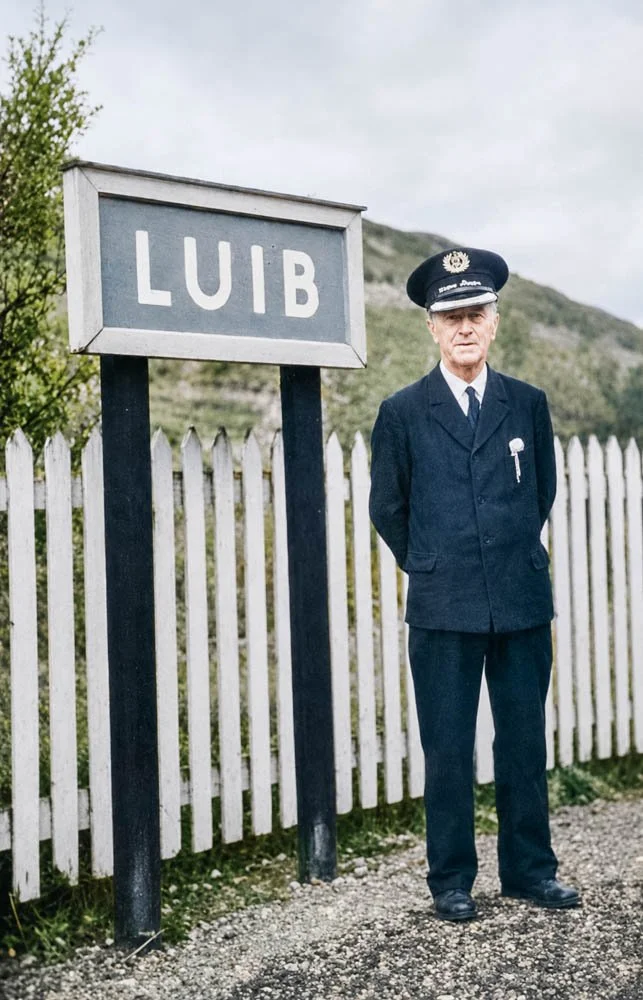
Luib station sat in Glen Dochart, midway along the Callander and Oban Railway between Crianlarich and Killin Junction. It opened on 1 August 1873 as the line pushed west through the glen, and served the scattered farming communities of the valley for over ninety years before closing on 27 September 1965.
The station had two platforms on either side of a passing loop, a small signal box, a goods yard, and a stone water tower. It was a working rural staffed station, rather than anything grand, a place where livestock, goods and the occasional passenger could join or leave the line, with the River Dochart and the public road running close alongside.
Today, the station site is occupied by Glen Dochart Holiday Park. Photographs feature Alistair Macquire, Station Manager of Luib Railway Station. (Photographs supplied anonymously)
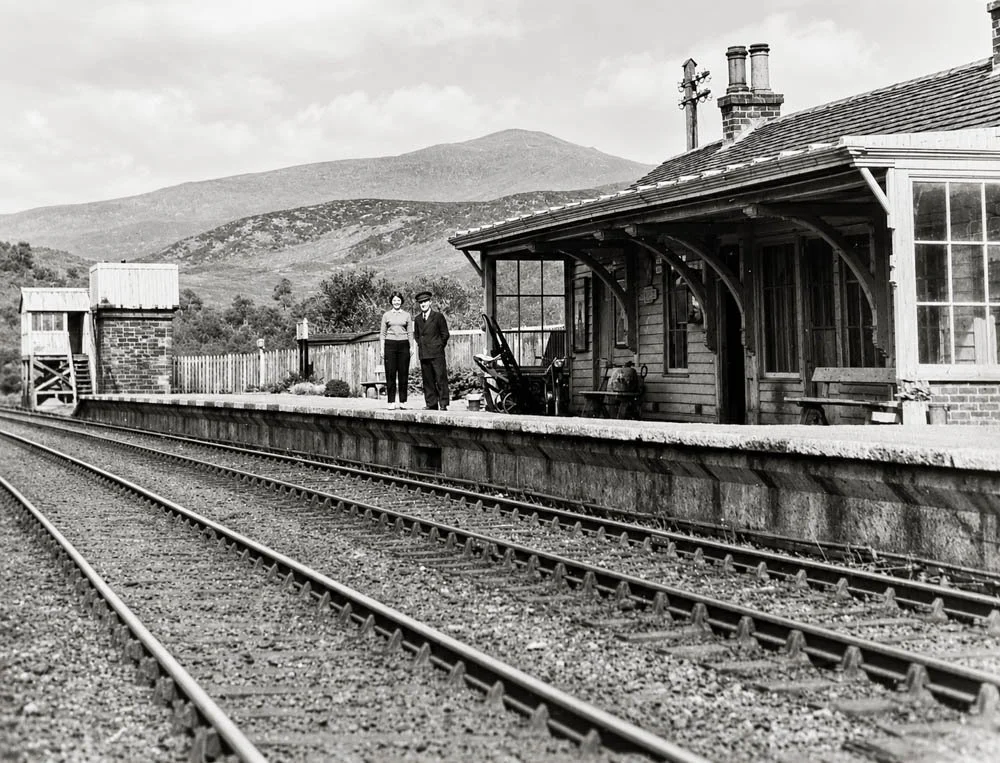
Elizabeth MacLellan, now in her late eighties, has lived in Tyndrum all her life. She remembers her mother putting her on the train as a homesick child for her first week at a school hostel in Callander, and the decisive way a ten-year-old can get home if she really wants to.
-
Well, I was very homesick when I went at first. I'd never been away from home in my life, except maybe to a farm, which is only five miles away, with my cousins, that was all. And I went, and my mother put me on the train at Tyndrum. And my cousins were on the train, but they never spoke to me, so I was a bit upset about that. So when I got to Callander, I jumped on the train and I came back home to Tyndrum. And that next morning I was sent back. And then I went, stayed in the Ellen Gowan hostel till I left when I was 15. And I had the most lovely matron, she was a darling of a lady. And I was happy there, very happy. We went from Monday morning till Friday night, and we came back up on the Pug, as it was called, the wee train to Killin then I got a recollection that we, it only came to Criainlarich, and we had to get the goods train, I think, up to Tyndrum, if I can remember right, it was a long time ago.
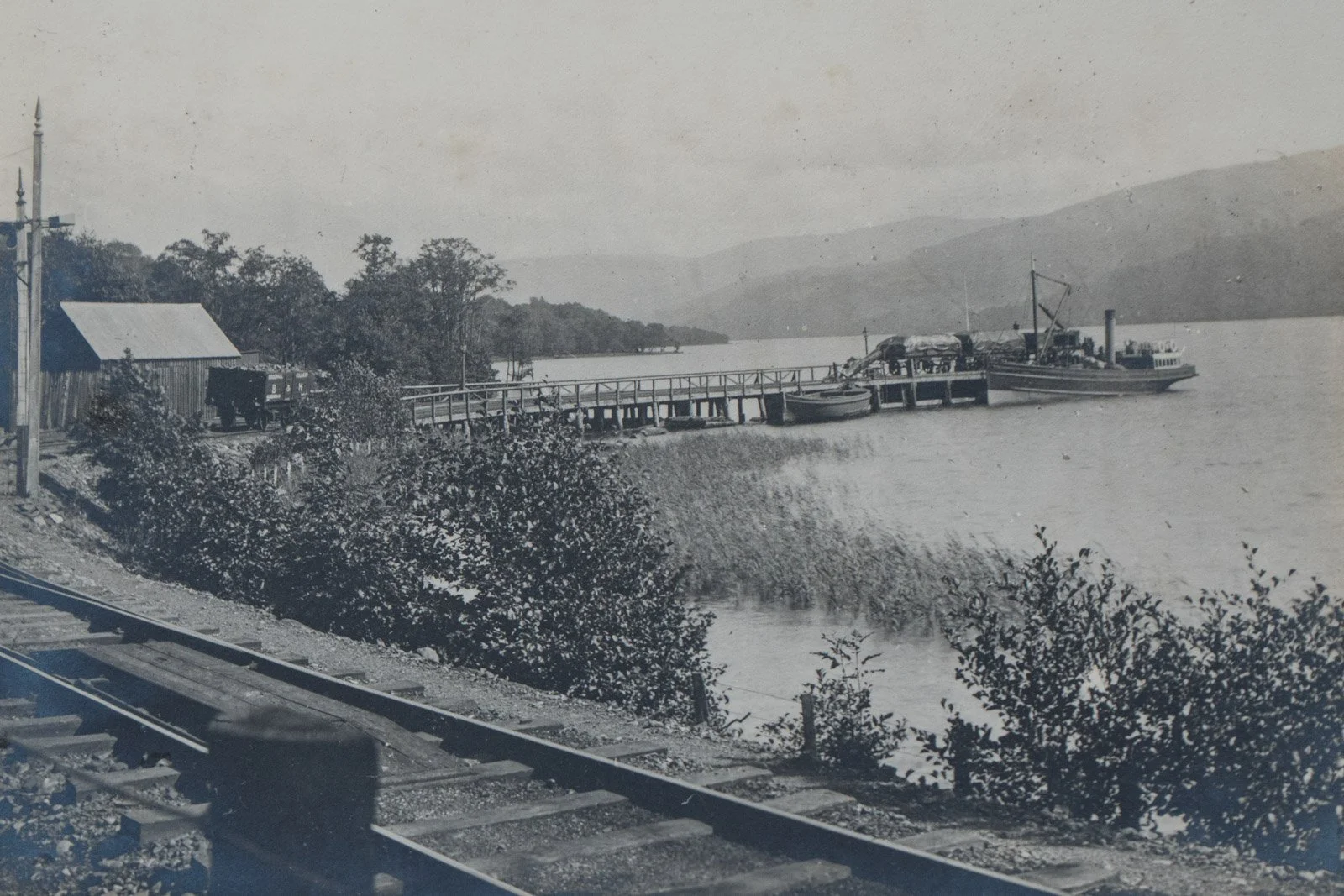
Loch Tay Steamers
From 1886 until the outbreak of World War II passengers could use the railway to connect with the steamer service on Loch Tay. Read more about the history of this service at the link below.
For children from the Killin side of the junction, the weekly routine ran up the branch from Killin to Killin Junction, where you changed for the wee pug — the local slang for the branch-line tank engine down to Callander. Margaret Taylor grew up at Mid Lix, a farm on the Killin branch; the rhythm of her working week was the rhythm of the trains. (Interview courtesy of Killin Media Team)
-
I used to walk on a Monday morning to Killin Junction to get the train. We didn’t have a car at that time and it was well - it also gave me another half hour if I could walk to Killin Junction to get the train. I could be a wee while longer in my bed rather than walking to Killin.
But my father, he carried my case and I trotted along behind. And then on a Friday coming home, the wee pug would let me off on the way back down from Killin Junction - just dropped me off below Mid Lix, so that was quite good. Then when I got involved in hockey and that, when I was at school - I stayed in the hostel, didn’t come home till the Saturday. But it wasn’t the school train you were coming home on on the Saturday. It was just the general train.
And if there was an inspector on the train… Martin Lawrie was the guard and occasionally it would happen in the wee pug so when we get to the level crossing below Mid Lix, you jump out down below and I’m going to tell the inspector I’ve got a shovel to collect that we dropped on the way up.. So he went out one side and I went out the other! But there was a big jump going down that side - I didny like going down the bottom side!
Och Aye. Our lives at Mid Lix were - train times were - we were between the wee pug going up below Mid Lix and the main line going round. So everything - that was how you judged the time of day, with the trains that were going past.
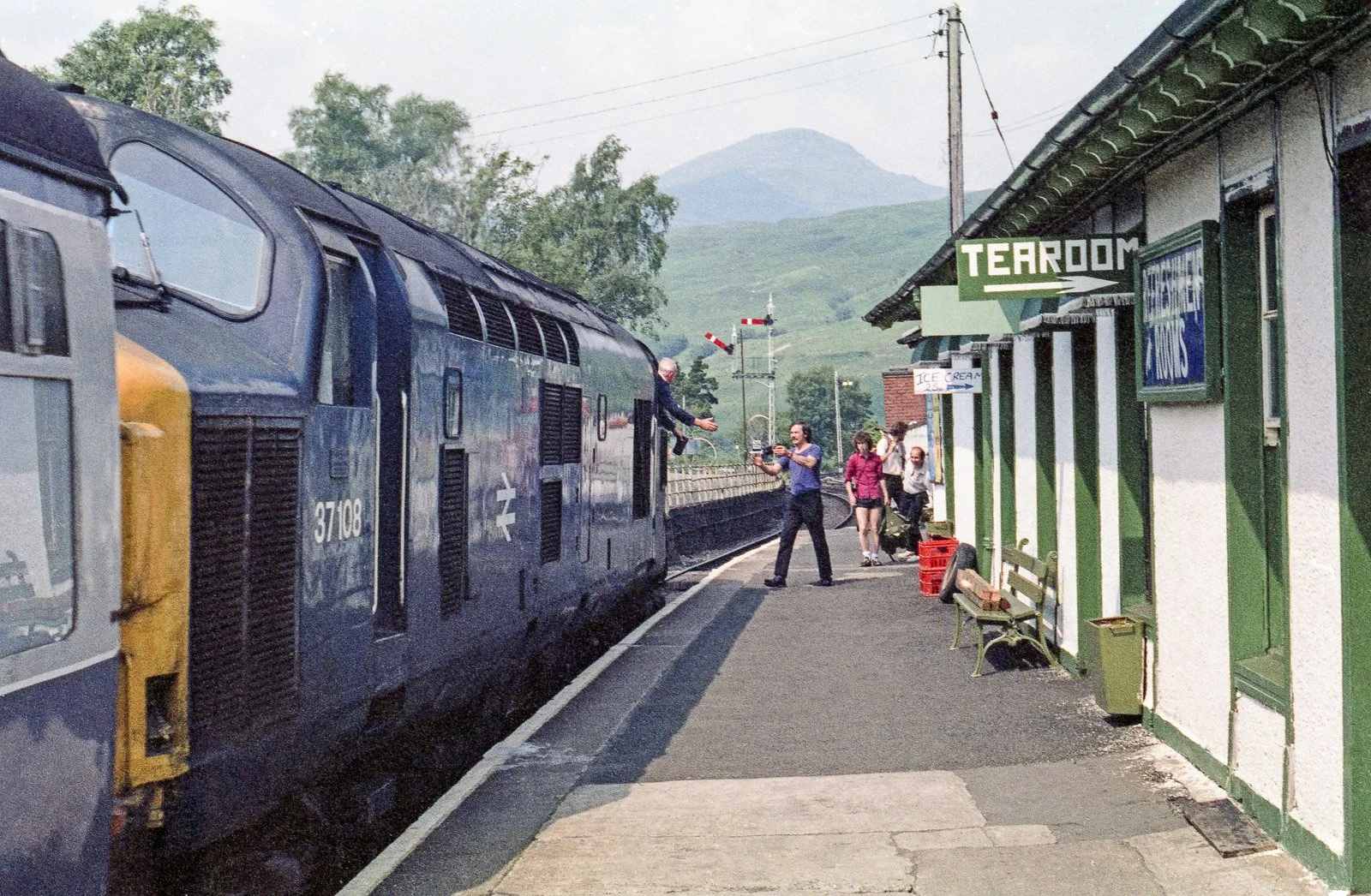
c.early 1980s. Afternoon train for Oban (Graham Maxtone)
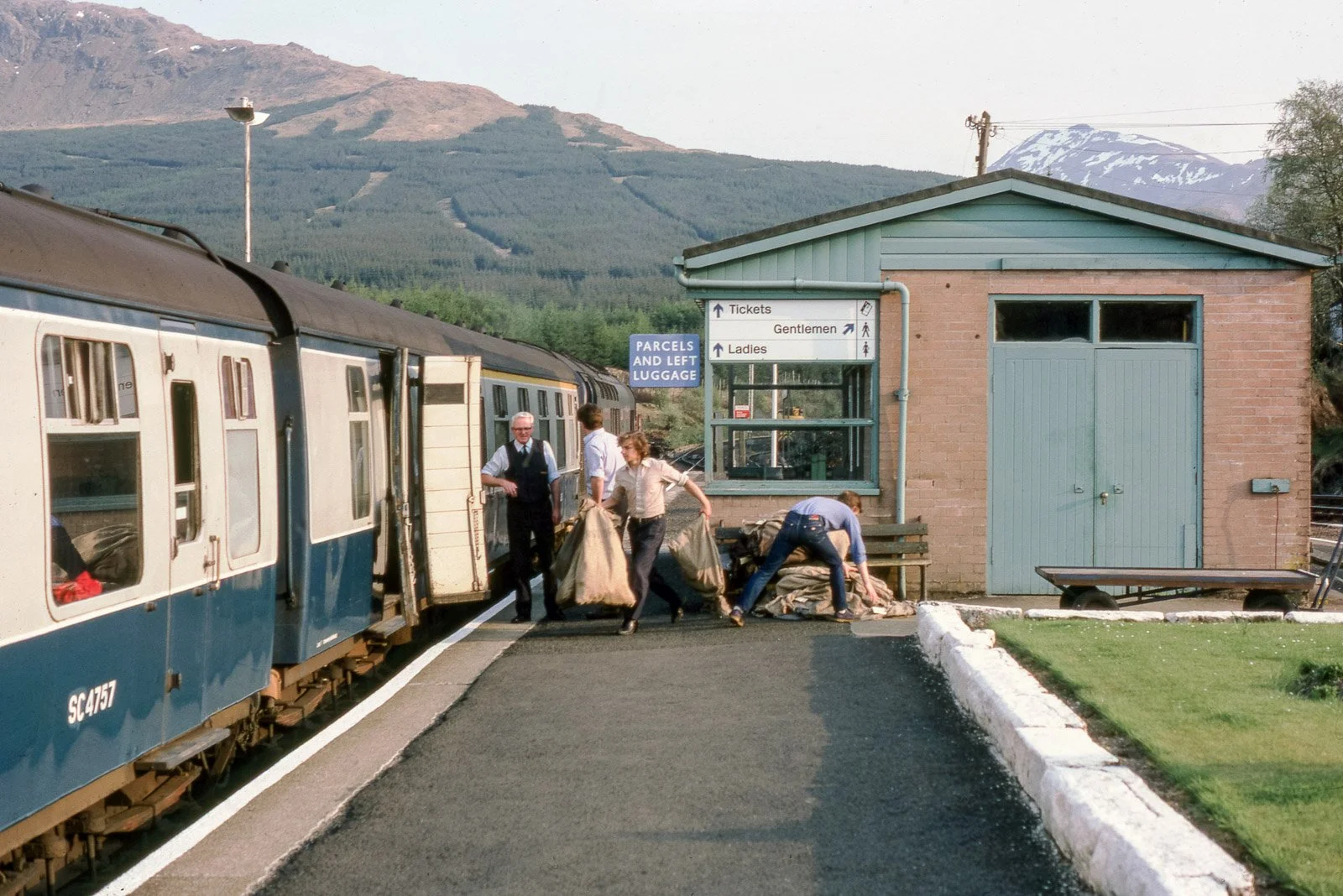
Loading mail on the Oban to Glasgow train - 1986 (Graham Maxtone)
Catherine Macmillan grew up in a railway family in the village, where you did not even walk round to school the long way if you didn't need to.
-
I suppose the station was the biggest change for us, because it was manned pretty much 24 hours a day with a signal box; the signals were changed then it all went electric. That was a big thing for us. It was quite a sad day, when that all changed — because it was never lonely if you were waiting for a train. If the train was was running late, you had the signal box, you were more than welcome to sit in with the signalman and stuff like that.
I suppose that’s a shame and there isn’t the same number of men locally employed there. We used to go Dad drove a wee trolley and stuff like that we’d get a wee spin with him— everything’s so stict now. We even had to cross the line to come to school - can you beleve that?— trespassing nowadays should have been a thing then as well but the signalmen were watching you and knew it was safe.
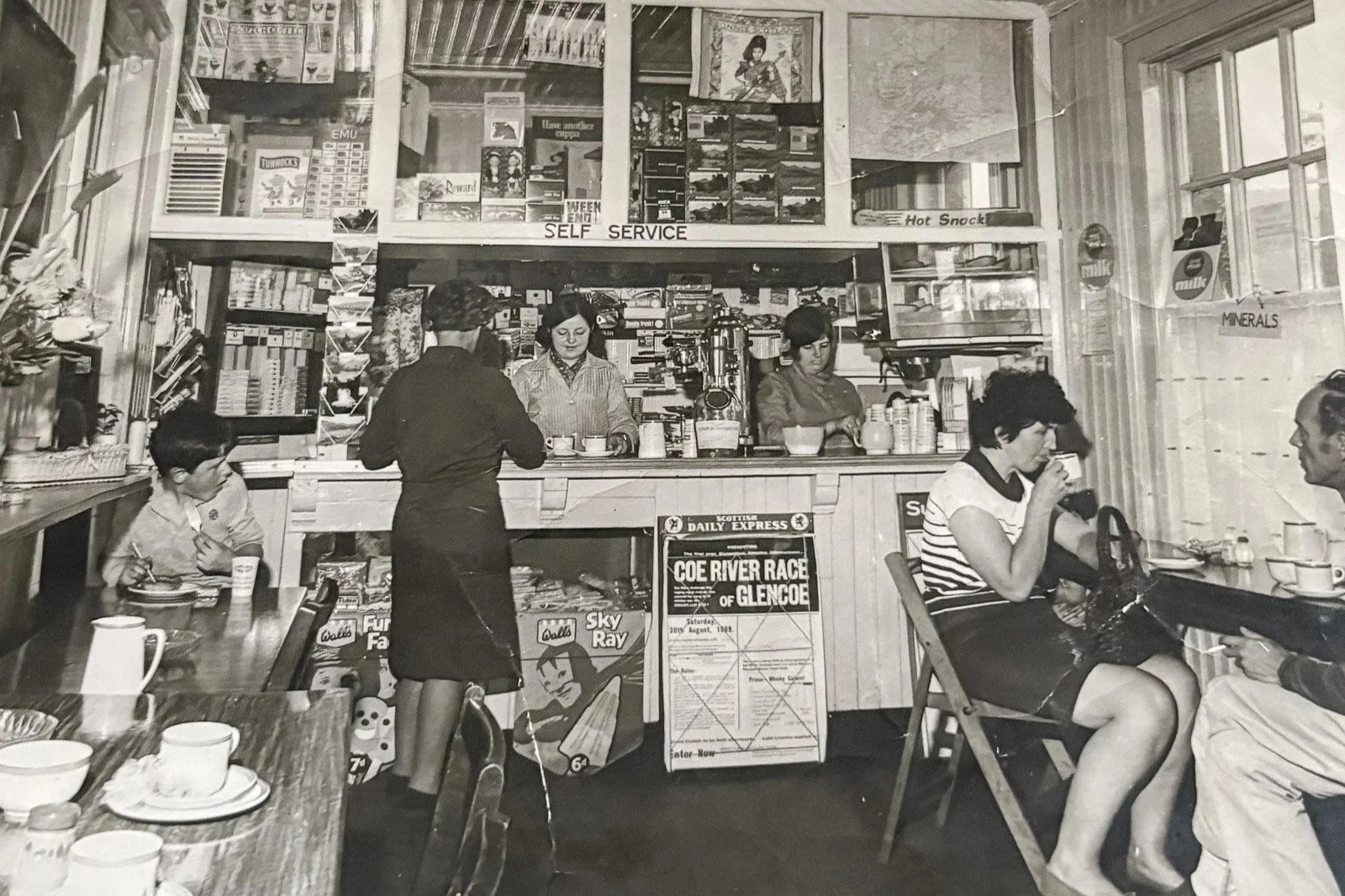
Crianlarich Station Tearoom
Click the link to discover stories of station life in the 1960s and 70s, including the busy tearoom. (Sheila Macdonald)
The station - a village hub
The station was not just a place to catch a train. It was the village's link to everything else. Post, parcels, newspapers, coal, paraffin, fuel for the garages at Fort William and Oban, and the dog you'd just bought from the other end of the country: it all came through on the train. In these two clips, Billy Ronald recalls that era and fondly remembers the tearoom.
-
I remember my father buying a dog and we used to go to the station and collect the dog. But the railway was really busy. All the fuel and things like that all came by rail to Fort William and Oban. In fact there were still depots in Fort William and Oban with sidings into it. None of the fuel came by road at that time.
Also I remember, what I do remember from when I was younger, there was people called the Crowls who did the taxi business here. And they had vans and they picked all the parcels off. Every train that came in they were with a van. It was Red Star, I'll remember that. And they would take parcels to Killin and Tyndrum and all around. Every train, the parcels were in a guard van I think, or a special carriage. It was all parcels, rather than a lorry coming with parcels for you. It all came in the train.
-
The station tearoom, when we walked home, we went by the station, via the station. And we used to get up on the platform, and we used to get in the station tearoom. And quite often it was old Mrs MacDonald, give you a sweetie.
But if the train was in you didn't bother getting in because it was just heaving. What we used to do is go into the, especially in the winter, we'd go into the signal box with the fire roaring and you'd get a wee heat and a wee warm.
Livestock to market
For the farms along Strathfillan, Glen Dochart and Glen Lochy, the railway not only made it possible to go down to Stirling for the day, but it also made it possible to send your sheep and cattle there. Before the livestock lorry became common, Tyndrum had a market of its own, and the station pens were busy. John Burton took his own stock to the lower station at Tyndrum for about a decade, which he describes in these two clips.
-
And that was the great thing for the sheep farms, because at one time they had to drive their sheep to market. But of course, markets, sheep markets, or cattle markets were much more common; I mean, there was a sheep market in Dalmally, and there was a sheep market in Tyndrum. In fact, there were two different firms that had the little market at Tyndrum, which was quite amazing because there was absolutely nothing now. Now there was also one in Killin, you know, you would Aberfledy or Crieff, there were markets in all these places, so the actual farms maybe didn't have a tremendous distance to the drive their sheep or whatever it was, but the people who were buying them would have—you know, to take them away to Stirling or wherever, so there would be days taking them away.
But for the railways came, of course it was a case of you could get your sheep onto a wagon and the next day they would be sold in somewhere like Stirling, and even the farmer, even if he hadn't a car or whatever, he could get onto the train the next morning and go around and see his sheep get sold in the market, and that was a big advantage.
And I can remember that quite well, taking sheep over from Connonish to the lower station at the lower station at Tyndrum, and putting them on wagons, and did that for about 10 years.
-
The last time when put sheep away to Stirling was in December, you know, like me think 1961, and. We had a pen of 50 sheep to send to Stirling to the market, and it came a terrific snowstorm.
And my father said, "We just have to let these sheep go." I said, "No, I think—" I said, "I think—" I said, "If you could walk down the road with a few cows and we could leave them up there, we could leave them at the house where we are, at Dalrigh,” and I said, "I could walk— I could follow in the tracks of what the cows have made, and then walk up the main road to the station."
We wouldn't do that now, but—Uh, we managed to break that off, and that was— that actually worked really well. Till we got to in front of the Royal Hotel, and then there hadn't been anybody on the road between Royal Hotel and the station. It was about a foot of snow, what a job I had getting these sheep to move on the unbroken snow.
But I'm lucky I had a dog who was very forceful and pushed them on, and we got them onto the wagon. And then I went into Stirling, but that barely the next morning. I walked over to the Tyndrum, onto the train, and into Stirling, a bad train for the sheep, so there you are.
The night the Queen slept at Crianlarich
In October 1965, the Queen came west to open the new Cruachan hydro-electric power station at the head of Loch Awe — a tunnelled, "reversible" pumped-storage scheme built under Ben Cruachan. She came by train. The Royal Train was stabled overnight at Crianlarich, and the east signal box belonged, for that one shift, to a very particular piece of railway history. Peter Henderson was on duty.
-
I worked in the east box, at the junction there, and the Queen was going to open Loch Awe Dam, I think it was, and she parked overnight at the signal box. And that was, they came, they renewed all the sleepers. The first engine to heat the train came in, and you could have combed your hair on it. And then, of course, the Queen came in, stayed the night, and we could not move because of security. And I had an inspector in the signal box with me. And although I was in the signal boxes for a long number of years, it was the inspector that had to pull the signals, not me.
But that was an event, the security was just unreal. Security on the bridge, if you wanted to go out for the toilet or anything, somebody had to go with you, because the Queen was lying sleeping in the train, you know.
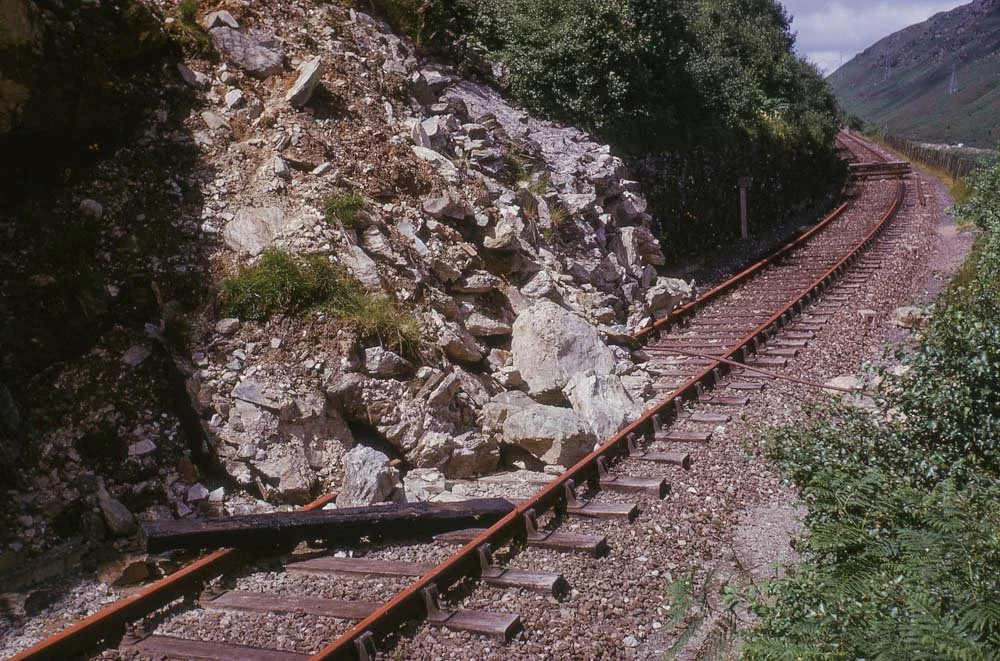
“Avalanche Closes Railway Sooner than Expected”
On Wednesday, September 29th 1965, The Scotsman led with this headline and photograph following a major landslip which blocked the Callander and Oban railway line. British Rail announced that the damage was far worse than first believed and decided not to repair the route, despite initial hopes that services could continue until the planned closure later that year.
The article explained that although debris on the track was limited, it was supporting thousands of tons of unstable rock above the line, making repairs dangerous and uneconomic.
Landslide blocks Callander & Oban Line (The Transport Library)
The landslide at Glen Ogle — 1965
Within months of this landslide, the whole Callander-to-Crianlarich section and with it, the Killin branch, was formally closed. For the village, as Moira Robertson explaines it felt like a door had closed very suddenly.
-
And then there was a landslide in Glen Ogle across the railway line. It was just before the Beeching cuts, about a year or two before that. So they closed that line. So you couldn't go by rail to Callandar anymore. But the schoolchildren here who went to high school, not everybody did in those days, they went by train to Callandar to go to school.
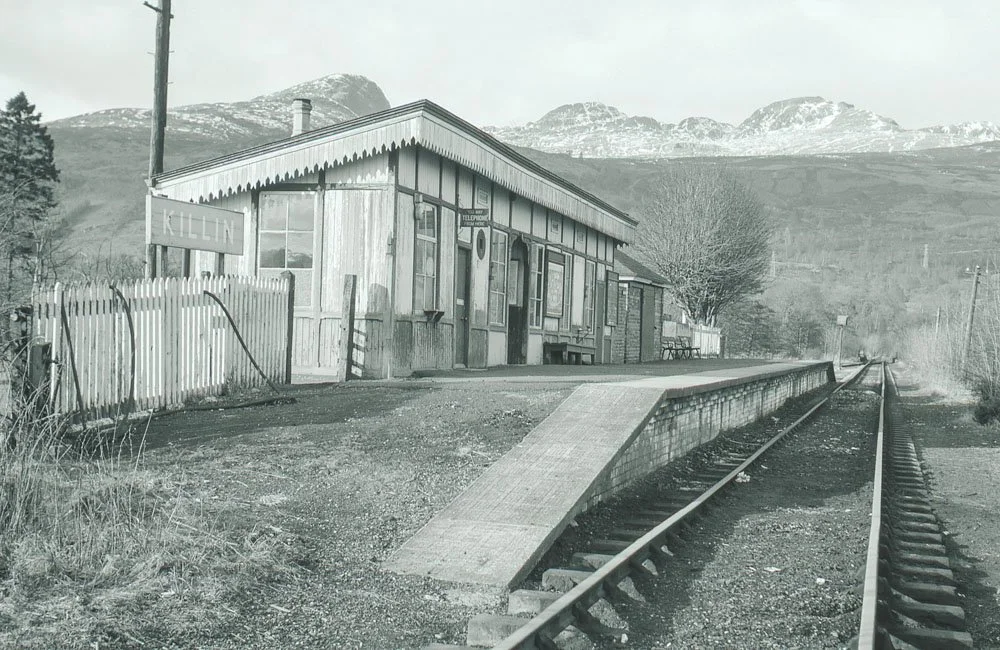
Killin Railway Station in 1966, after its closure (The Transport Library)
The end of a golden era
The West Highland Line survived, and Crianlarich kept its junction status for the Fort William and Oban services. But the scale of the railway as a local employer began to shrink almost immediately, and then kept shrinking. Signal boxes were automated. Ticket offices emptied. Maintenance moved onto centralised squads that drove in from Glasgow when they were needed.
Jimmy Allardice explains how Crianlarich depended on the railway.
-
All the houses in Crianlarich, with the exception of about five, belonged to the railway. There was 32 houses in Crianlarich belonging to the railway. Between signalling, between S&T, a signal and telegraph, a permanent way, and outdoor superintendents. So Crianlarich is the railway. Was, is, not so much now because the houses now are sold. And there's no work. I don't think there's one person in Crianlarich now who works in the railway. Whereas before, there was about 35 families depended on the railway there when I worked in the railway, you know. Which is, the vast majority of the people that stayed in Crianlarich worked in the railway, and that's why they were here.
You've got to remember though, it's very strict, that if you broke any rule or regulation, and that you were dismissed because of that, you had to get out of the house within four days. Four days, that's all you were given was four days. And then the next person would need to get back. If you were out in four days, somebody would
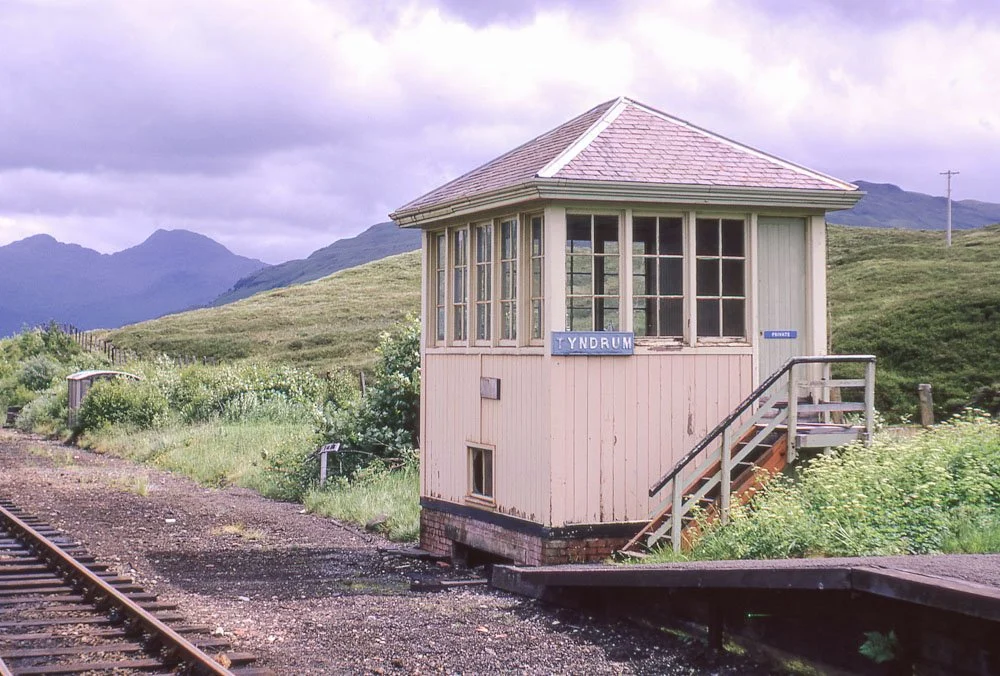
Tyndrum Lower signal box out of use (The Transport Library)
The West Highland Line today
The West Highland Line is now routinely voted one of the great scenic railways of the world. It runs through Strathfillan with regular services, and is joined six nights a week by the Caledonian Sleeper, which leaves Euston in the evening and wakes its passengers on the shores of Loch Lomond. Both Tyndrum stations remain open; Crianlarich still acts as the junction where the Oban portion splits from the Fort William portion.
Sarah Heward's experience of the Sleeper is one of the quieter pleasures of living where she lives.
-
The bizarre thing is that although you're in a, community of circa 150 people, that's the permanent residence here. Obviously there are transient residents—tourists and workers—You've got two railway stations and you've got a non-stop service to Central London 6 nights a week.
From Tyndrum. And I've done it quite a lot, and it's absolutely surreal to get on the train in Tyndrum at 10 to 10 at night and wake up in Euston at 7 o'clock in the morning.
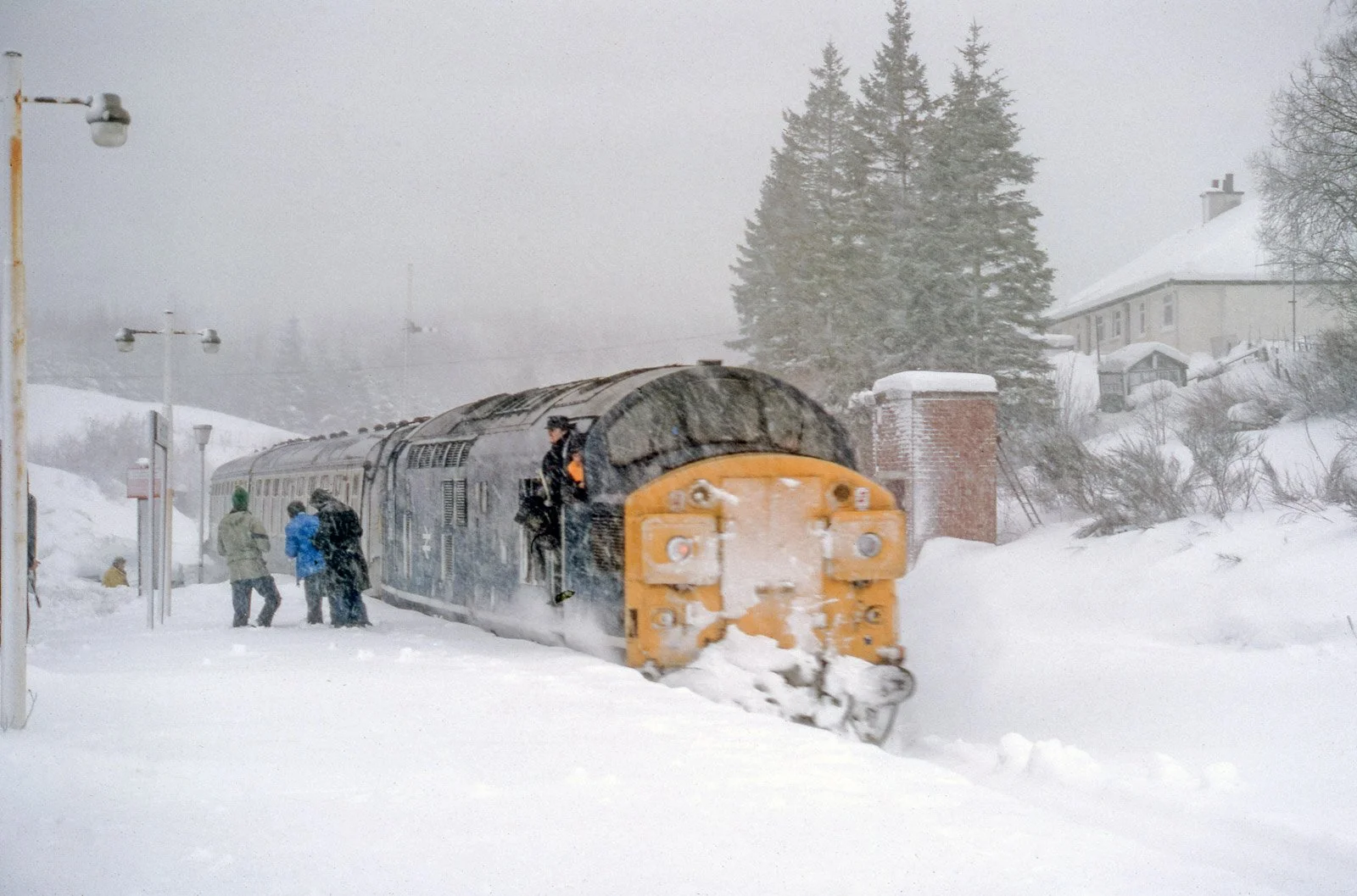
January 1984, 14:15 from Fort William, stuck in snow. (Graham Maxtone)
The line still has its moments of drama. One winter in the mid-1980s, Fiona Robertson watched the village mount its own rescue of a train snowed in between Tyndrum and Bridge of Orchy. (See picture above)
-
The first the locals knew of it was the local policeman turning up in his Land Rover at the pub and going in and saying, “Right, boys, who in here’s got four-wheel drive or who’s got a Land Rover?” And all the hands went up. And he went, “There’s a train stuck.”
And there was a train stuck in the snow on the line between here and Bridge of Orchy. And they basically went on a rescue mission in their four-wheel drive vehicles, even although they did openly say to the policeman that they’d all been drinking. He said, “I don’t care. This is people’s lives on the line.”
But there will be information about that somewhere. I know that Bridge of Orchy Hotel has some really good pictures of it, or they did have. I don’t know if they still do.
But yeah, the winters here were in those days proper winters. And you see the difference now. I mean, you maybe get snow staying for a few days and then it disappearing.
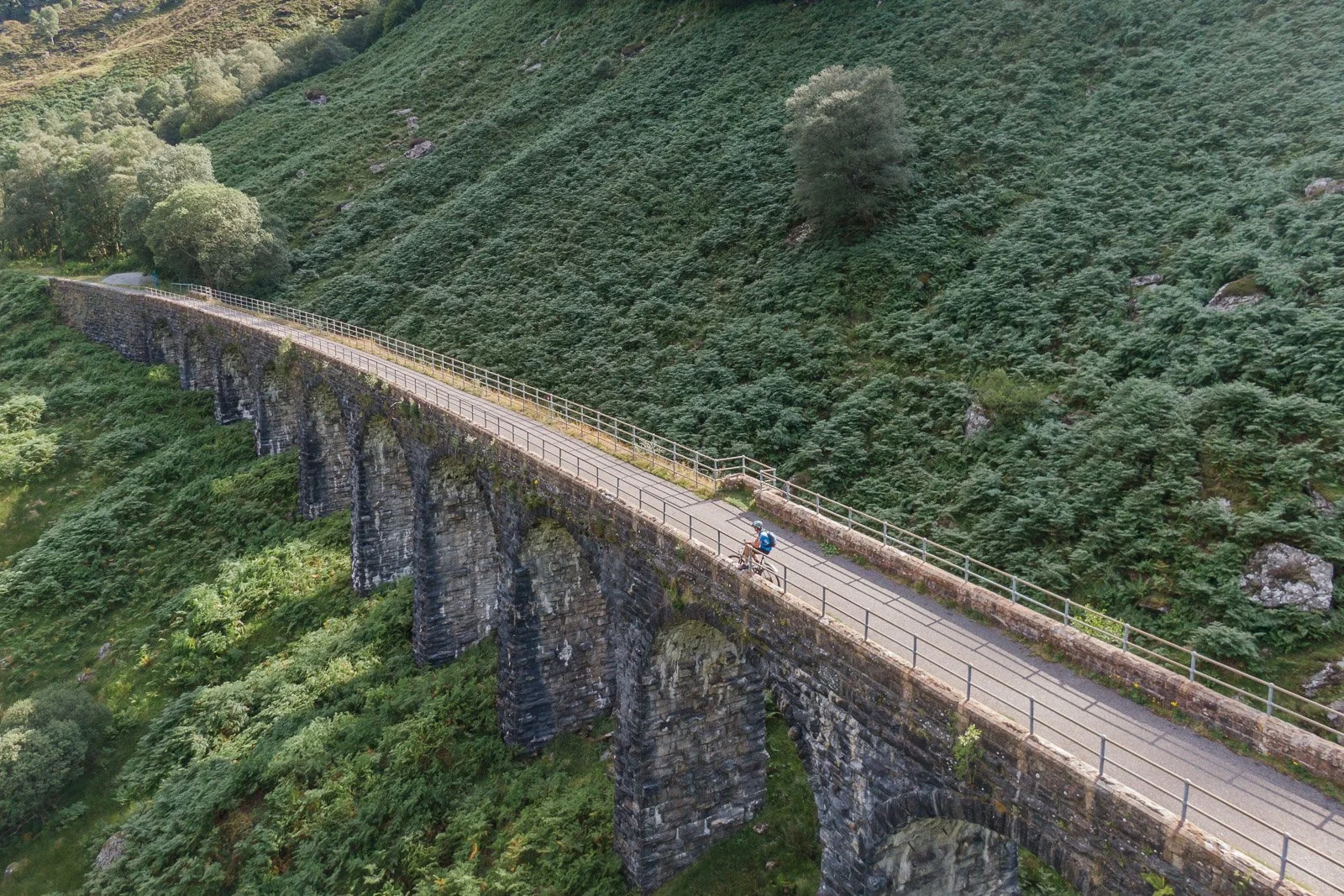
Glen Ogle Viaduct now a cycle path (Paul Saunders)
Old lines, new paths
The Callander & Oban line is gone, but parts of its trackbed remain visible across the landscape — bridges, abutments, the neat cuttings and cambered curves that only old railway lines make. A section of the former line along Glen Ogle now carries a popular cycle route on National Cycle Network 7, and stretches near Loch Dochart and along Strathfillan are used as paths through the woods and the hills. Rebecca Turner, who moved to Crianlarich for the hills, stumbled onto it early.
-
The first things I did when I walked in with no local knowledge, when I moved here with no local knowledge, was walk down to Loch Dochart along the old railway line. Actually, a little bit of it through Jim Ronald's land, which I didn't know Jim Ronald at the time, but I'm sure he would have been fine. I had the dogs on the leaves, and that's great, actually. And I don't know that many people use that. I mean, now I know the area better, and I'll kind of pull into the lay-by and go down, because I've got an inflatable kayak as well, so I'll take my kayak down onto Loch Dochart and then into Loch Iubhair. But that's a little tranche: walk, actually, along there.
Conclusion
The railway that arrived in these villages over a century ago changed not just how people travelled but how they lived. It brought work, structure and connection to places that had been genuinely remote. The families who filled the railway cottages, tended the signal boxes and rode the branch line to school were part of something that felt, at its height, permanent.
It was not. The route through Callander and Glen Ogle closed line has gone, closed suddenly by a landslide and never reopened, and with it went the jobs, the railway cottages as working homes, and a way of life that had defined these villages for generations.
What remains is the West Highland Line, now recognised as one of the great scenic railways of the world, still threading through Strathfillan, still stopping at Crianlarich and both Tyndrum stations. It is a remarkable thing to have. But the people whose stories are told here grew up when there were two lines, full signal boxes, and a railway that was the pulse of everything. Their memories are a reminder of how completely the relationship between people, work and land can change within a single lifetime.