
Tourism stories
Visitors came to these glens before the railways, staying at inns and travelling by road. Trains later made journeys easier, bringing holidaymakers to local hotels and connecting with steamers on Loch Tay.
The opening of the West Highland Way in 1980 brought more walkers through Strathfillan. Local families provided beds, meals, shops and places to stop, developing businesses around the growing trade.
Hotels and holidays
Moira Robertson remembers the hotels serving Crianlarich and Tyndrum and the coach parties that stayed in the area. Hotels provided accommodation, meals and employment, with visitors using them as a base for exploring the Highlands.
The railway also brought people to Killin, where the branch line connected with steamers on Loch Tay. Holidaymakers could combine train journeys, loch cruises and visits to the Falls of Dochart.
-
I can remember the second hotel, not the Royal Hotel, the Pendoran Hotel (Tyndrum). I can remember that being built. And that was built in an unusual way because the kitchens and the restaurants were up the top. So you had a good view out while you were eating and things. And the rooms were all underneath. But that was owned by Ian Cleaver from Dalmally, along with the Crianlarich Hotel. And then he owned the Dalmally Hotel and one in Oban as well. But they were all sold a few years ago, about five or six, to Mutha, which is a Pakistani company. But it's got places all over the world. And it ran its hotel for a couple of years, three years maybe. He used to do coach tours. Ian Cleaver did coach tours from each of his hotels.
Then and Now - Crianlarich Hotel
Move the slider to compare the photographs of Crianlarich Hotel.
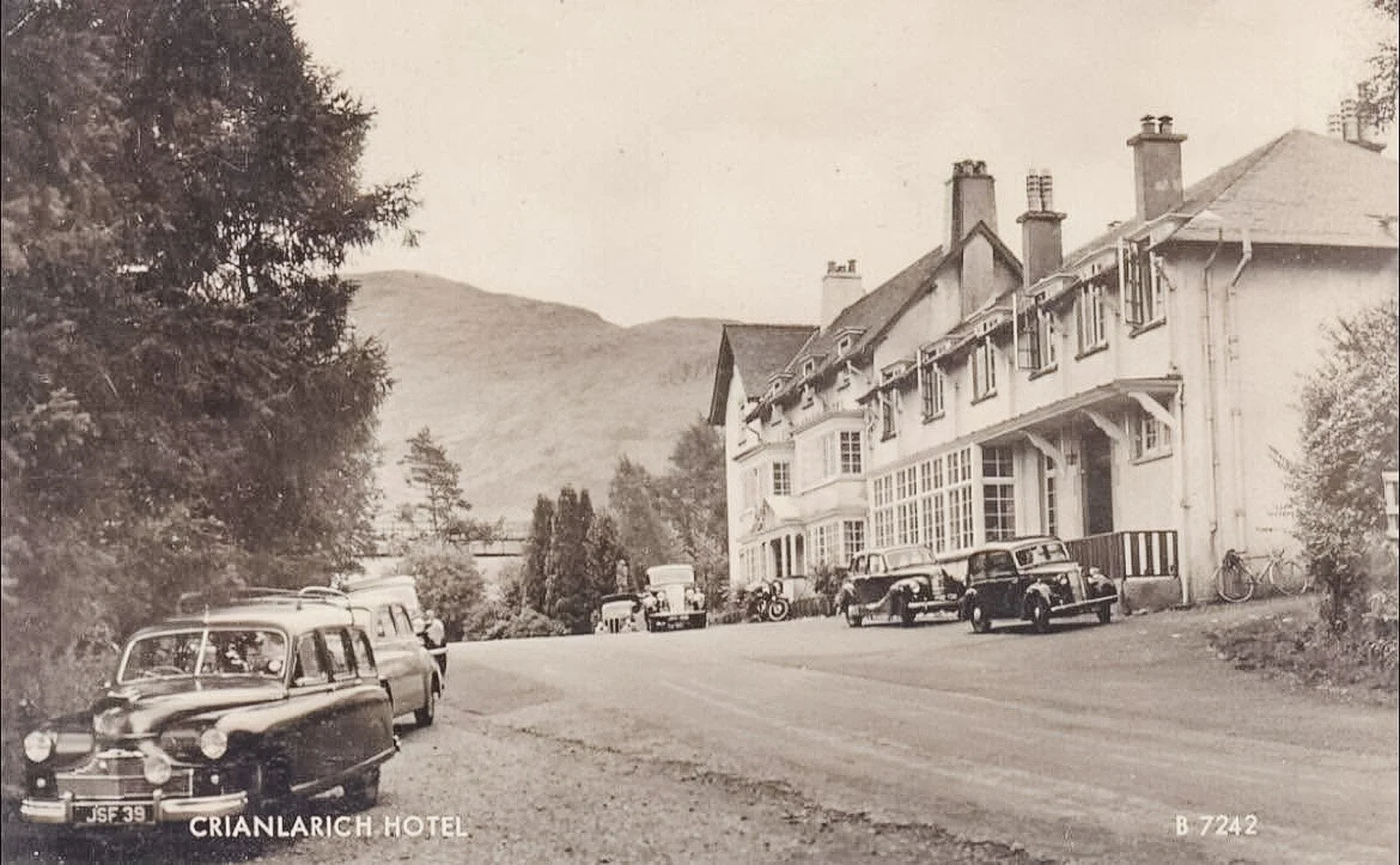
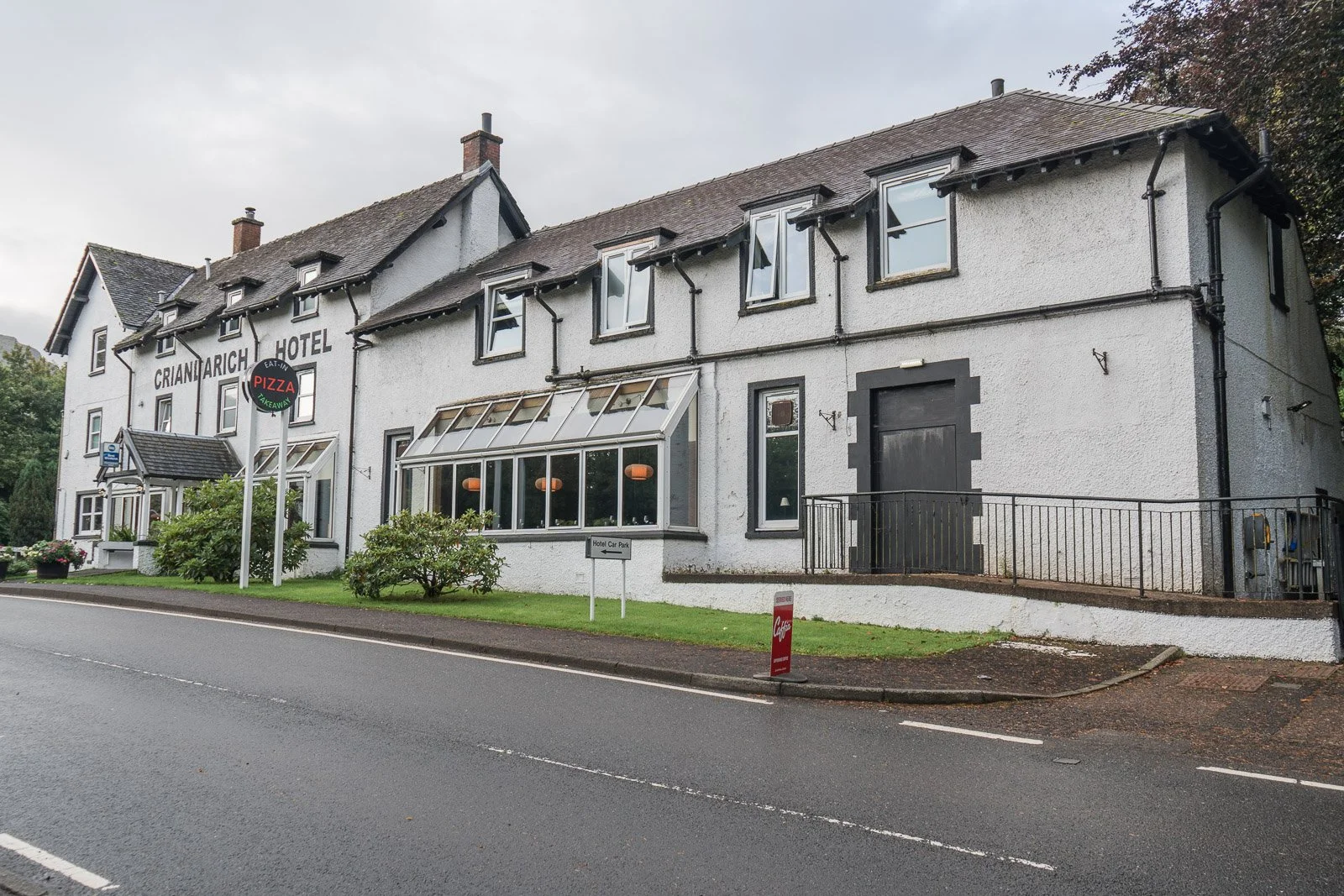
The Crianlarich Hotel grew from the village’s long importance as a meeting point between routes through Glen Falloch, Glen Dochart and Strathfillan. An earlier inn stood about 500 metres west of the present building, serving drovers, traders and other travellers.
The present hotel was established beside the newer main road before the arrival of the railways. Crianlarich’s first railway opened in 1873, followed by the West Highland Line in 1894. These connections transformed the hotel into a popular base for tourists, anglers and climbers. By 1910, it was promoting Crianlarich as the “Scottish Mountaineering Centre” and providing garages and petrol for early motorists.
The hotel was extended between the two world wars and again modernised during the growth of coach tourism in the late 20th century. It remains a prominent landmark at the meeting of the A82 and A85, continuing its historic role as a stopping place for travellers through the Highlands.
(Classic picture Callander Heritage, modern picture Paul Saunders)
Welcoming West Highland Way walkers
The West Highland Way opened in 1980, connecting Milngavie and Fort William. It passes through Tyndrum, with a spur path linking the route to Crianlarich.
Walkers needed somewhere to sleep, eat and buy supplies. People living along the route responded by opening their homes to guests and developing accommodation and other services.
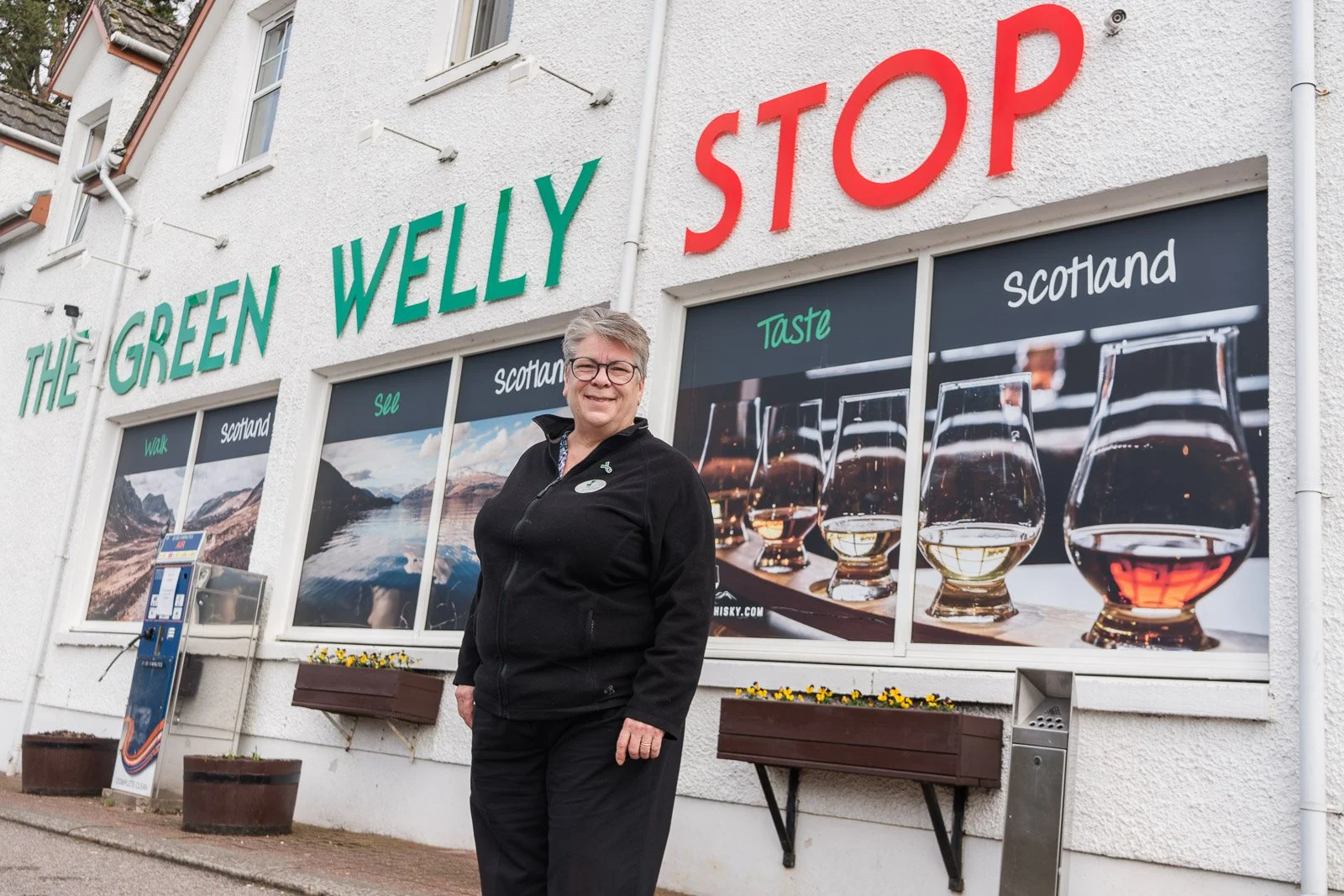
Fiona Robertson’s family had run the business that became The Green Welly Stop since 1965, starting with a post office, general store and petrol pump. She remembers her father recognising the opportunities brought by the walking route and developing the business to serve its users.
The family offered The Green Welly Stop for sale in August 2026, after Fiona’s interview, following more than six decades of ownership. (picture Paul Saunders)
-
But I think what’s been really good for the area was the opening up of the West Highland Way, in the early ’80s, which my father latched onto pretty quickly, and that was really the birth of the Green Welly Shop as it was in its original form. And it became a very popular, probably one of the first of its kind of an outdoor store in Scotland probably.
And that went from strength to strength, in particular with the West Highland Way walkers. And the accessibility to the countryside has been great. You get ultra marathons up the West Highland Way. You get people on mountain bikes up the West Highland Way. You’ve got all the up round here. You’ve got walkways in Tyndrum and Crianlarich, which is fantastic, and the cycle path, and everything, so many things have been community driven.
And the Strathfillan Community Trust have done a superb job over the years, of which my dad was actually in the trust for probably decades with John Riley. So yeah, lots of changes. So in the ’70s, ’80s, ‘90s, a lot of our trading here was coaches. That has switched now. It’s definitely more cars. We still get coaches, but the coaches are smaller. So instead of 53-seaters or maybe 35-seaters, mid-size minibuses.
And we get fourth-generation families coming in now, and they’ve been coming now in all these years and supporting us. So it’s been really good.
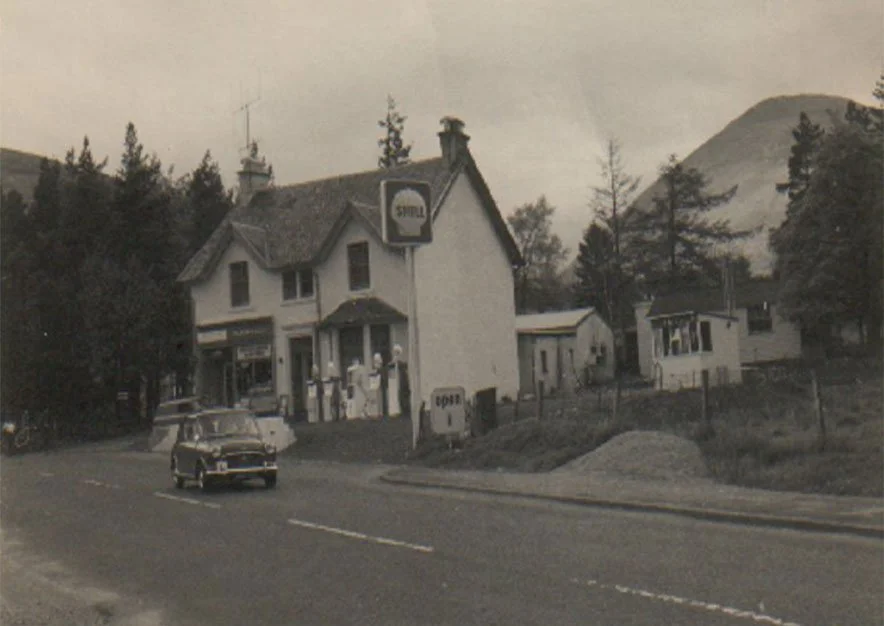
Green Welly Stop 1960s (Fiona Robertson)
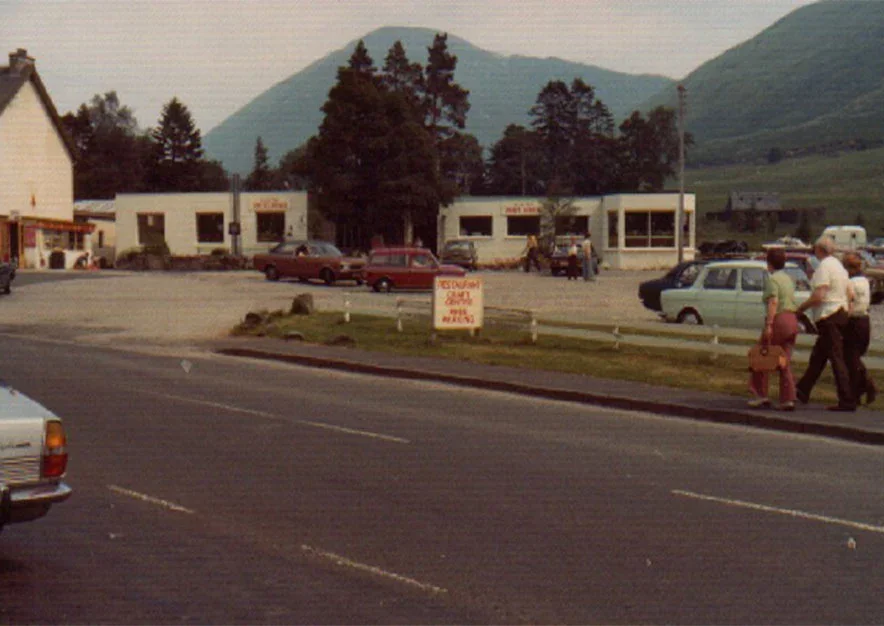
Green Welly Stop 1960s (Fiona Robertson)
Beds along the way
Rena Baillie moved to the area in 1988. Her home stood on a farm beside the West Highland Way, where she developed Strathfillan Wigwams. She recalls thirty years of welcoming walkers, including visitors who returned regularly.
-
We came to the area in 1988, so we've been here 35 years. My husband was interested in the type of land that's about here, after driving through the area. Then a farm manager's job came up for it, and we moved into a farm just outside of Tyndrum. We've been there for 32 years. He liked the hills because he worked with sheep and cattle farmland, farm animals.
I started a business there as well, which was extremely popular for 30 years. My daughter worked there as well when she was 14, so we gave her a job for a few years. It was on the West Highland Way. Our house was on the West Highland Way, so it was extremely busy there with all the walkers. It was really an absolute hub of the West Highland Way.
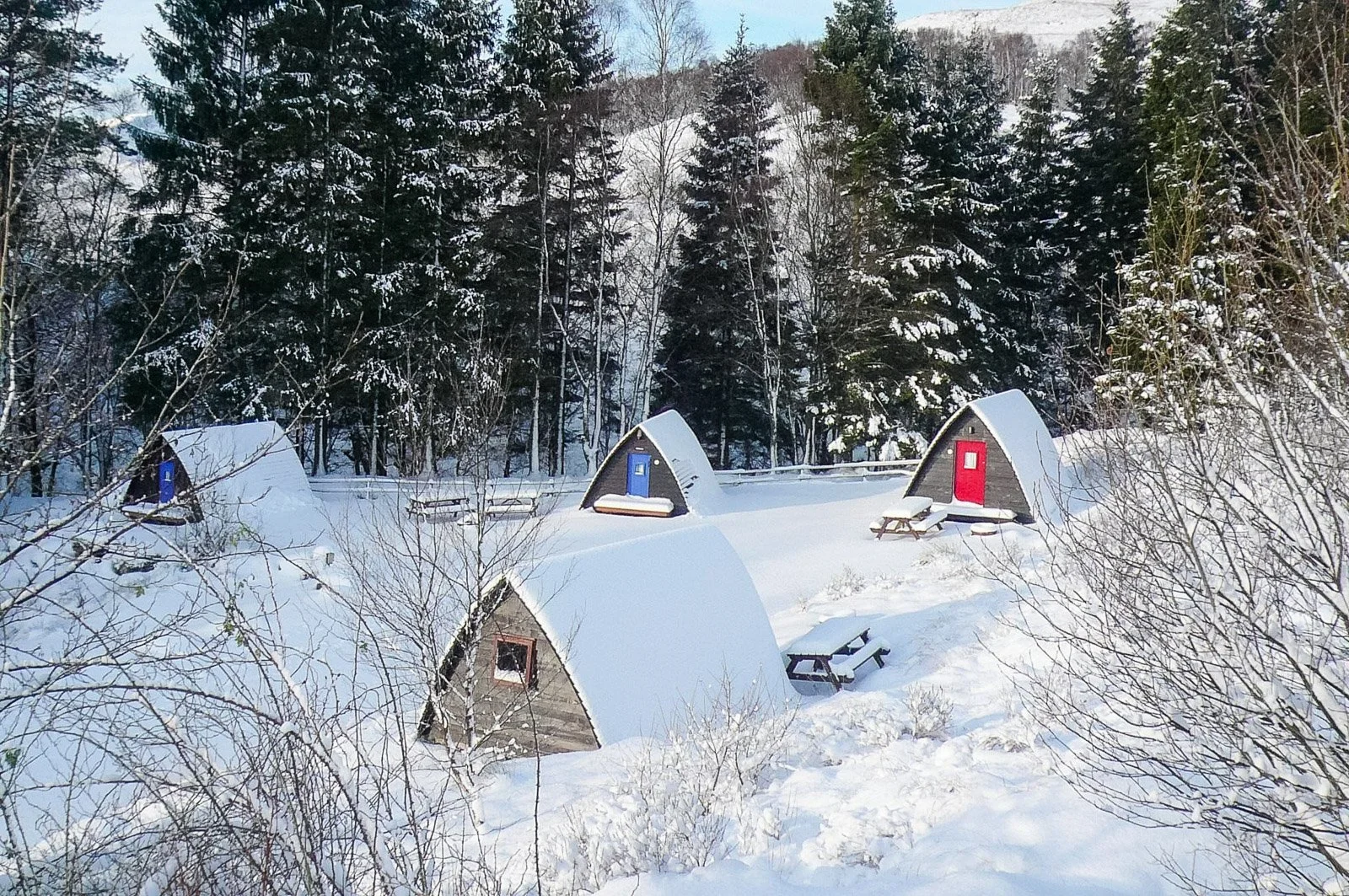
Strathfillan Wigwams (Rena Baillie)
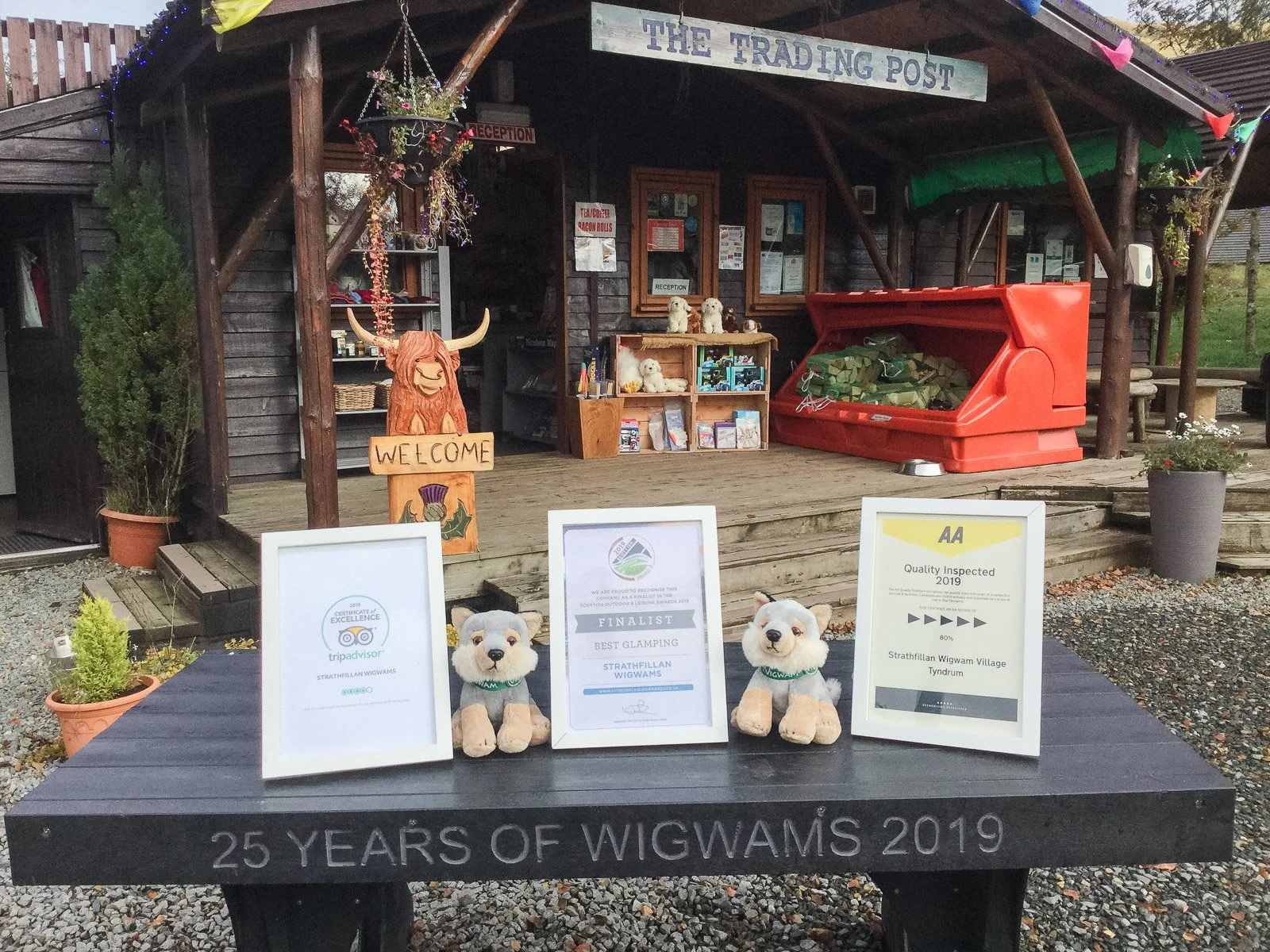
Strathfillan Wigwams (Rena Baillie)
Alec and Jeanette Buchan had farmed in Glen Falloch since 1974. After the route opened, Jeanette began providing bed and breakfast. Her account describes the growing number of walkers and the work of looking after them.
-
In about 1980 I think it was, we came in 72, 80, the West Highland Way opened up, you see, and Jeanette did Bed and Breakfast. I think it was 88 that opened up.
And did Bed and Breakfast, for walkers on the West Highland Way, and it now has multiplied tenfold since then.
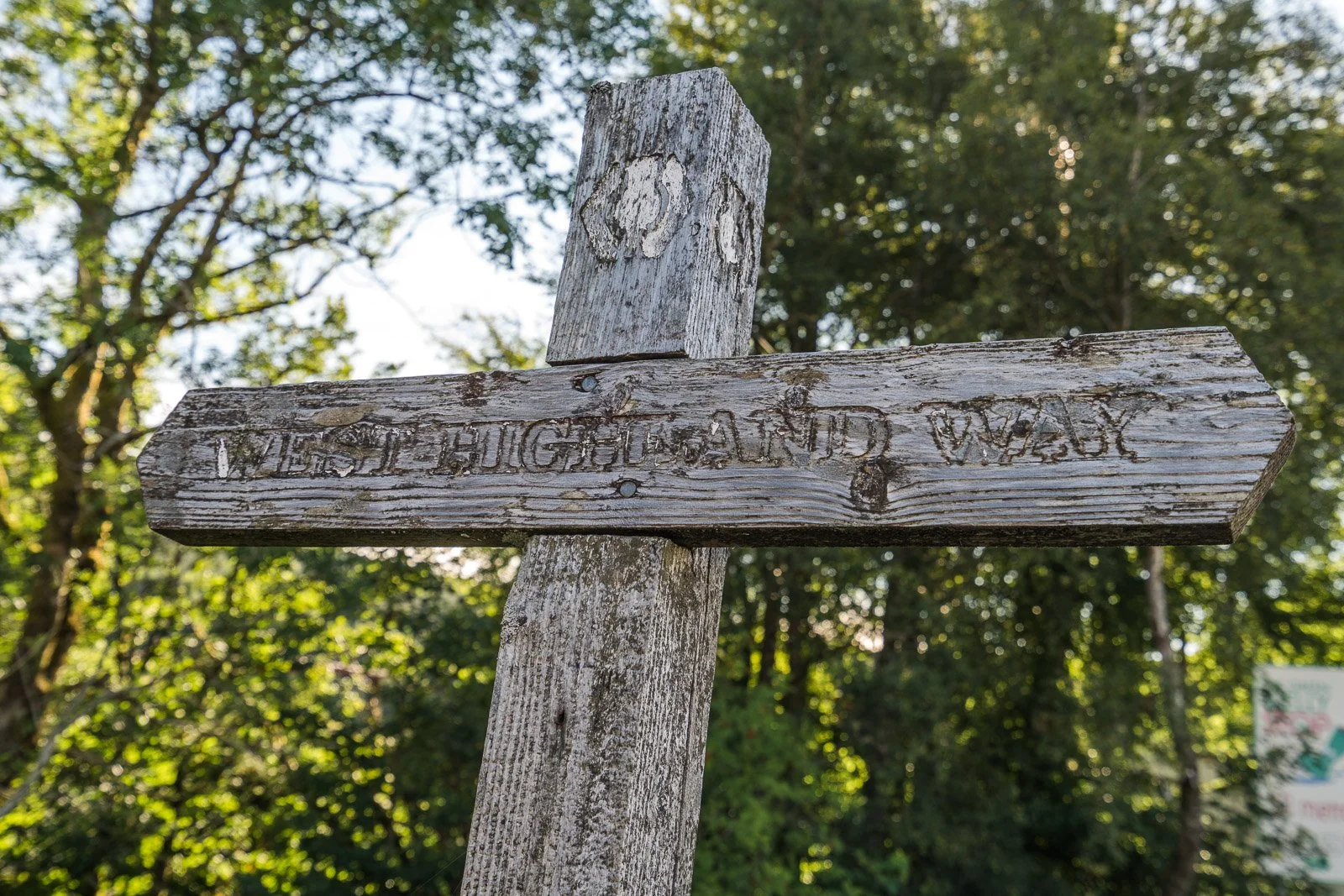
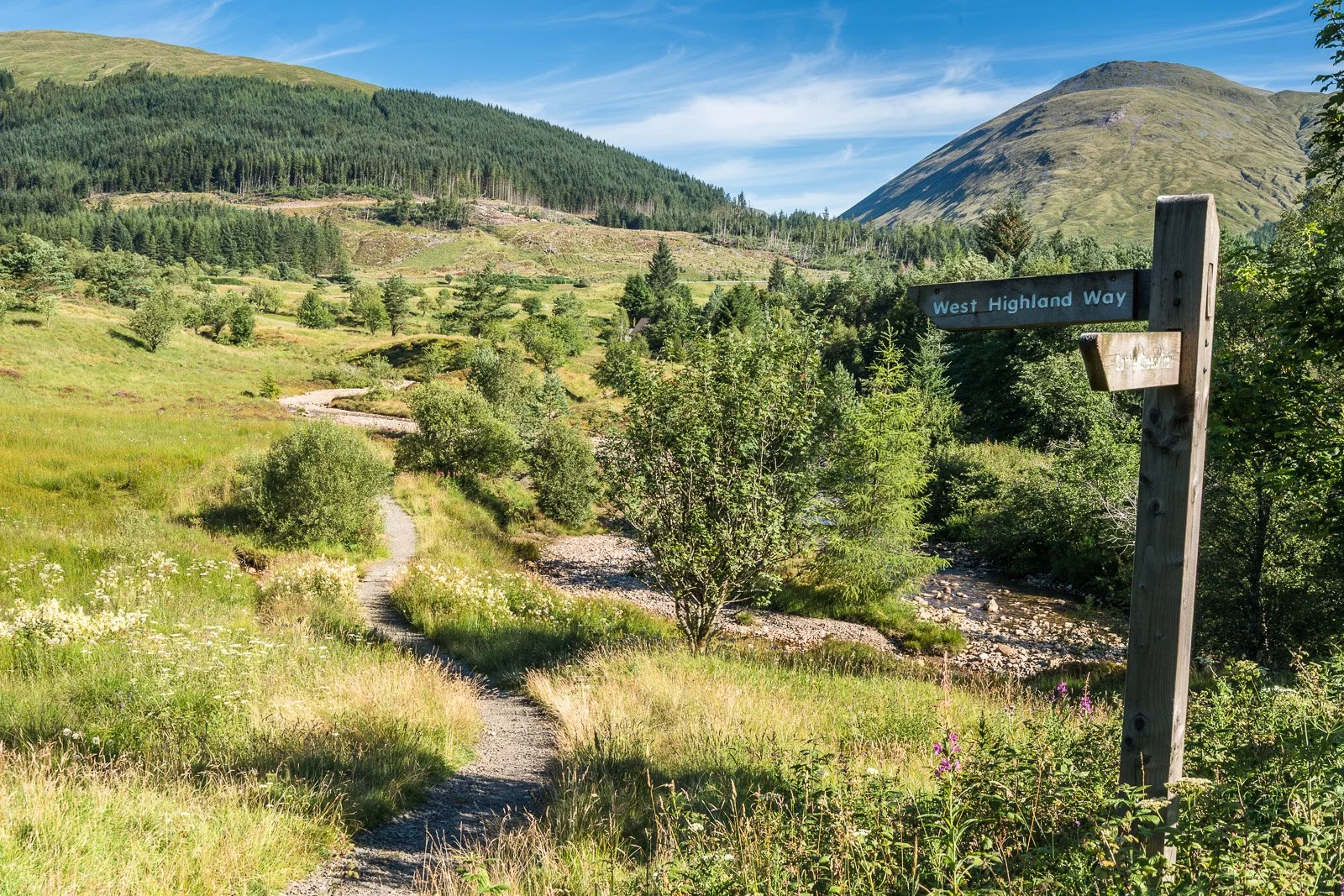
West Highland Way, Tyndrum (Paul Saunders)
Helping visitors explore
The cuttings featured here come from Tourism News, published for the local tourism industry by Argyll, the Isles, Loch Lomond, Stirling & Trossachs Tourist Board.
They record investment in visitor services around the turn of the millennium, including a new information centre at Tyndrum. Its purpose was to encourage people travelling through the village to stop and discover more of the surrounding area.
Plans for a new Tyndrum centre
“New Gateway Tourist Centre Gets Go-Ahead” announced planning approval for a centre beside the Little Chef on the A82.
The proposed building would contain visitor information and displays about local attractions and activities, with a car park and landscaping. The article reported a £570,000 funding package and an intended opening in August 1999.
Local tourism operator Ian Cleaver of Highland Heritage Coach Tours was providing the land. The Tourist Board expected the prominent roadside site to attract people who might otherwise pass through. →Read the Article
Opening to the public
“Tyndrum Leads the Way” reported that the centre had opened to visitors at the end of September 1999. The completed centre and car park cost £610,000.
Inside, a relief map and displays introduced the area’s geography, wildlife, attractions and activities. Information covered places from Loch Awe to Loch Tay.
The report announced weekend opening during winter, with full-time opening returning in April. →Read the Article
The formal opening and first results
The Summer 2000 edition of Tourism News reported that Deputy Minister for Tourism Alasdair Morrison had formally opened the centre in March.
“Tyndrum Success” recorded 6,186 visitor enquiries during April and May, compared with 2,748 in the same period the previous year. The Tourist Board credited the new building’s prominent position with attracting more people.
The article also acknowledged Ian Cleaver’s donation of land and contribution towards the access road, alongside support from the funding partners. →Read the Article
Closure in 2017
The centre later became part of VisitScotland’s information network. It closed in late 2017 during a wider reduction in the organisation’s staffed centres.
Local people subsequently explored acquiring the building for community use, including information and heritage displays and a meeting space. The proposal did not proceed.
Killin’s campaign to join the National Park
An October 2001 Tourism News article, “Support for Killin’s National Park Bid”, records a campaign to include Killin within the proposed Loch Lomond and The Trossachs National Park.
A petition bearing 300 signatures was submitted to the Scottish Executive’s Rural Development Committee. Supporters included Dr Sylvia Jackson MSP and Anne McGuire MP.
John McPherson, chairman of Killin Community Council, welcomed backing from elected representatives, other community councils, the Tourist Board and Stirling Council. Campaigners wanted the proposed boundary revised to include the village.
Killin was included when Loch Lomond and The Trossachs National Park was established in 2002. →Read the Article
(Cuttings kindly provided by James Fraser, former Chief Executive of Argyll, the Isles, Loch Lomond, Stirling & Trossachs Tourist Board)
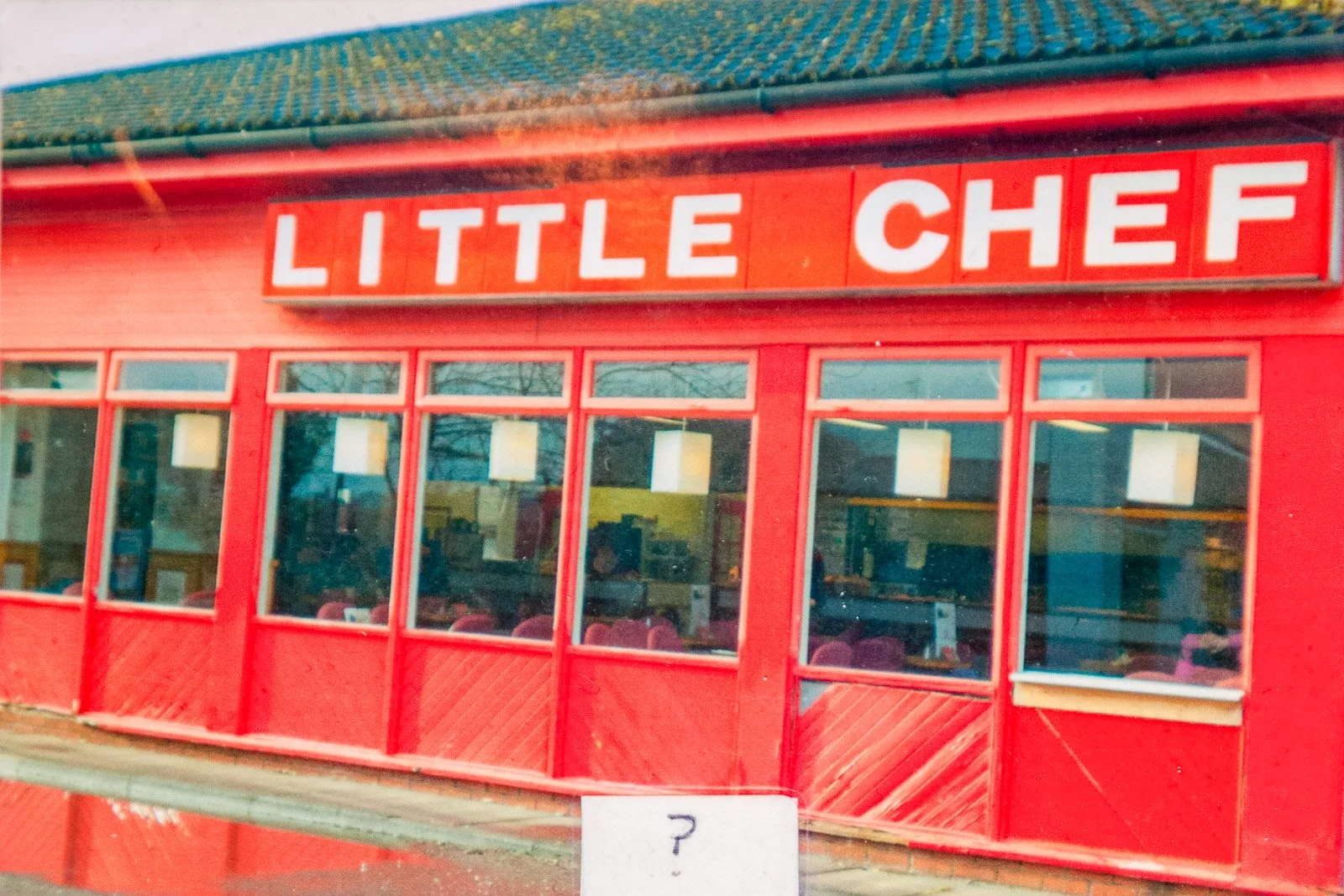
Little Chef before The Real Food Cafe (Sarah Heward)
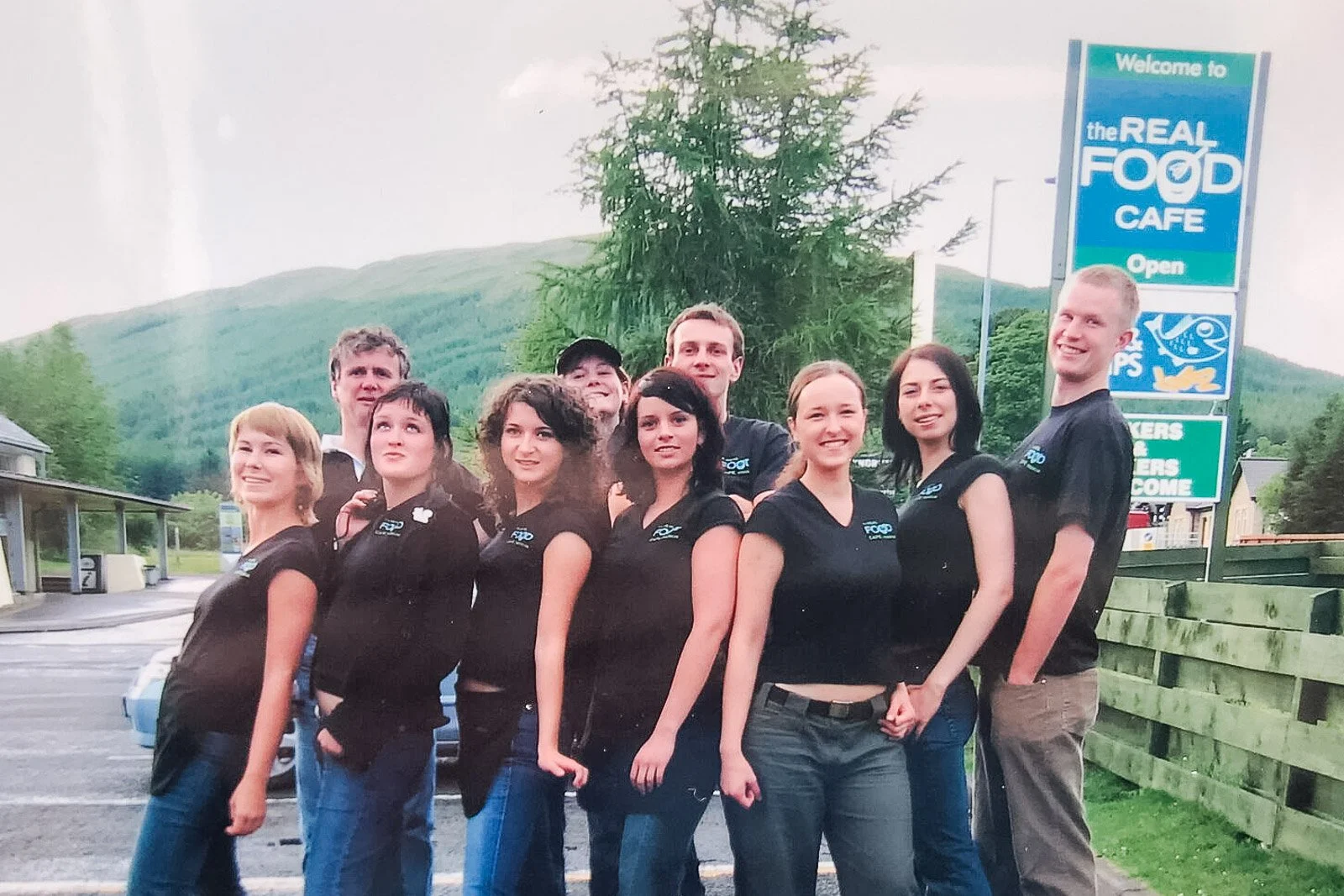
First team at The Real Food Cafe 2005 (Sarah Heward)
Work through the seasons
Catherine Macmillan remembers busy summers and opportunities for young people to work looking after visitors.
-
The thing about Crianlarich was even when I was a child it was always a busy stopover. The hotel was busy; The bed and breakfasts were all heaving out the door. Any local place, the shop, I worked in the shop when I was only twelve imagine? And then The Green Welly and all that employed all the young people. So, when people say were you not bored as a child because your school friends were in Callander, what did you do after school? — are you mad?
We worked all summer, that’s what we did. We were grateful for all the people and still are. I mean Crianlarich shop is absolutely chock-a-block with walkers — you see them every morning there, then again at four or five o’clock when they’ve finished their walk. It’s really really busy. We’re really grateful I don’t think anyone ever cursed them obviously the roads are so busy now and that’s the big thing.
You can’t stop that I mean years ago people use to come in a bus, there would be busses on the road. I worked at the Green Welly Stop when it was Goschen’s of Tyndrum at the time we could have twenty-six lunch coaches. Now you’re lucky to get one lunch coach because people don’t travel on busses. There is busses, but you don’t go on holiday in a bus.
Sarah Heward opened The Real Food Cafe in Tyndrum in 2005, on the site of a former Little Chef. She discusses the mix of walkers, road travellers and other visitors using the café, and the difference between summer trade and quieter winter months.
Her account describes the opportunities of running a business at a busy junction, alongside the practical demands of seasonal tourism.
-
It’s quite an extraordinary little place and it is in the middle of nowhere. It is remote; it is rural. In the winter, almost the tumbleweed blows down the road. But because it’s a junction, it’s got this kind of energy and life from all the people passing through.
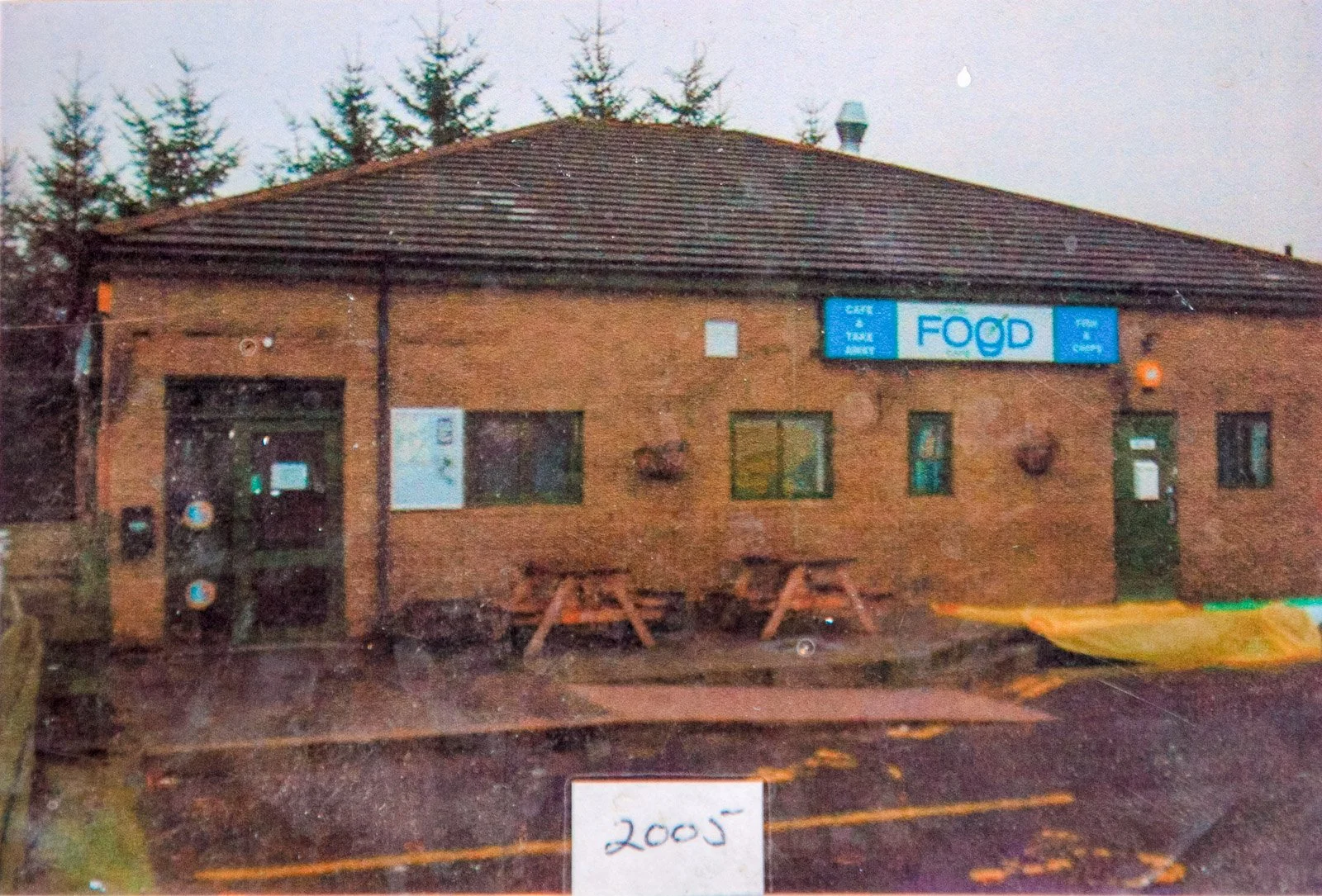
The Real Food Cafe 2005 (Sarah Heward)
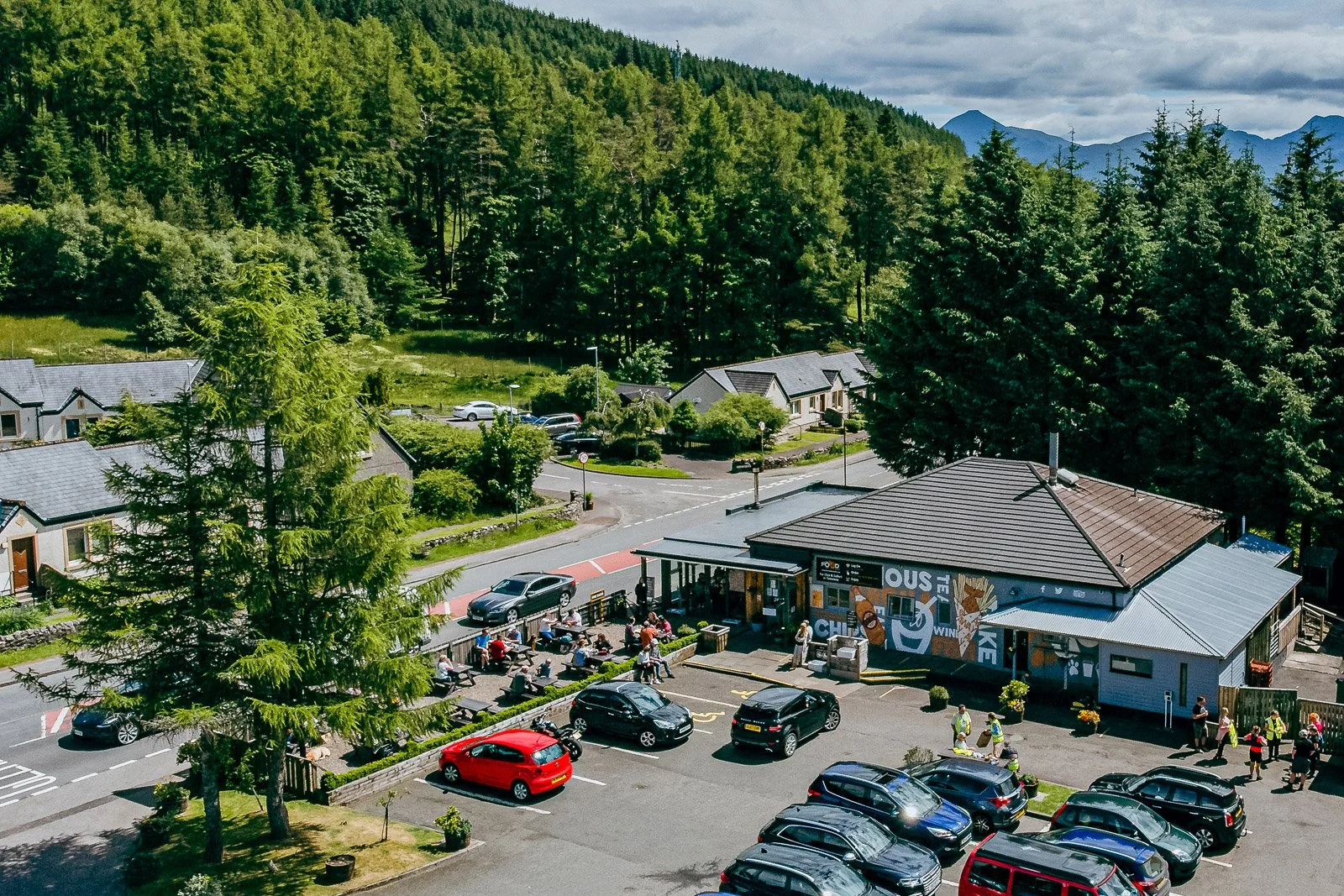
The Real Food Cafe 2021 (Sarah Heward)
Different ways to enjoy the outdoors
Diane Mailer moved to the area with plans for an outdoor education business aimed at people over fifty. She describes what she learned about her customers and how outdoor activities have changed.
-
Ironically, when we did come up, we came from Helensburgh, Jim and I, and I was working, like I said, in outdoor education. So, we did come up with a view to start our own business. So, we were going to specialise in outdoor education for the over 50s. I’m just laughing because that’s obviously me now.
At the time, looking at it from that point of view, mainly the type of people that were doing hillwalking or using the outdoors would be maybe a younger generation. It was out there, and there were a few dedicated hillwalking companies or cycling companies that would actually market for that sort of group, which at the time I thought was the older population of being 50.
But now, they were the people, and they still are, maybe the people with more time, more disposable income. And I think the outdoor industry, in some respects, has almost come full circle where they’re starting to talk about again the benefits of getting out into the hills. It’s good for your mental health, good for your fitness, that appreciation for the environment. That was already there 20, 30, 40 years ago, but I think it’s become more mainstream now, and more companies have jumped onto that.
So yeah, certainly the hills are much busier. On a good forecast day you’d have folks parking in all the lay-bys to go up Ben Lui or Ben Dorain, the Munro side of it is pretty popular.
But I think there is also that slight turn back to slow tourism where people are looking just to have some quality time, whether that’s forest bathing, wild swimming, just that shift away from the adventure side of it where the outdoors is not so much looked at as the domain of the young and the fit and the hillwalkers and the runners.
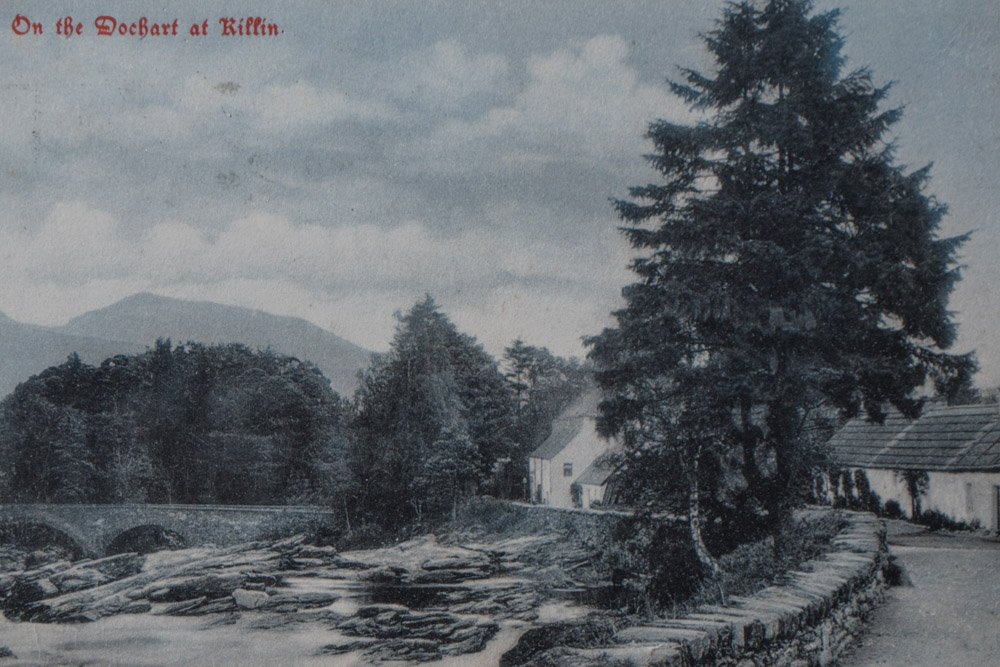
On the Dochart, Killin
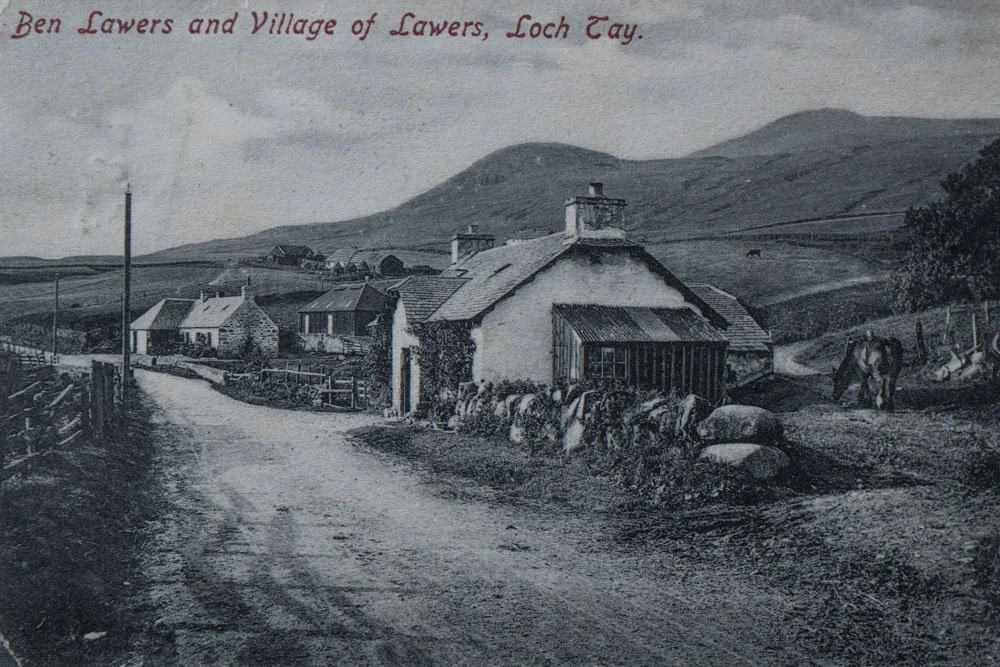
Ben Lawers, Loch Tay
Sarah Heward discusses the café’s connections with endurance events and the runners and cyclists who use it.
-
The West Highland Way is such good training. There are great races on it: the West Highland Way Race, the Highland Fling, the Devil o’ the Highlands all those three races take place on the West Highland Way. So, there’s an awful lot of people doing these, it’s a real, the café is a real centre for endurance sport — cycling, running, all sorts of stuff. We’re also the start and finish for the Highland Trail 550: which is 550 miles with 32,000 metres of climbing, off-road, unsupported, mountain biking. It’s free to enter but it’s massively oversubscribed they have to hire a tracker because obviously they’re all tracked; they go around the whole of Scotland with certain checkpoints. The prize if you finish — which often at least half of them don’t — is that you get free fish and chips.
The volume of footfall has a cost. Rebecca Turner moved to Crianlarich for the hills and knows the paths around the village well. She has watched certain routes deteriorate noticeably in the years she has lived here.
-
There's a lot more footfall on the hills, so either the ground gets really scarred up and the people are just kind of finding their way wherever, it's not too muddy, or like I think happened on Ben More not that long ago, is they get a company in to actually make a path that is hard standing.
I suppose again that's like a real trade-off because on the one hand it's the wildness of the hills which is fantastic, but nobody wants the land to get so scarred up. So I have noticed the path being, I mean even on going up Twistin Hill, which is, what's the name of that big house, on the outskirts anyway, on your way up to An Caisteal, that ground has got so torn up where it's quite wet and there have just been so many walkers, because you've got the big lay-by there, so it attracts a lot of people.
Even just in the time I've been here, the ground is so scarred, and then of course that makes it wetter, and then that makes it more scarred, and then people go alternative routes to avoid it, and that scars it up more.
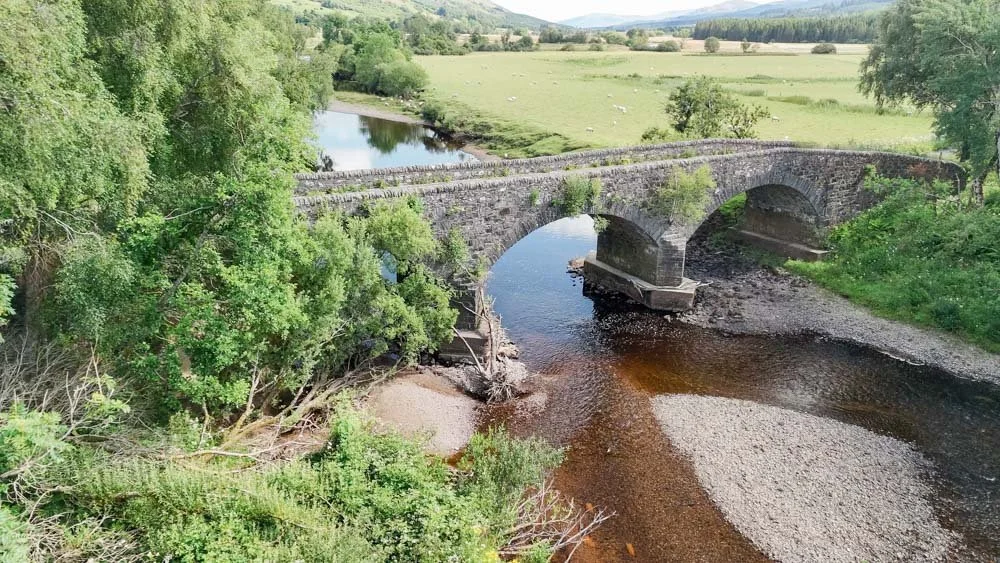
Emma Paterson manages Auchlyne Estate in Glen Dochart (pictured here), where several Munro’s sit at the boundaries of the ground. Walkers crossing the estate are a daily reality. Her approach has evolved, and in recent years she has begun opening parts of the land to off-grid camping. (Picture by Paul Saunders)
-
The Munro's that we have on the ground are sort of at the extremities of the ground and I think our next-door neighbours to the west, they have a lot more problems with hill walkers going up through their property because it's easier to get to the Munro's from there than it is from here. Occasionally we have run-ins with people but on the whole if you explain to them what we're trying to do and why we're doing it, on the whole most of them are understandable and appreciate, well I think they appreciate being told what we're trying to do.
We also, just in the last couple of years, allow people to go off-grid camping, so people with Land Rovers all done up with all sorts of gadgets and all the rest of it and we allow them to go up the hill road and camp and that's gone down very, very well. Because people are able to get away from campsites and lay-bys and that sort of thing and that seems to be very popular.
Old buildings, new uses
Not all of the change that tourism has brought is about numbers on a path. Some of it is about what happens to the buildings a community leaves behind. Diane Mailer and her husband converted the old church at Tyndrum, first into a self-catering property and then into a café space, finding a new use for a building that might otherwise have simply closed.
-
Initially the project was, we lived in the old manse. So that was a project in itself.
And then, my husband and I, Jim and I we converted the old coach house into a self-catering property. So that was sort of like another development
And then, having it been sat empty and we were using it for storage, and it was filling up, mainly Jim’s storage actually, lawnmowers and various things in the old church. We cleared that out and we converted that. So that took a couple of years to do.
So, we developed the building side of it as a sort of conversion. And we then created a sort of a café business from that.
So, I worked with another girl, and we created a partnership to do the actual café business. So, we ran that.
So probably sort of eight years or so we were running it quite successfully. And we were a small employer. And it ran, we opened all year, but it was quite a seasonal business. Obviously very busy in the summer with lots of 70% of the traffic would be coming through holiday traffic.
We like to think that we also were able to maintain the building. We spent a lot of time, a lot of money. We got the stained glass repaired. We kept it wind and watertight. We made improvements to the building.
There aren’t many sort of historical buildings in the area in terms of buildings that people can actually go and see. In the Strathfillan area, even if you go quite far out, there there’s no old country houses. There are not many old churches that you can actually go and see or spend time in.
So we felt it was actually, a contribution we wanted to make. So that was the drive We had that opportunity to sort of spend the time and sort of driver to preserve the building sort of thing. So the café side of it grew arms and legs
For Innes MacLellan, working in that same building means meeting people from across the world in a space that still surprises the people who walk into it.
-
There's such a variety of people that we get here, you know, you've got Aussies, you've got Americans, you've got Germans, you've got, yeah, every, you know, different language you can imagine through a whole summer. So it's really quite interesting, remarkable really, and a lot of them, well, provided that it's not too busy, you get to have a bit of a rapport with the customer.
They're always just amazed by the landscape, whether or not it's their first time here or not. Yeah, they just think it's absolutely beautiful around here, and I agree. They're just amazed at, well, obviously, I think they're shocked that there is a place like this, like a cafe, an old church renovated into a cafe, in such an area where there isn't actually an awful lot of other things around.
You know, it's like, oh my God, this is so out of the blue, why is this here? But obviously there is a community here, several communities, which people who maybe haven't been here before don't realise, but yeah, I think they're just amazed and they love it.
Welcoming people here
The stories on this page describe the work behind a visit: preparing rooms, serving meals, answering questions and maintaining places people use.
The archive cuttings record larger projects and campaigns, while the interviews show how local families and businesses responded to visitors’ needs. Together, they tell us how tourism has developed in Crianlarich, Tyndrum and Killin.
Thank you to everyone who shared their stories.