
A timeline of change
While the stories gathered for this website predominantly cover the last few hundred years, it is helpful to take in a larger timeframe to provide some context for the history of these communities.
1306: Battle of Dalrigh
Robert the Bruce was defeated by forces led by the MacDougalls at Dalrigh, near Tyndrum, but escaped capture. The place name, meaning “the king’s field”, recalls the battle and its association with Scotland’s Wars of Independence.
1318: Royal Support for St Fillan’s Church
Robert the Bruce made provision for a canon from Inchaffray Abbey to serve St Fillan’s church in Strathfillan. This royal support helped establish the medieval priory, whose ruins survive at Kirkton, near Tyndrum.
1694: Killin established as a Burgh of Barony
Killin became a burgh of barony under Sir John Campbell of Glenorchy, 1st Earl of Breadalbane, formalising its role as a local centre for trade. The Campbells of Breadalbane went on to influence the village’s development through their estates and patronage.
1727: First recorded schoolmaster in Killin
Mungo Malcolm was appointed by the Presbytery of Dunkeld, making him the first recorded schoolmaster in Killin. His appointment reflects the church’s role in providing and overseeing local education.
1741: Tyndrum lead mines opened
Sir Robert Clifton began working lead deposits in the hills above Tyndrum. Mining continued intermittently under different operators until 1926, leaving workings and waste heaps that remain visible in the landscape. 🎧Listen to a story
1760: Bridge of Dochart built
The Bridge of Dochart was built at Killin, spanning the river where it tumbles over rocky outcrops before entering Loch Tay. The bridge became one of the most photographed landmarks in the area and remains a defining image of Killin today.
1767: New Testament translated into Gaelic
The Killin minister James Stuart published the first translation of the New Testament into Scottish Gaelic, a landmark contribution to the language’s literary heritage. The work placed Killin at the centre of an unexpected moment in Gaelic scholarship.
1797: Parish School erected in Killin
A Parish School and schoolhouse were erected to the south of the village, providing formal education for the local community. The building marked a significant step in establishing permanent schooling across the area.
1 August 1873: Callander and Oban Railway arrives
The Callander and Oban Railway reached Crianlarich and Tyndrum, opening Crianlarich Lower station and transforming the area’s connectivity. Railway employment quickly became central to village life, with purpose-built housing constructed for workers and their families. 🎧Listen to a story
1869: John Paterson arrives at Kirkton Farm
John Paterson came from Ayrshire to take on the tenancy at Kirkton Farm in Strathfillan, going on to become one of the most celebrated hill sheep farmers in the area. The flock numbers he managed between 1869 and 1923 offer a remarkable record of Highland farming at its height. 🎧Listen to a story
1876: St Fillan’s Episcopal Church, Killin
The church was erected from prefabricated corrugated-iron sections, funded by the 7th Earl of Breadalbane. Its association with shooting parties earned it the informal name “The Grouse Chapel,” and it remains a distinctive example of Victorian iron church architecture.
1 April 1886: Killin Railway branch opens
The branch line connected Killin Junction with Killin village and the pier on Loch Tay, linking the railway with steamer services already operating on the loch. It made journeys easier for residents and visitors and supported the growing tourist trade. 🎧Listen to a story
7 August 1894: West Highland Railway opens
The West Highland Railway opened through Crianlarich and Tyndrum, creating Crianlarich Upper station and a second stop at Tyndrum. With two stations on different lines, Tyndrum became the smallest settlement in the United Kingdom served by two separate railway stations. 🎧Listen to a story
1901: Crianlarich Parish Church completed
Designed by architect Thomas Ross, the church served the parish for most of the twentieth century.
7 September 1901: Early motor vehicles pass through Crianlarich
Thirty-four cars passed through Crianlarich in each direction as part of a 115-mile motor trials course, one of the earliest records of motor vehicles in the area. The event offered a glimpse of the transport transformation that would reshape the Highlands in the decades to come.
1907: New Loch Tay steamer launched
The Queen of the Lake was built by Ailsa Shipbuilding and transported in sections for assembly on Loch Tay. It carried passengers between lochside communities until services ended at the outbreak of the Second World War in 1939. The vessel was laid up at Kenmore and broken up in 1950.
1916–1926: Tyndrum lead mines final working
The mines were worked for a final time by Tyndrum Lead and Zinc Mines Ltd, bringing to a close over a century of intermittent mineral extraction. Their environmental footprint remains visible in the landscape around Tyndrum to this day. 🎧Listen to a story
1922: Crianlarich War Memorial erected
The memorial, believed to be the work of sculptor Alexander Carrick, was erected to honour those from the area who lost their lives in the First World War. It stands as a reminder of the human cost of the conflict, even in the smallest rural communities.
1923: Killin Railway absorbed into LMS
The Killin branch railway was absorbed into the London, Midland and Scottish Railway during the national grouping of the railways. The branch continued to carry passengers, including local schoolchildren making the weekly journey to McLaren High School. 🎧Listen to a story
1935: McLaren Hall was built in Killin
Built through a bequest by Archibald McLaren of Ardeonaig, the McLaren Hall became the largest village hall in Perthshire, with a main hall capacity of four hundred. It provided a vital gathering and social space for the community for decades.
9 September 1939: Loch Tay pier station closes
Loch Tay station, serving the steamer pier near Killin, closed to passengers at the outbreak of the Second World War. Passenger trains continued to serve Killin village until 1965.
1941: Wartime air crash on Ben Lui
A plane struck Ben Lui during the war, and local shepherds went up the hill to recover the four victims — a quietly dramatic story of rural people responding to wartime tragedy. 🎧Listen to a story
1947–1948: Breadalbane Park and railway nationalisation
Breadalbane Park was leased to the people of Killin on a 999-year lease by the Earl of Breadalbane, securing a lasting community green space at the heart of the village. In the same period, Britain’s railways were nationalised under British Rail, ending the era of private railway operation.
1951–1961: Breadalbane Hydro-Electric Scheme
The North of Scotland Hydro-Electric Board constructed the Breadalbane scheme, linking reservoirs, tunnels and seven power stations. The development changed parts of the upland landscape and contributed to the expansion of electricity supplies across the Highlands.
1953: Crianlarich stations formally renamed
Crianlarich’s two stations were formally designated Upper and Lower, reflecting their positions on the two separate railway lines serving the village. By this point, the village’s identity was inseparable from its railways, with generations of families employed and housed by the two companies.🎧Listen to a story
October 1965: Green Welly Stop founded
The Gosden family opened a roadside business in Tyndrum, beginning with a post office, general store, and petrol station. Built on seasonal reinvestment and a strong family work ethic, it grew over decades into one of Scotland’s best-known travel stops.🎧Listen to a story
27 September 1965: Railway closures in the glen
A landslide in Glen Ogle brought services on the Callander to Crianlarich section of the Callander and Oban Railway to an early end, ahead of the planned closure on 1 November. Services to Crianlarich Lower, Killin Junction and the Killin branch also ceased, ending Killin’s rail connection. Trains continued to serve Crianlarich and Tyndrum via the West Highland line. 🎧Listen to a story
1960s: New school buildings in Crianlarich and Killin
New primary school buildings were constructed in both communities to replace ageing facilities. Killin’s new building included specialist rooms for science, domestic science, and physical education, reflecting the expanded ambitions for rural education in the postwar era.
19 January 1973: Ben More air crash
A BEA Viscount aircraft struck the summit of Ben More in difficult weather conditions, killing the captain and three crew members. The aircraft was on a routine test flight with no passengers aboard, and a granite memorial to those who died stands in Crianlarich village.
6 October 1980: West Highland Way opens
Lord Mansfield officially opened the West Highland Way, making it Scotland’s first designated long-distance walking route. Tyndrum lie on the route, with a spur path connecting Crianlarich. The growing popularity of the trail transformed the visitor economy of the area over the following decades.🎧Listen to a story
Mid-1980s: Gold discovered at Cononish
Mineral surveyors identified gold deposits at Cononish, near Tyndrum, and a 900-metre exploration adit was excavated between 1989 and 1991. For the farmer at Conanish Farm, the arrival of prospectors in 1983 came as a surprise, though gold traces in the river gravel had long been known locally. 🎧Listen to a story
1988: Upper Tyndrum station renamed
The station formerly known as Tyndrum Upper was renamed Upper Tyndrum, reflecting ongoing British Rail administration of the West Highland line. Despite the name change, the station’s role as one of two serving the tiny village remained unchanged.
1991: Village hall built in Crianlarich
Crianlarich’s new village hall replaced its predecessor on the same site, funded entirely by local community fundraising. 🎧Listen to a story
1992: Housing survey highlights local need
A community survey in Tyndrum and Crianlarich identified a significant lack of affordable housing as a pressing local concern. The findings foreshadowed a challenge that would remain largely unresolved in both communities over the decades to come.
15th July 1994: Breadalbane Folklore Centre opens in Killin
The Breadalbane Folklore Centre opened in Killin’s restored Old Mill. Displays explored Gaelic folklore, local clans and the story of St Fillan, with a tourist information centre on the ground floor.
1997: Strathfillan Community Development Trust established
The communities of Crianlarich and Tyndrum joined a Scottish Rural programme to develop a local regeneration strategy, establishing the Strathfillan Community Development Trust. The Trust went on to manage community assets, support local projects, and advocate for the long-term sustainability of Strathfillan.
2002: Loch Lomond and The Trossachs National Park established
The Scottish Government established the National Park, bringing Killin, Crianlarich, Tyndrum, and the Cononish mine site within its boundaries. The park brought new planning oversight and conservation priorities that would directly shape major decisions for the area in the years ahead.
2005: Real Food Cafe opens in Tyndrum
Founded by Sarah Heward with a team of six on the site of a former Little Chef, the Real Food Cafe quickly became known for quality Scottish produce and a commitment to local sourcing. It helped establish Tyndrum as a destination in its own right, rather than simply a passing stop. 🎧Listen to a story
December 2008: Timber loading ends at Crianlarich
The carriage of Scottish timber by rail ceased when the recession ended contracts at Crianlarich station sidings. The closure marked the end of one of the last regular freight operations on the West Highland line through Strathfillan.
2014: Breadalbane Park upgraded
Killin and Ardeonaig Trust undertook a major upgrade of Breadalbane Park, covering drainage, hard standing, path networks, and children’s play equipment. The work improved a space that had been at the heart of community life in Killin since the 1940s.
December 2014: A82 Crianlarich bypass opens
A new 1.3km two-lane carriageway opened to the west of Crianlarich, allowing through traffic on the A82 to bypass the village centre and its low railway bridges. The road relieved congestion that had long been a source of frustration for residents and visitors alike.
August 2016: First gold produced at Cononish
A bulk processing trial produced gold from ore stockpiled during the 1980s exploration work, and the first commercially produced Scottish gold ounce was sold for £21,000 at auction in Edinburgh. The milestone marked the first tangible return from decades of planning and investment at the mine. 🎧Listen to a story
February 2018: Full planning permission granted for Cononish mine
Permission was granted for underground mining operations with a projected mine life of up to seventeen years. The approval came after a contentious earlier application had been refused by the National Park on environmental grounds.🎧Listen to a story
November 2020: Scotland’s first commercial gold mine begins production
Scotgold poured its first gold from underground operations at Cononish, making it Scotland’s first commercial gold mine. The milestone arrived decades after initial prospecting in the 1980s and years of planning disputes that had divided community opinion.
2022: Gold production at Cononish trebles
Annual production exceeded 8,500 ounces, with over 1,000 tonnes of gold concentrate sold for approximately £12 million. The mine employed around 60 people, many housed locally, and community benefit payments provided a new income stream for the area.
November 2023 — Scotgold Resources goes into administration
The company entered administration after failing to secure new investment, with the majority of its 80-strong workforce on unpaid leave since September. The closure raised serious questions about the long-term future of the mine and the community benefits it had promised.
December 2023: Heritage funding awarded for Wild Strathfillan
The National Lottery Heritage Fund awarded £249,502 to Loch Lomond and The Trossachs Countryside Trust for The People & Nature of Wild Strathfillan. The project forms part of the wider work connecting people with the area’s natural and cultural heritage.
March 2025: New ownership for Cononish mine
South African firm Acrux Sorting Technology acquired an 80% stake in SGZ Cononish, under the new company name Glen Lyon. The acquisition offered renewed hope for a mine that had become central to the area’s economic story.
May 2025: Changing Places Toilet opens at The Green Welly Stop
A Changing Places toilet opened at The Green Welly Stop following a campaign involving Sarah Heward and the Tyndrum Infrastructure Group. Supported by the UK Shared Prosperity Fund and other funding, it improved facilities for people who need more space and equipment than a standard accessible toilet provides.
August 2026: The Green Welly Stop is offered for Sale
After six decades of ownership by the same family, the iconic business, a landmark for many on the A82, goes up for sale.
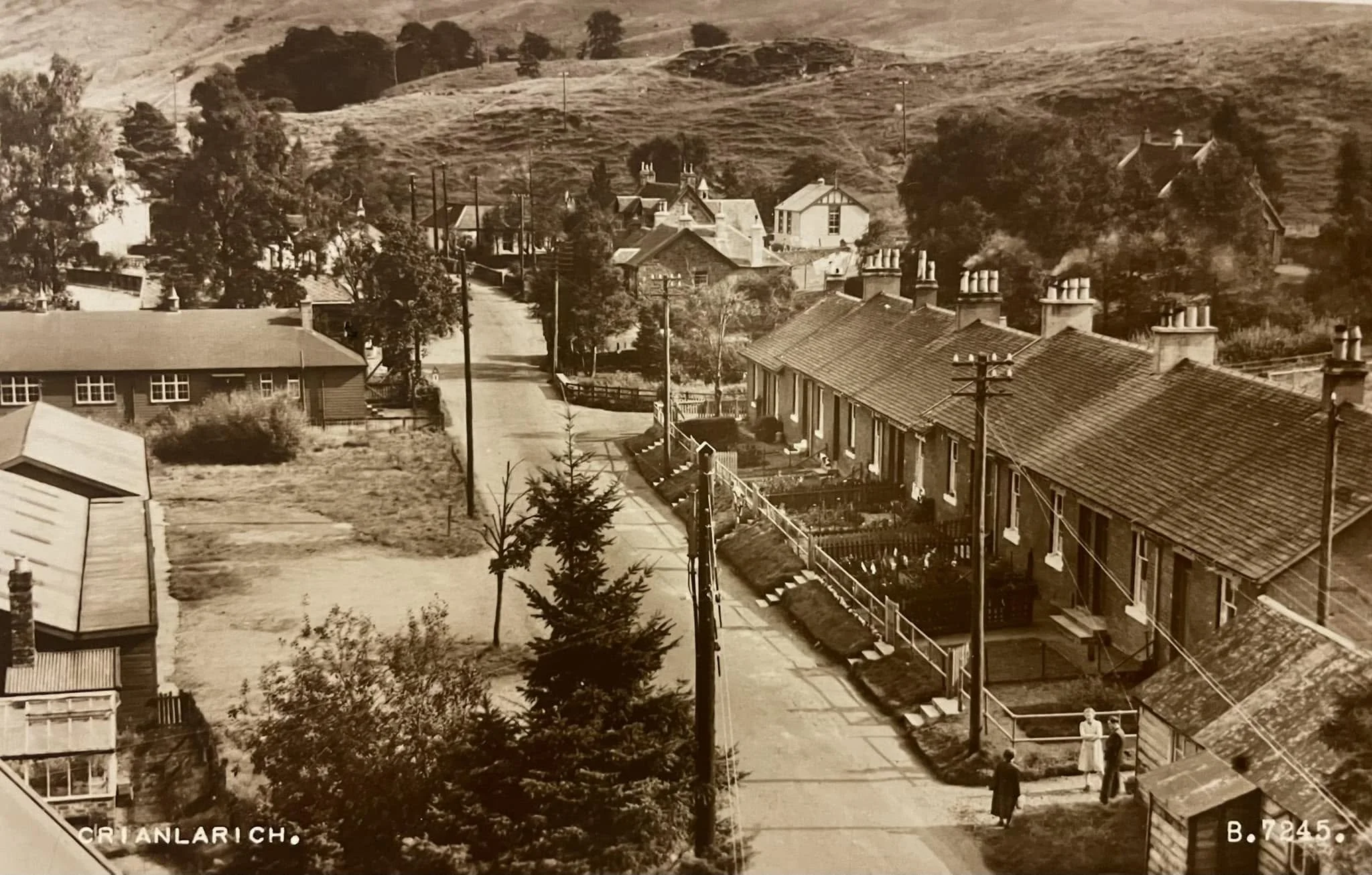
Crianlarich 1957 (Callander Heritage)
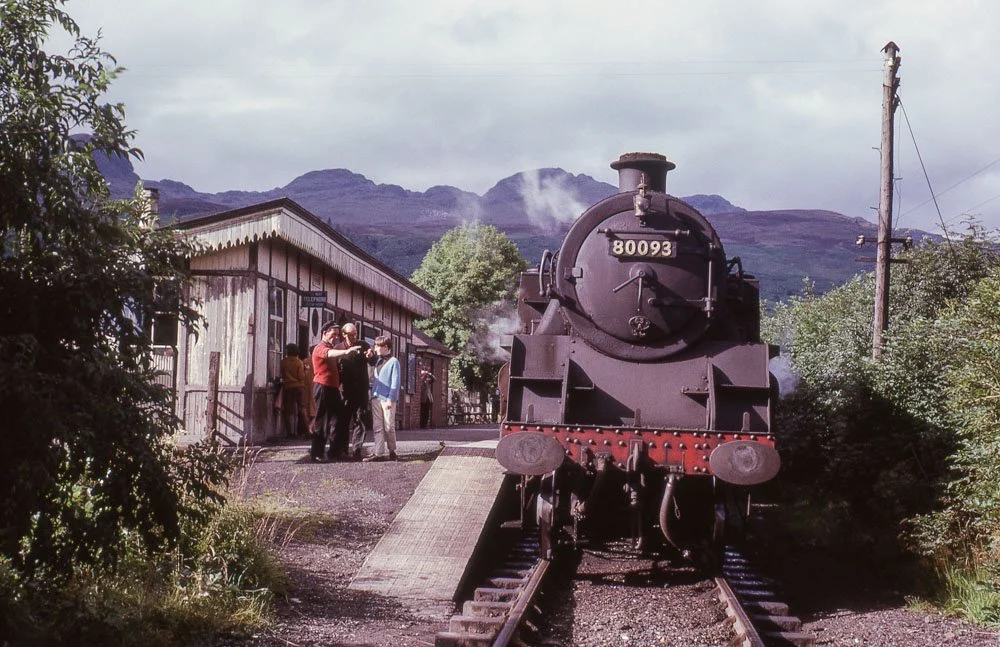
Killin Junction (The Transport Library)
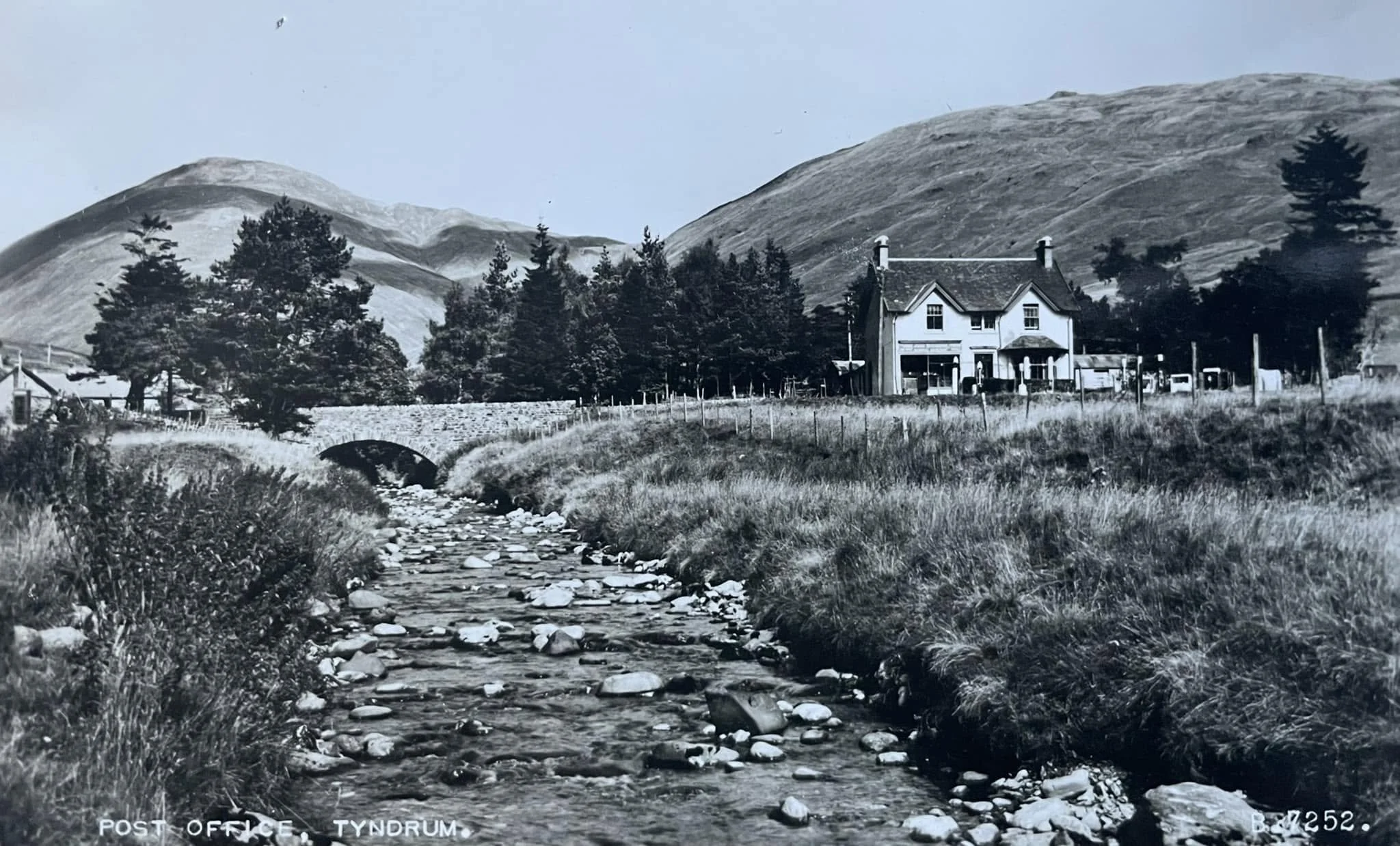
Tyndrum Post Office (Callander Heritage)