
Forestry stories
Commercial forestry changed the hillsides around Strathfillan and Glen Dochart during the twentieth century. Residents remember working farms giving way to plantations, changes in local employment and the effects they observed on familiar burns, hills and wildlife.
These stories bring together farmers, forestry workers and people who live and walk here. Alongside their memories, research into the area’s deeper past reveals how woodland, peatland, heath and grazing have changed over thousands of years.
What the peat revealed
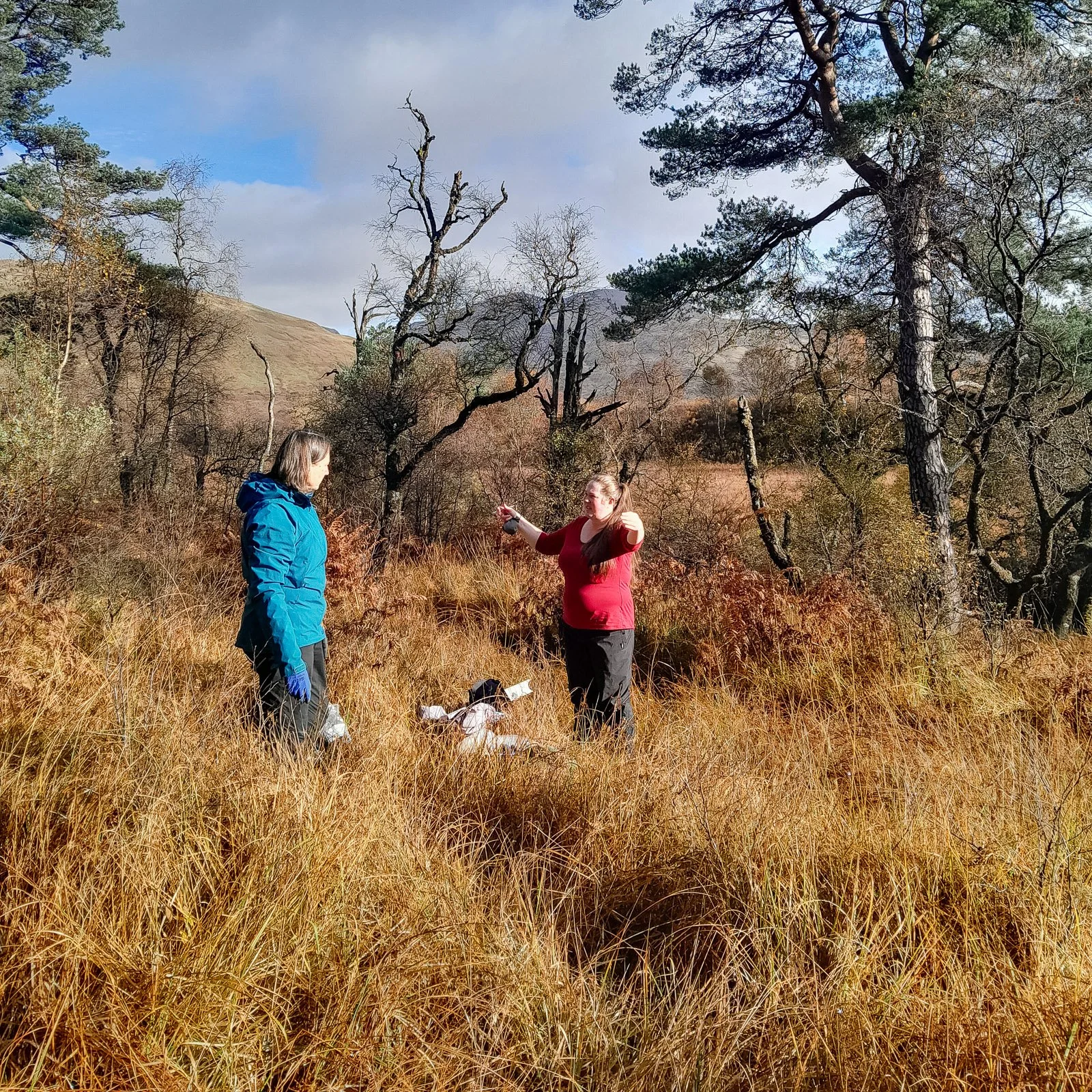
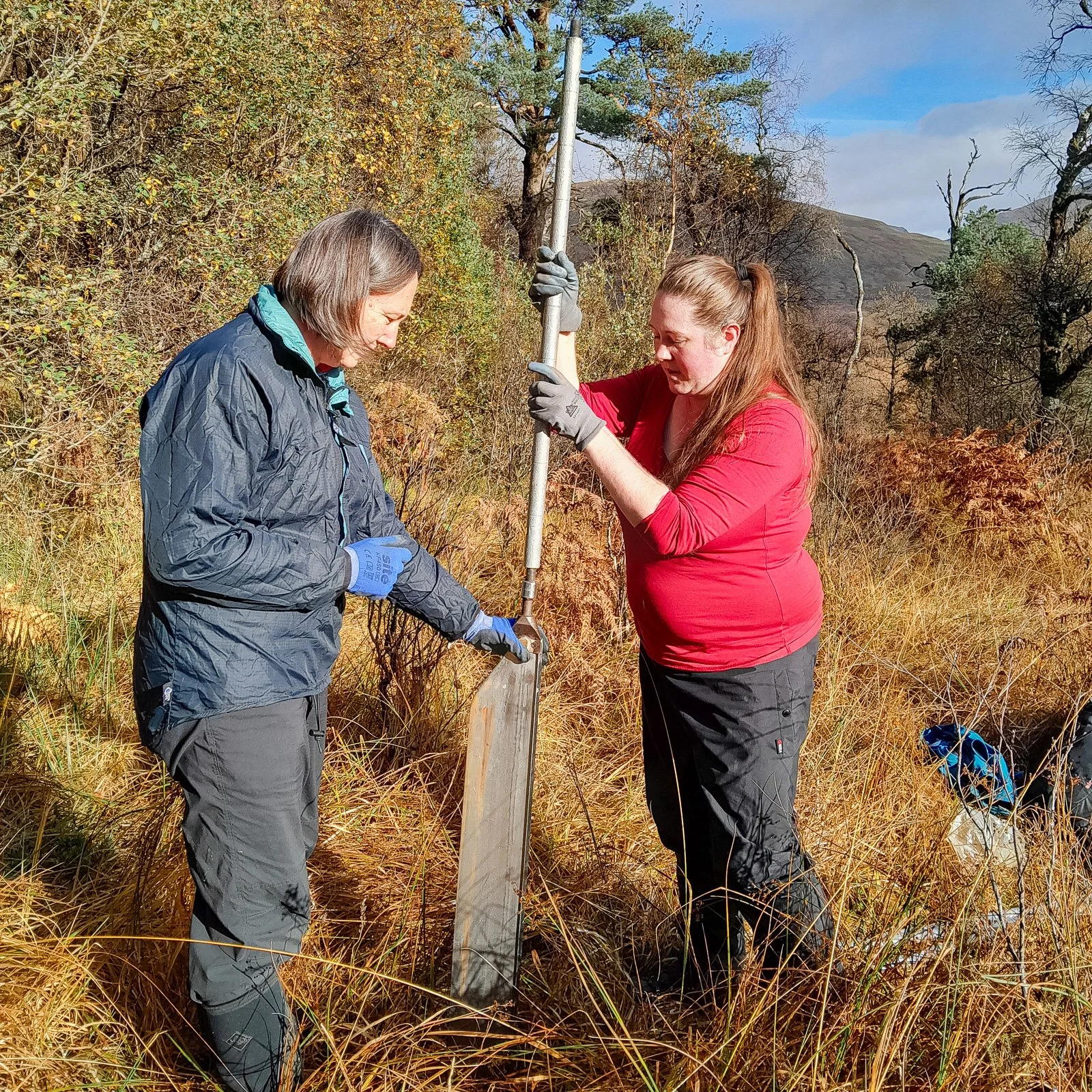
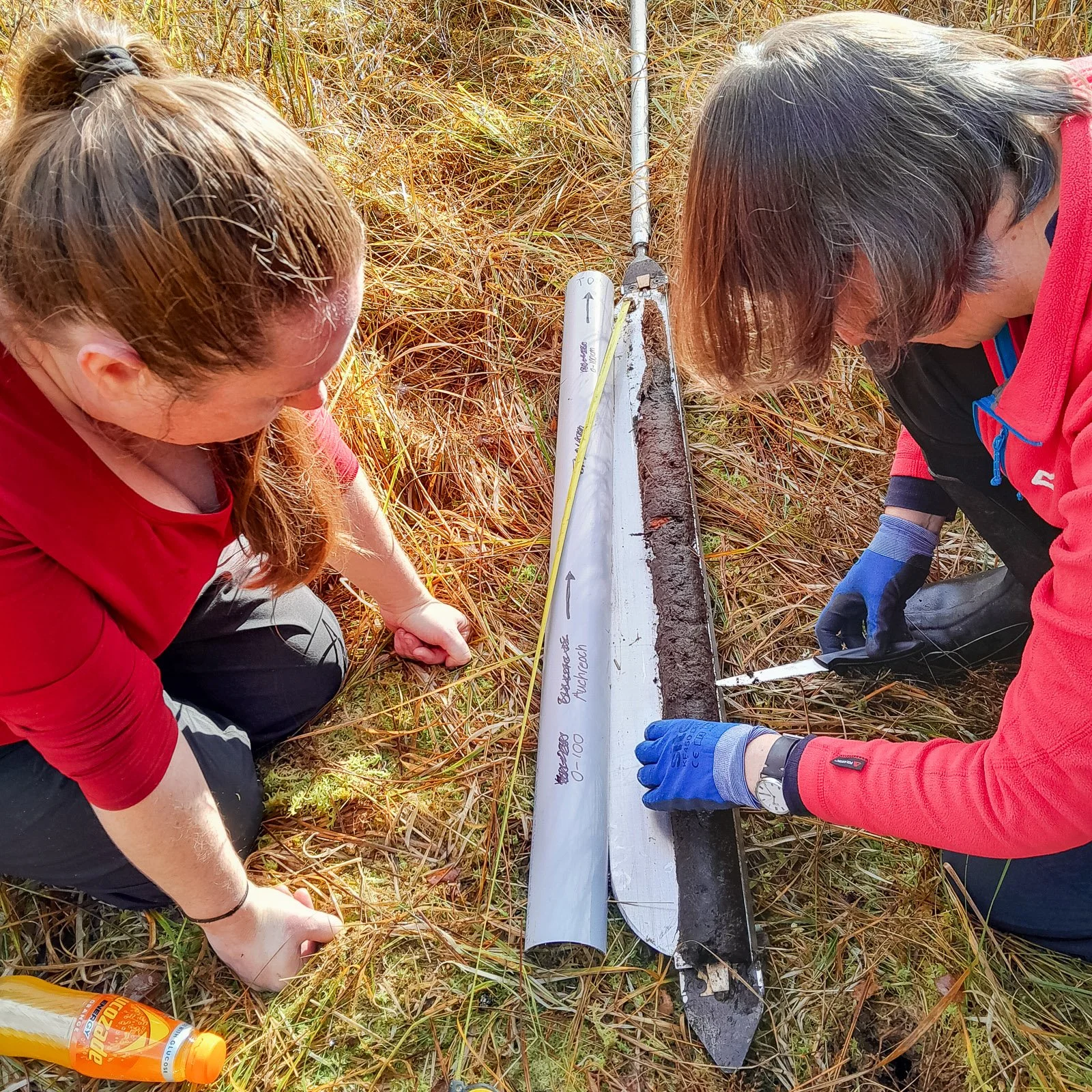
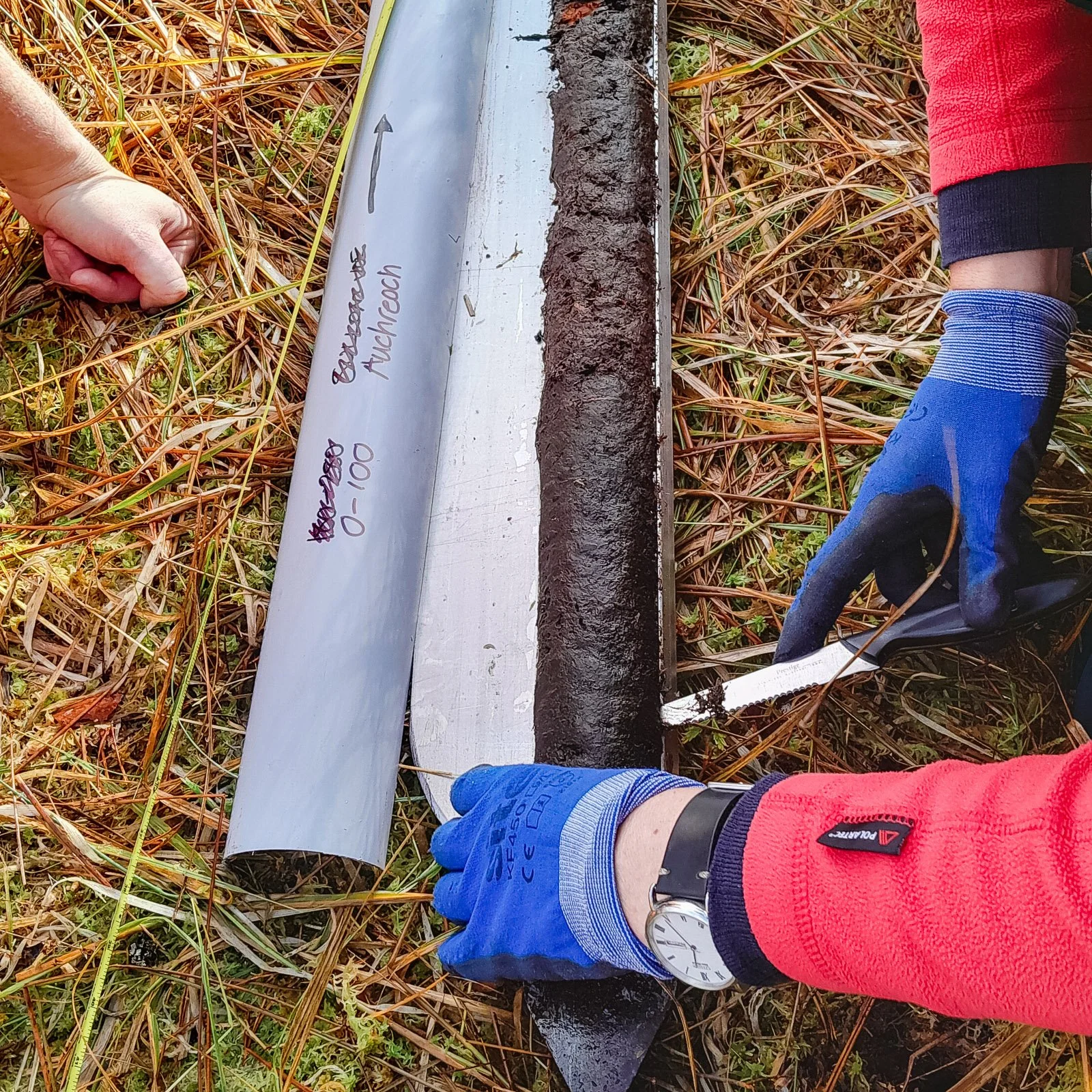
In October 2025, Kirsty Brown collected a two-metre peat core near Tyndrum for her honours dissertation in Ecology and Conservation at the University of Stirling.
Pollen and other microscopic remains preserved in the peat provided a record of around 4,500 years of vegetation and land use. They revealed how woodland, peatland, heath and grazing had changed over time, long before the farms and forestry plantations remembered by the people interviewed for Stories of the Land.
“Understanding how this landscape has changed over thousands of years gives us a much stronger foundation for deciding how to care for it in the future. Sharing this history can help people see themselves as part of the landscape’s continuing story and strengthen their investment in what happens next.”
Discover Forestry Stories
Dick Steven arrived in the glen in the late 1950s just as the hill started to change
John Holland explains how Kirkton Farm, near Tyndrum was nearly covered in trees
With the arrival of the forests, John Burton noticed changes to the burns on his farm
Billy Ronald reflects on the change of the land above Crianlarich during his lifetime
Rebecca Turner has also seen the effect on the land whilst walking in the hills
Jamie Elliot describes the impact on employment with the introduction of forestry machines
John Holland and Diane Mailer look to the future with a lighter touch to environmental management
What the land looked like before
Dick Steven arrived in the glen in 1958. At that point, the farms were still running, the neighbouring system still working, and the hillsides still carried the sheep that had grazed them for two centuries. Within a few years, the picture would begin to change.
-
Well I came here first in '58, and if you took Strathfillan alone, if you took it from, Loch Dochart up to Tyndrum, then I think there'd be— there'd be about 12 or 15 farms.
And they were all quite active, good working farms with all employed 2, 3, 4 people. You know, each one.
And of course, big numbers of sheep, but they've dwindled, obviously, and I think now you can count on there's about 3 farms that are really what you say worthwhile units now, and the sheep have gone off.
That started about 1963, '64. I remember the forestry— if you want to put it this way— were to blame for the sheep going off initially, you know, they started planting, and I think the first one in this district was Portnellan—no, Inverardran, and shortly after Portnellan. And that was about '63, '64, they got planted.
And then gradually more farms got planted.
John Burton farmed at Cononish for all of his adult life. He describes a time when farming was a community business, when neighbouring farms gathered together and helped each other, and when the system worked.
-
Sheep came from the Borders. Now, the Borders north of England and Wales had sheep farms on hills, you know, long, long before that. But the Highlands really hadn't been captured by sheep, and unfortunately, of course, there was a lot of people who downed the little crofts and things to make way for the sheep, because the tenancies were worth a lot more money to the landlords, which was a bit sad.
Now, sheep was a very successful business, really, and it was a very good community business, because each farm helped each other.
So when they were gathering in the sheep, the neighbouring farms congregated together. So you'd have a team of six or eight people to gather in the sheep. And then the next time it was somebody else's turn, and it was done in rotation. It worked very well. I mean, the costs were really nil as far as the bank was concerned.
You know, the only cost would have been the men and any odd ladies had to be fed, and of course they would get a wee dram or a pint of beer, or whatever it was as well. And that worked really well up till about the early '70s.
And then there was a very large farming group called the Ben Challum Company, who decided to sell part of an estate, which was the one at this end, which included Arrivain farm, Tyndrum Hill, Auchtertyre and Kirkton.
And Auchtertyre and Kirkton were two very good farms. Arrivain was a big farm, maybe not so good, but it was very extensive. And that was all sold to the Forestry Commission.
So there was a huge change, and at that time it rather broke up the neighbouring system. So it was more of a struggle to get men to come and, you know, gather in your sheep.
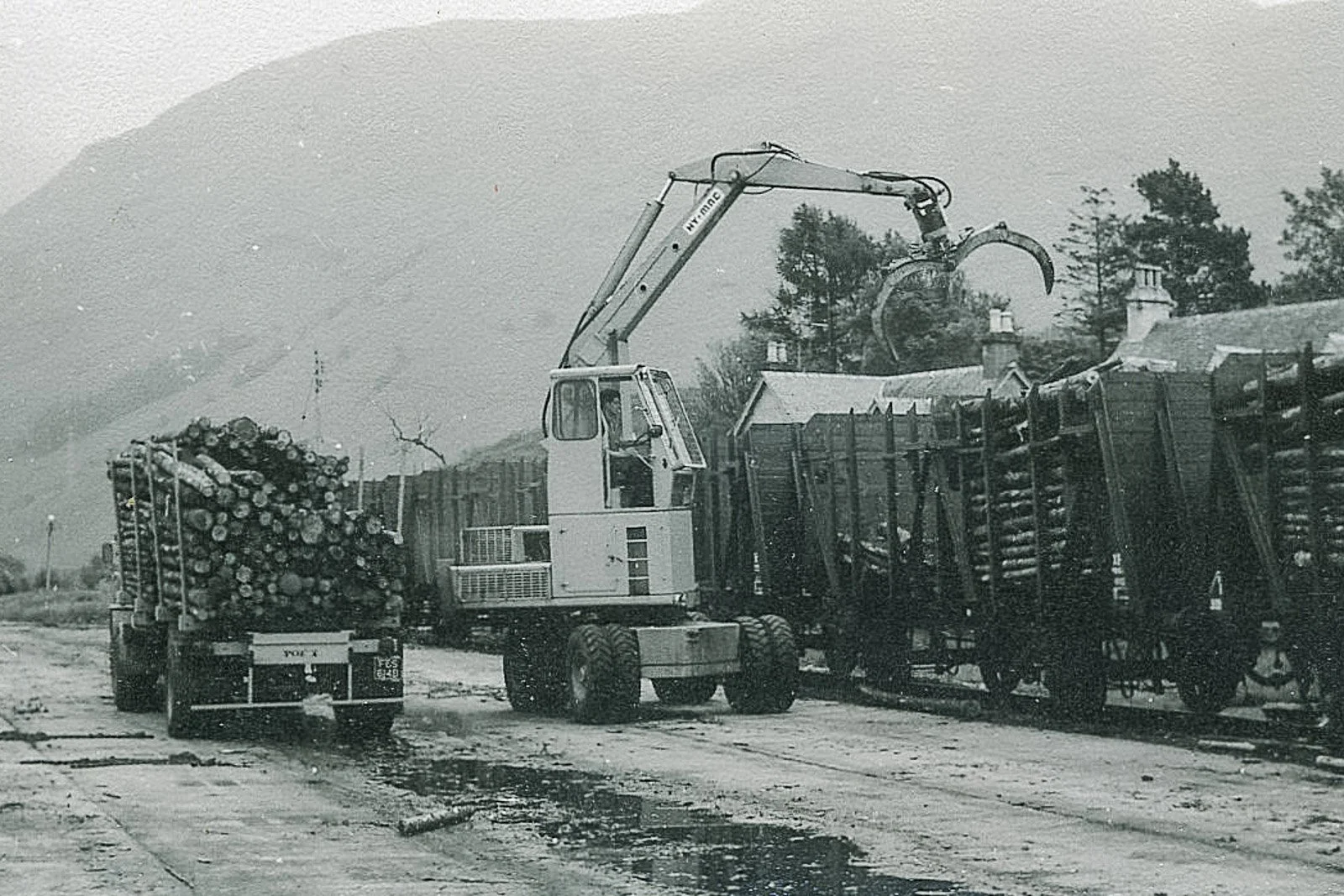
Timber loading at Crianlarich Lower - June 1966 (Graham Maxtone)
The Forestry Commission arrives
The land at Kirkton and Auchtertyre, now home to the SRUC Hill and Mountain Research Centre, was bought by the government in the 1960s with the intention of covering it in trees. John Holland, who has worked there for more than thirty years, explains how it came to be saved from that fate.
-
at the plan was to cover it in trees. So, it was going to be forestry. And so, part of the farm was planted. So, the big block of Sitka spruce above Tyndrum, above the railway, was planted.
But the West of Scotland Agricultural College was looking for a hill farm for research and demonstration purposes. And because this was such a renowned hill sheep farm, they asked the Scottish government whether there was an opportunity for them to lease it. And luckily, in terms of it's not covered in Sitka spruce, the Scottish government gave the lease to the West of Scotland Agricultural College. So, the college has been here in various forms, West of Scotland Agricultural College, Scottish Agricultural College and now Scotland's Rural College since 1969.
What Sitka spruce did to the land
The tree the Forestry Commission planted across these hillsides was Sitka spruce. It grew fast, which was the point. What it did to the soil, the water, and the wildlife was a different matter. John Burton watched the burns on his farm change.
-
It wasn’t very long before the Forestry Commission staff to come in with huge machinery and ditching and draining and, you know, all the things they shouldn't have done, according to nature, system nowadays.
Yeah, and land a lot of things missing.
You know, there must have been a lot of carbon dioxide that went into the air, you know, with the amount of plowing they had, and there was lots of erosion and, Loch Dochart, which is the first of the two lochs along past Crianlarich.
It actually, over a period of a few years, it visibly filled up quite a lot when gravel and sand and stuff.
However, that's that, and of course the plant of this terrible tree, the Sitka spruce, which you probably have heard about.
It, on the other hand, is a wonderful tree for growing in this wet countryside, and it grows really quickly.
And that, of course, was a big attraction. Wood growing quickly, and—
Obviously able to market it quickly as well.
But when these trees grew up even quite a little bit, they shed a little needles and, of course, when that went into the ground, it caused huge acidity. And all the little streams that were coming down the hillside, which at one time were full of trout and not a one
Billy Ronald grew up farming land above Crianlarich that was open and alive. He goes back to the same ground now and finds something quite different.
-
There was no woodland around about it at that time, which I call weeds. They're not always spruce, they're just invasive species as far as I'm concerned. But we farmed quite a lot of the land around Crianlarich, the hotel as they called it, above Crinlarich Hill. That was the first place I farmed when I was about 10 or 12 years old. And there was no woodland, it was just in the wild, it was unbelievable. And I can walk up there every day through it and there's just nothing. There's no sounds of birds or anything, it's just dead.
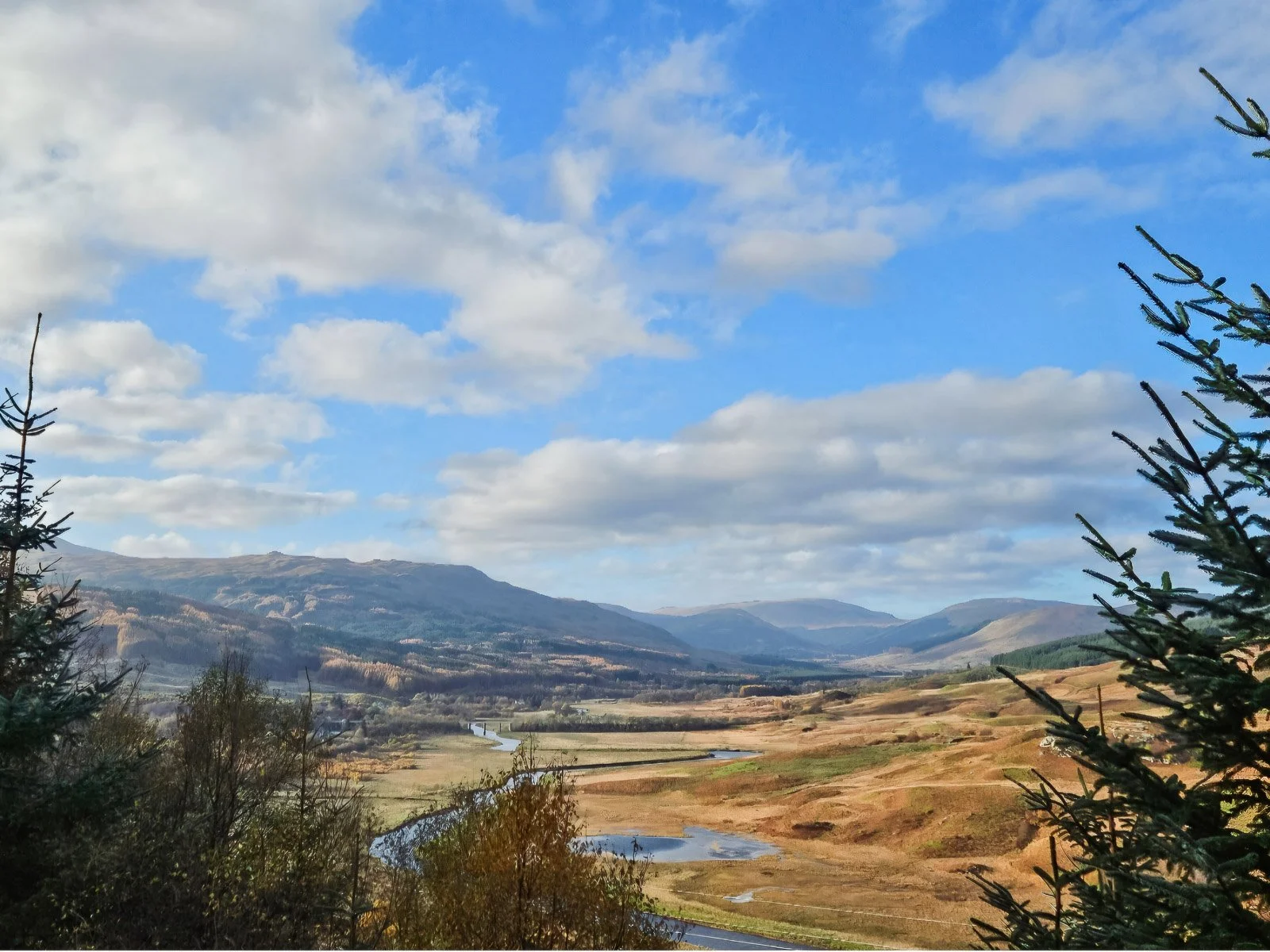
Rebecca Turner moved to Crianlarich for the hills and walks the West Highland Way regularly. The deforestation currently underway, as commercial plantations are cleared, is visible across the landscape. (picture from Rebecca Turner)
-
Deforestation is just such a shame. I mean, I know it's like a necessary evil, but that's just such a shame. It looks like a real graveyard up there, at the moment, on the West Highland Way. And it's just lovely when you come across natural forest because you just don't— you know, it's all plantation everywhere now. I would say that's the only real change I've noticed, is that that landscape is completely different to say how it was even just last year.
Working in the forests
Jamie Elliot went into forestry work when he left school. By the time he arrived, the industry was already changing: the chainsaws were giving way to machines, and the men who had done the work by hand were finding it impossible to compete.
-
It was changing considerably then, because that was when it was becoming mechanised. So, the guys that were on the ground working with chainsaws were dying away. And it wasn't that you couldn't get the work, but the machinery could do it so much cheaper. So, it was time to, you just couldn't make a living at it, like you had to move on, you know.
The effect on the wider working population went beyond the forestry workforce itself. As the plantations replaced the farms, the farming labour went with them. Jamie Elliot's father worked ground that had previously employed five men. That pattern repeated itself the length of the glen.
-
It made a major difference to the farming because it meant you had a lot less available decent farming, hill farming grounds, so there was a lot less shippers involved, you know. The farm we were on when my father came to it, he was on it himself, and we'd been told by an older member of the community that 25-30 years previously there was five men working on the same ground, you know, if you multiply that up and down the glen, that's a hell of a difference to the working population.
A different kind of woodland
The thinking about what forests should be in this landscape is beginning to shift. John Holland at Kirkton has planted around three hundred hectares of woodland on the research farm over the past twenty-five years, as part of a broader move towards lower-input farming and environmental management.
-
I think things have changed, you know, the emphasis has changed, from being in the 70s and 80s, where it was all about production, you know, and getting as many sheep on the ground as you could. And so, a lot of input, a lot of output, but at that time, quite a high environmental cost by doing that.
And then over the years, it's shifted to one where it's trying to be more in balance with maintaining agriculture, but also creating woodlands, having Agri-environment schemes, even having a tourism business like the Wigwam site that we have, you know.
Things have gone up and down over the years, but I think what we've tried to do is try to make the farm more sustainable. It's really difficult to make hill sheep farming economically sustainable, but by integrating other aspects, we've tried to do that. But also, you know, trying to make things so that environment and biodiversity are included within everything that we do.
From plantation to community woodland
Commercial forestry changed the landscape around Strathfillan, covering large areas with closely planted conifers grown primarily for timber. But the forests also helped open a new chapter in the community’s relationship with the land.
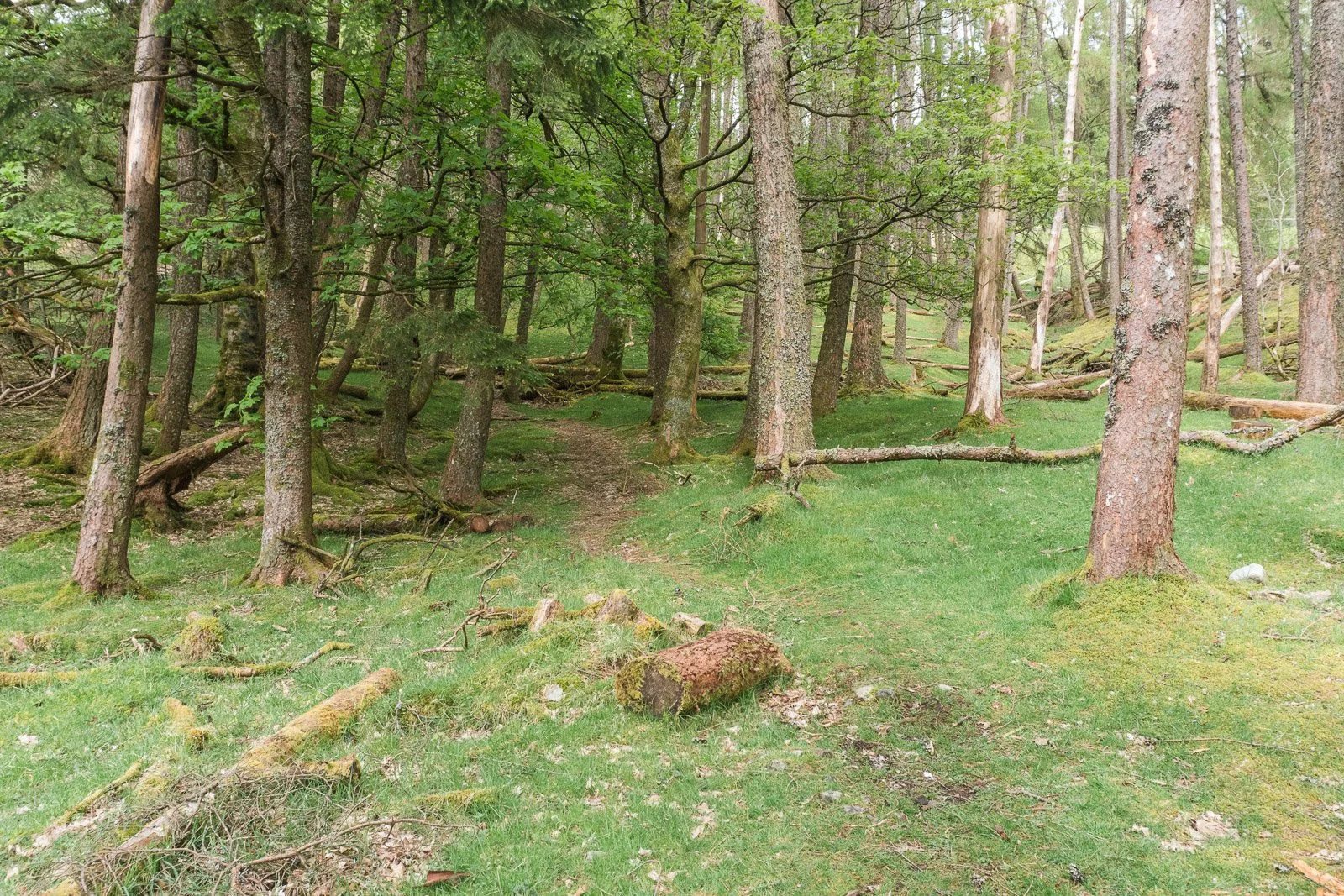
At Tyndrum, a former young conifer plantation became the foundation of an ambitious community woodland project. The Strathfillan Community Development Trust began managing the land under lease from the Forestry Commission in 1996. Local people collected seed and helped replant parts of the site with native trees through the Millennium Forest for Scotland programme. In 2006, the community purchased approximately 96 hectares of the woodland.
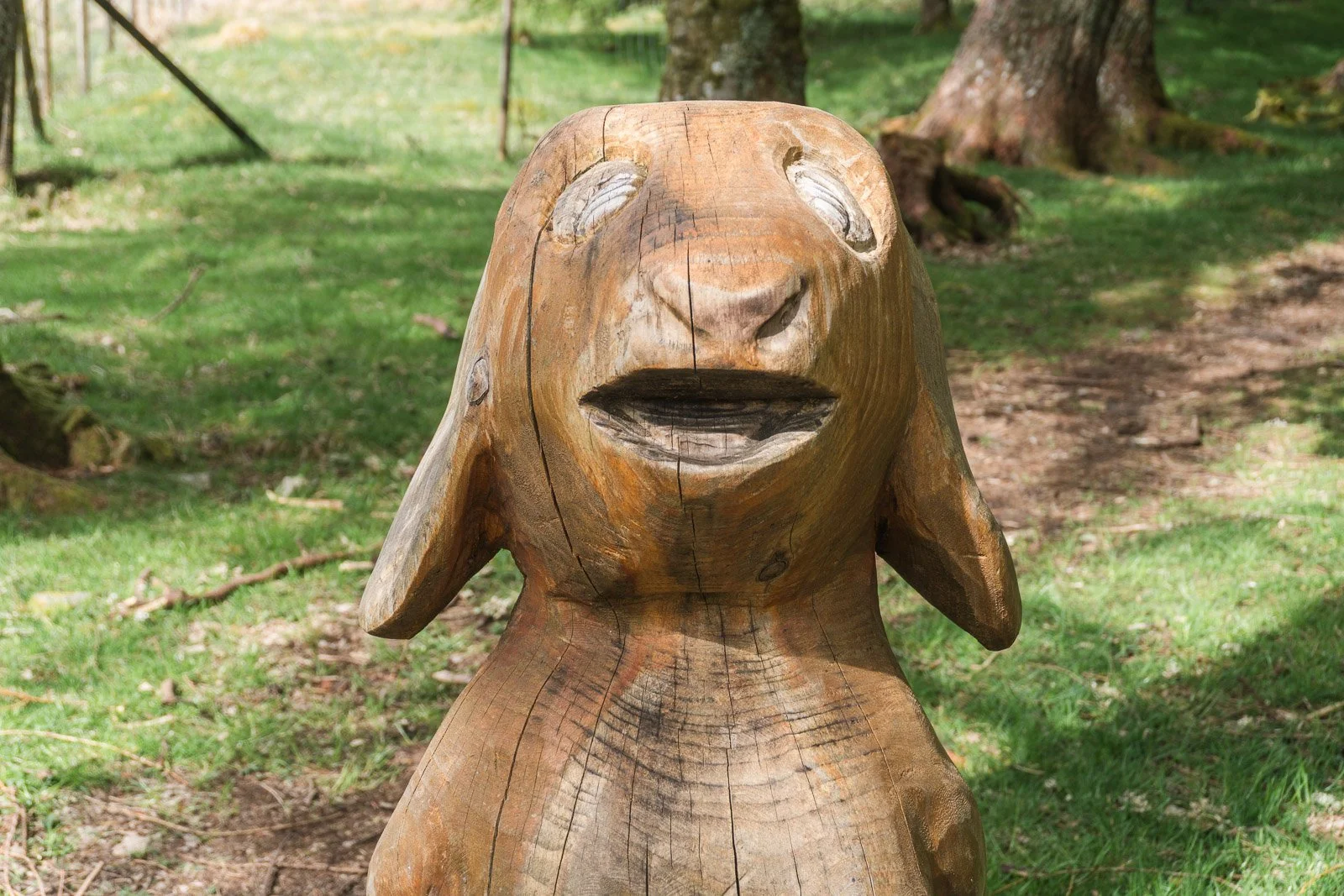
Today, Tyndrum Community Woodland contains downy birch, Scots pine and willow, alongside bog, rough grazing and surviving areas of the old spruce plantation. Paths, picnic places, a forest classroom and the Gruffalo Trail have turned land once managed principally for timber into a place for recreation, learning and wildlife. The transformation is continuing as remaining blocks of non-native conifers are removed and replaced by native woodland through planting and natural regeneration.
Crianlarich followed a related but slightly different path. Its community woodland was established in 1998 at the edge of Inverardran Forest, where native trees were planted beside the older commercial plantations. The community later leased the five-hectare woodland from the Forestry Commission. New and improved paths, interpretation and a viewpoint followed through the Heritage Paths Project in 2016 and 2017.
The two woodlands represent a significant change in how local forestry is understood. The land still produces and supports trees, but it is also managed for wildlife, access, education and community wellbeing. Forestry shaped the landscape; community stewardship is now helping to shape what comes next. (Photos: Paul Saunders)
Diane Mailer, who farms a small holding near Tyndrum, is approaching the same question from a different direction. She is removing a spruce plantation and replanting it as oak woodland, working with the land rather than against it.
-
So we're starting small, and we're sort of coming in from a sort of, you know, environmental side of it, if you like. So, as a custodian of this area that this sort of little farm that we're looking to sort of improve soil quality, we're doing— we're doing some tree planting, we're taking out little spruce plantation that we're going to replant as an oak woodland.
So that kind of farming is, you know, certainly in this area would be traditional hill farming, the sheep farming where you'd have, like, thousands of sheep, and it would all be interconnected to the state's upper— you know, Cononish or over to Glenfalloch, and they would all be sort of interconnected, working together. They would have a staff, a shepherds, and various people, and that's certainly in, like I say, I don't come from that background, but just looking in and speaking to people, I do speak to lots of people in the farming just to get lots of advice and, you know, just people. Are very willing to help and to, you know, to help you out and give you a hand.
But yeah, it's certainly changed things in terms of that traditional hill farming, and I think it's— there is a shift so I'm, you know, I work at the moment with the Loch Lomond and The Trossachs Countryside Trust, which is linked to the national park, and there's a real— you can see there's a bit of a building up of a bit of momentum behind the environmental side of it.
So they don't like the terminology "rewilding," but I mean, there is, you know, where they're looking at carbon capture with peat bog restoration or rewilding, you know, developing woodlands for wildlife corridors, a bit of, you know, the farming side of it's kind of jumping on that bandwagon as well, you know, in terms of, like, soil health or, you know, we're creating shelter belt for the sheep, for example, and.
So you've got that, a sort of shift there. So yeah, that is definitely a change that I think if you've got a memory of— if you're speaking to someone that has been in the area for many years and done some traditional farming in this area, I think their story would be quite different to mine and what I see happening and how I'm sort of managing this little bit of land or the kind of livestock that I've got or, you know, the support network I've got around me I think would be quite different.
Looking ahead
The people interviewed remember forestry through the work they did, the neighbours they knew and the places they visited. Their accounts record changes that are not always apparent from looking at the hills today.
Kirsty’s peat research reaches further back, revealing earlier changes in the plants growing here. Together, these records can help people deciding where to plant trees, what to protect and how to manage the land.
Thank you to everyone who shared their stories about forestry in Crianlarich, Tyndrum and Killin.