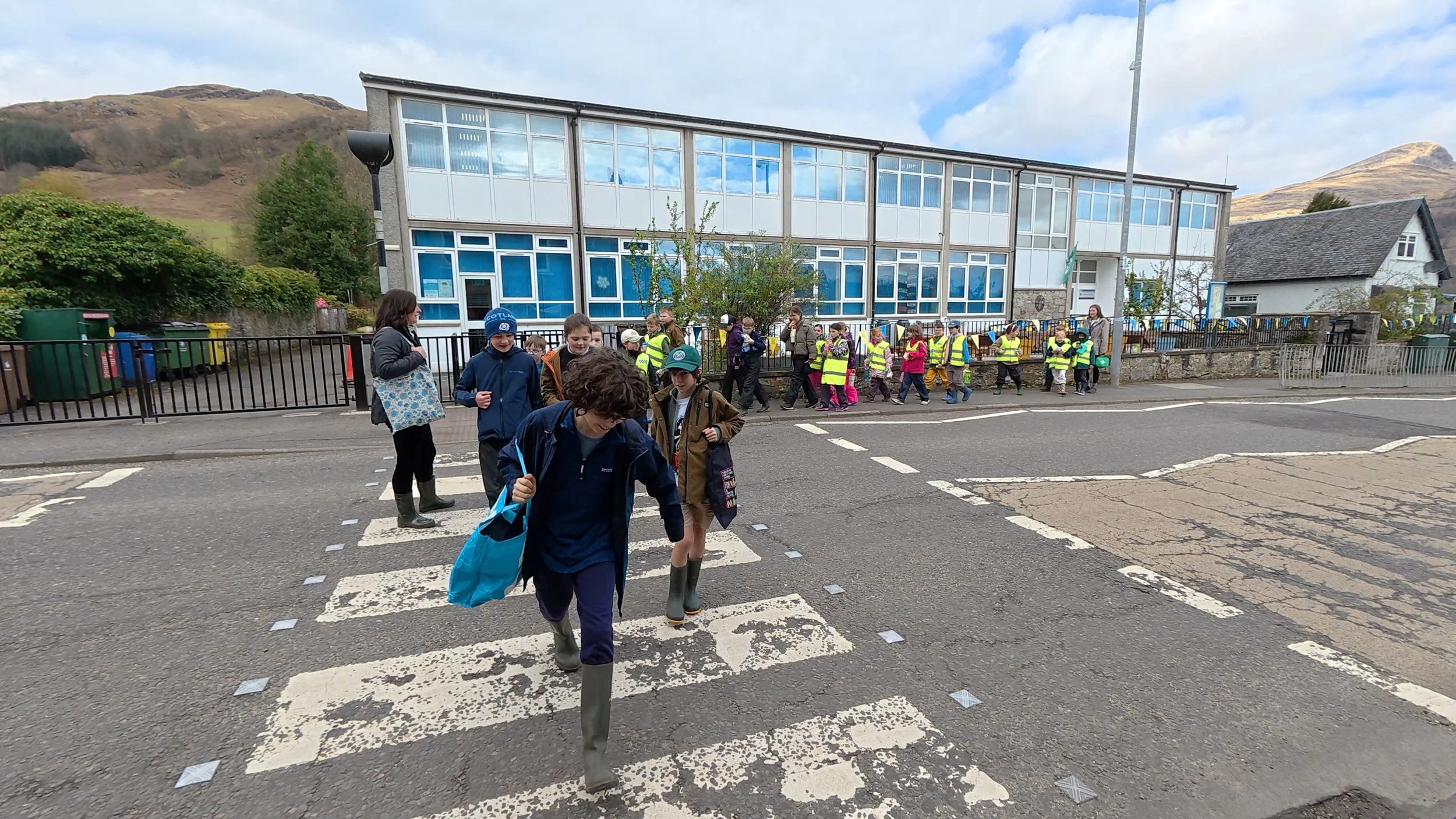
Killin
Killin stands at the western end of Loch Tay, beside the Falls of Dochart. Its stories include farming families, journeys by train and steamer, village dances and neighbours helping one another.
The memories gathered here describe growing up, working and taking part in community life in Killin and the surrounding glens.
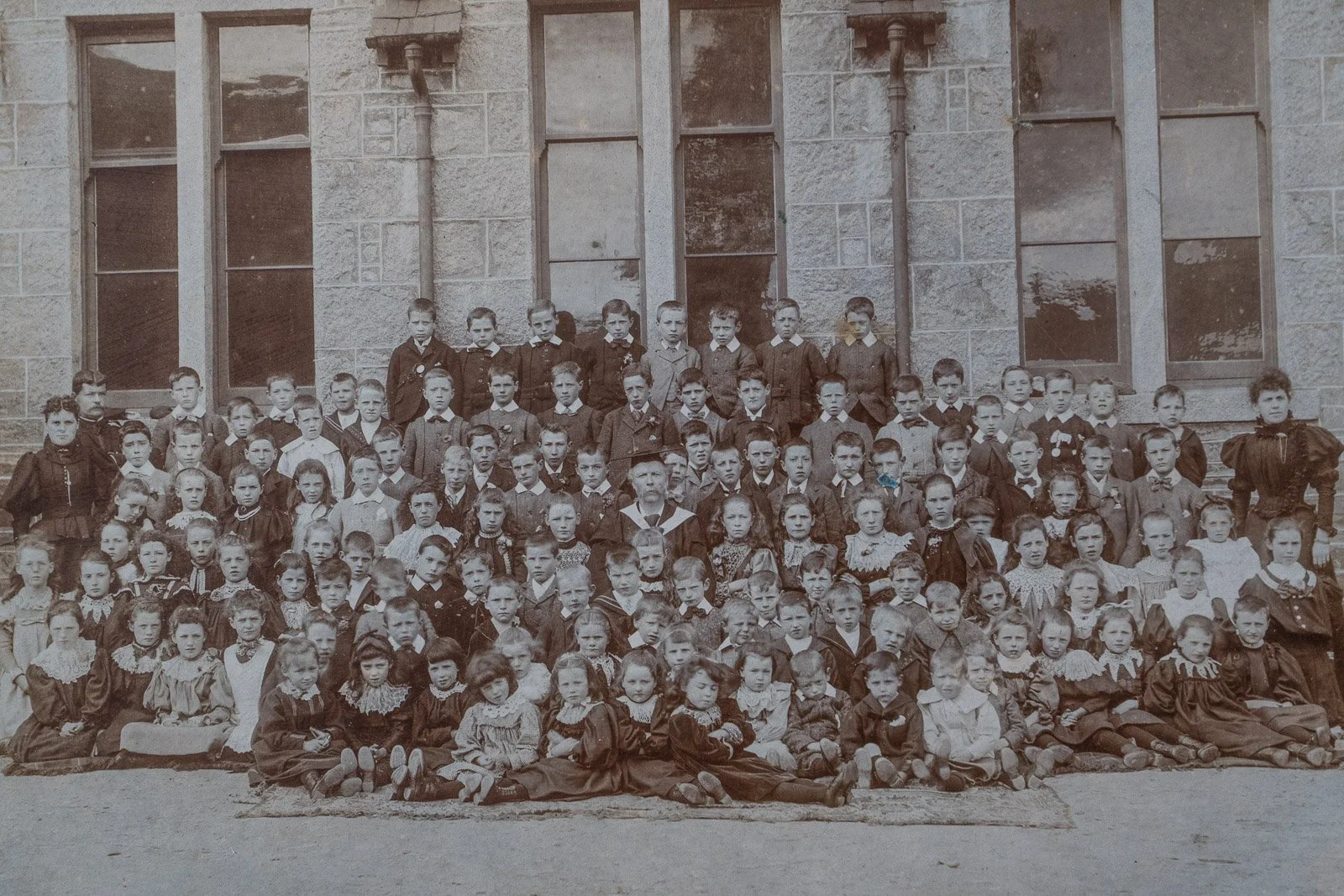
Killin Public School - 1897 for Queen Victoria’s Diamond Jubilee (Killin Heritage)
Estate history
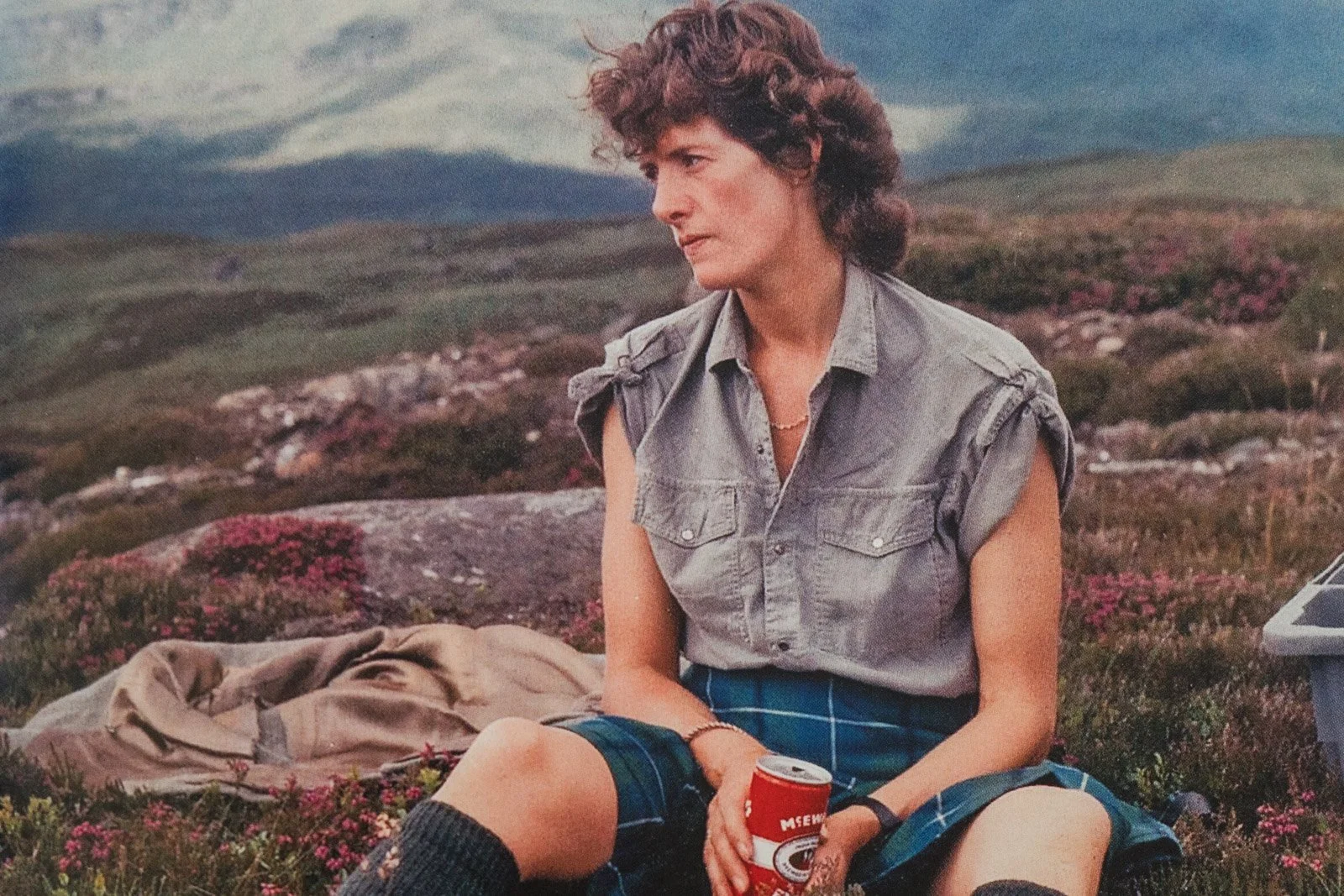
The Breadalbane Estate influenced farming, employment and land ownership across the area. Emma Paterson’s family connection with Auchlyne Estate dates to 1888, when her great-great-grandfather became a tenant.
Emma recalls an earlier tenant, Maharaja Duleep Singh, who came to Auchlyne for grouse shooting. His connection with the area survives in a memorial to his secretary in Killin’s old churchyard.
The heritage stories page explores his time at Auchlyne and the memorial he left behind.
A farming life
Margaret Taylor grew up at Mid Lix Farm and helped move livestock to market in Killin. Children had their own part to play, running ahead to stop animals straying into gardens and side roads:
“We all mucked in when we got a wee bit older, and that was a great thing when there were sales in the market in the village. My brother and I, we would walk the cattle and the sheep down from Mid Lix to the market. Just imagine that happening nowadays, be a bit chaotic. Our job, being the young ones and supposed to be fleeter, was to run down through the village to make sure all the gates and any gaps were blocked.”
Stuart Christie remembers farms employing more people and neighbours exchanging help with seasonal work:
“There was always somebody to come and give you a hand to gather and clip sheep. You didn't really have to employ contractors to do that. Your neighbours helped you, and you helped them.”
Emma Paterson also remembers neighbours coming together to gather sheep, then moving to the next farm to do the same. Both describe how those working arrangements have changed during their lifetimes.
For Stuart, discussions about the future of farming also bring to mind the effort previous generations put into the land:
“My folks spent their lives lifting stones out of these fields and building dykes to make them suitable for crops. That was how people made their living for generations. So I do get a bit annoyed when people suggest that everything that has been done over the last two or three hundred years was wrong and should just be abandoned.”
Getting to school by train
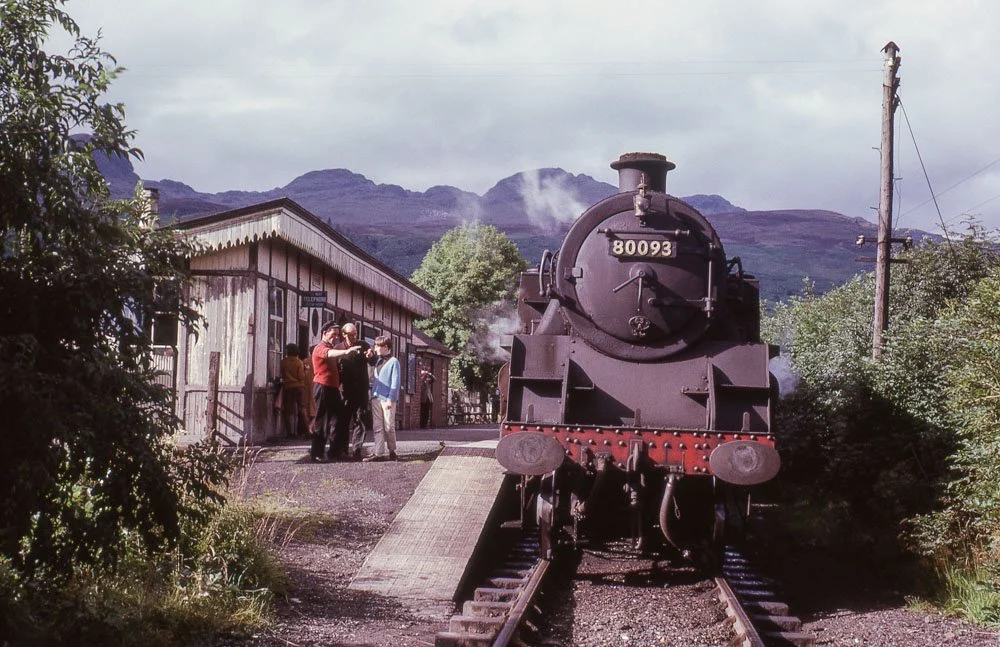
The Killin branch connected the village with Killin Junction and the Callander and Oban Railway. For children travelling to secondary school in Callander, it was part of the weekly journey between home and school accommodation.
Margaret Taylor remembers walking from Mid Lix to Killin Junction on Monday mornings, with her father carrying her case:
“I used to walk on a Monday morning to Killin Junction to get the train. We didn't have a car at that time, and it was well, it also gave me another half hour if I could walk to Killin Junction. I could be a wee while longer in my bed rather than walking to Killin. But my father, he carried my case and I trotted along behind.”
On Fridays, she recalls being allowed off the local train at the level crossing below the farm, saving part of the walk home. When an inspector was aboard, the arrangement became less straightforward:
“There was an inspector on the train sometimes, and the guard would go one side, and I'd go out the other. But there was a big jump going down that side. I didn't like going down the bottom side.”
Connecting with Loch Tay
From 1886 until 1939, passengers could travel along the Killin branch to Loch Tay station and board a steamer. The boats connected communities around the loch and brought visitors to Killin and Kenmore.
Explore the Loch Tay steamers page for photographs and the story of these journeys.
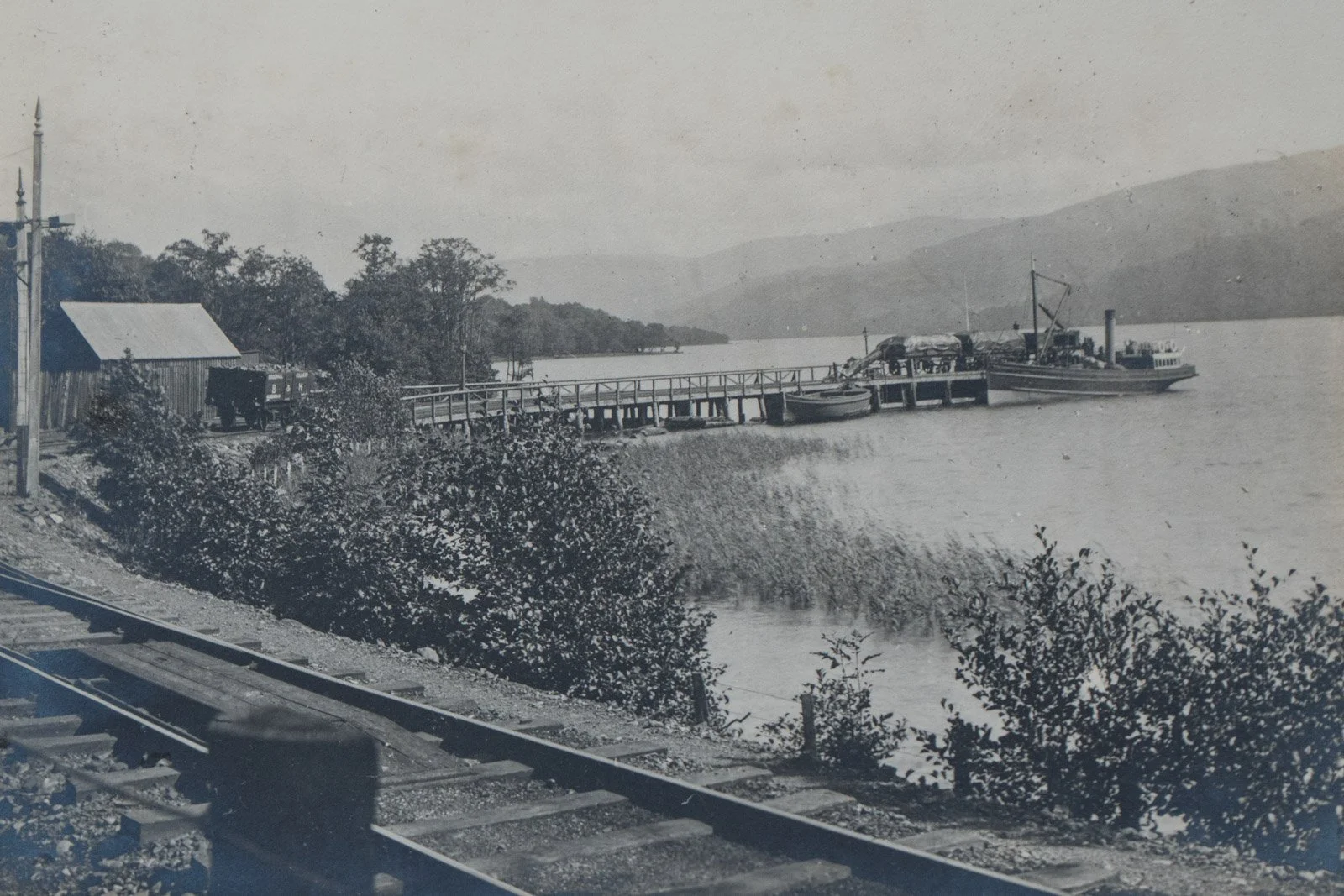
Loch Tay Steamers
Then and Now - Killin Hotel
Move the slider to compare the photographs of Killin Hotel. Look for changes to the building and its surroundings, alongside features that remain recognisable today.
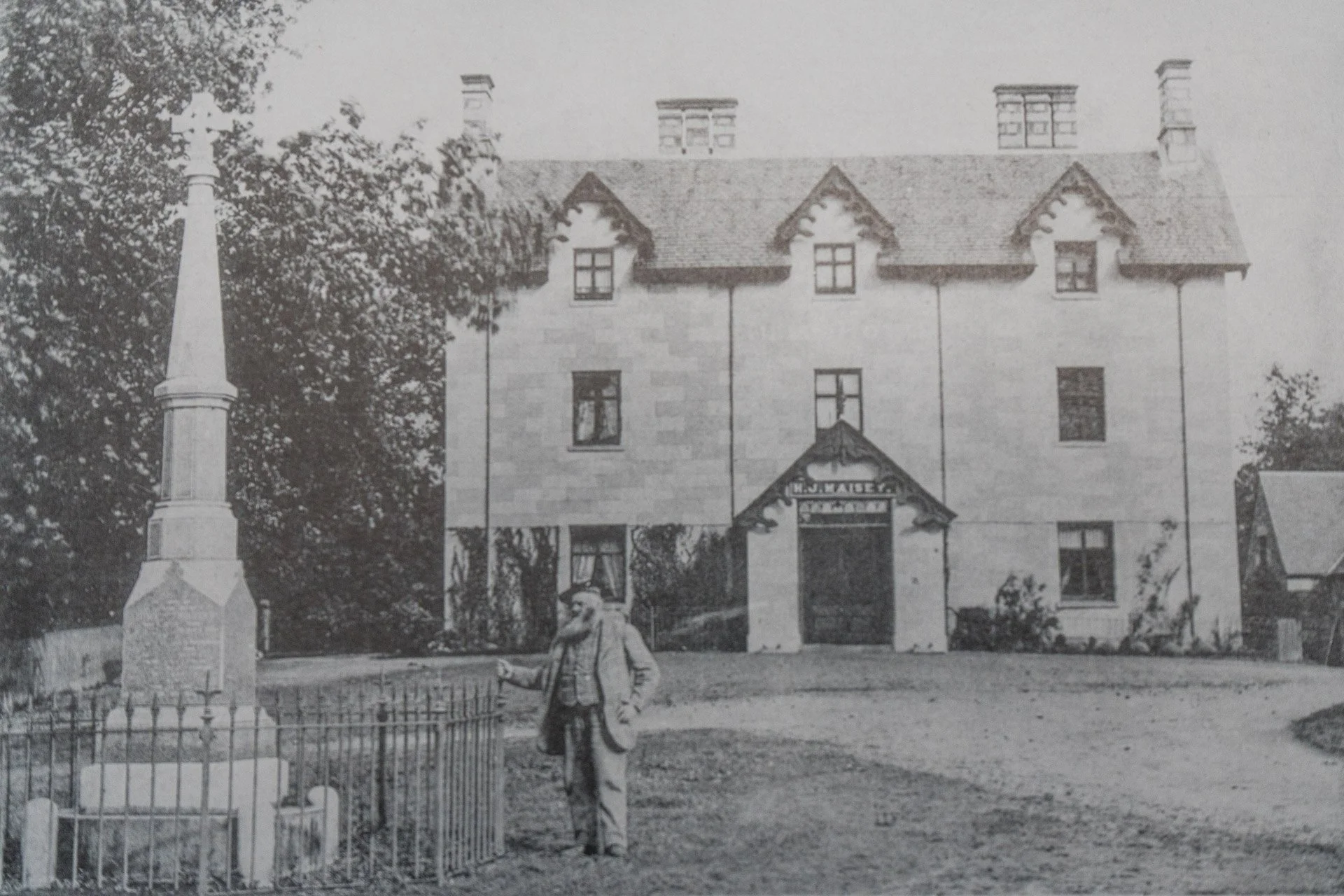
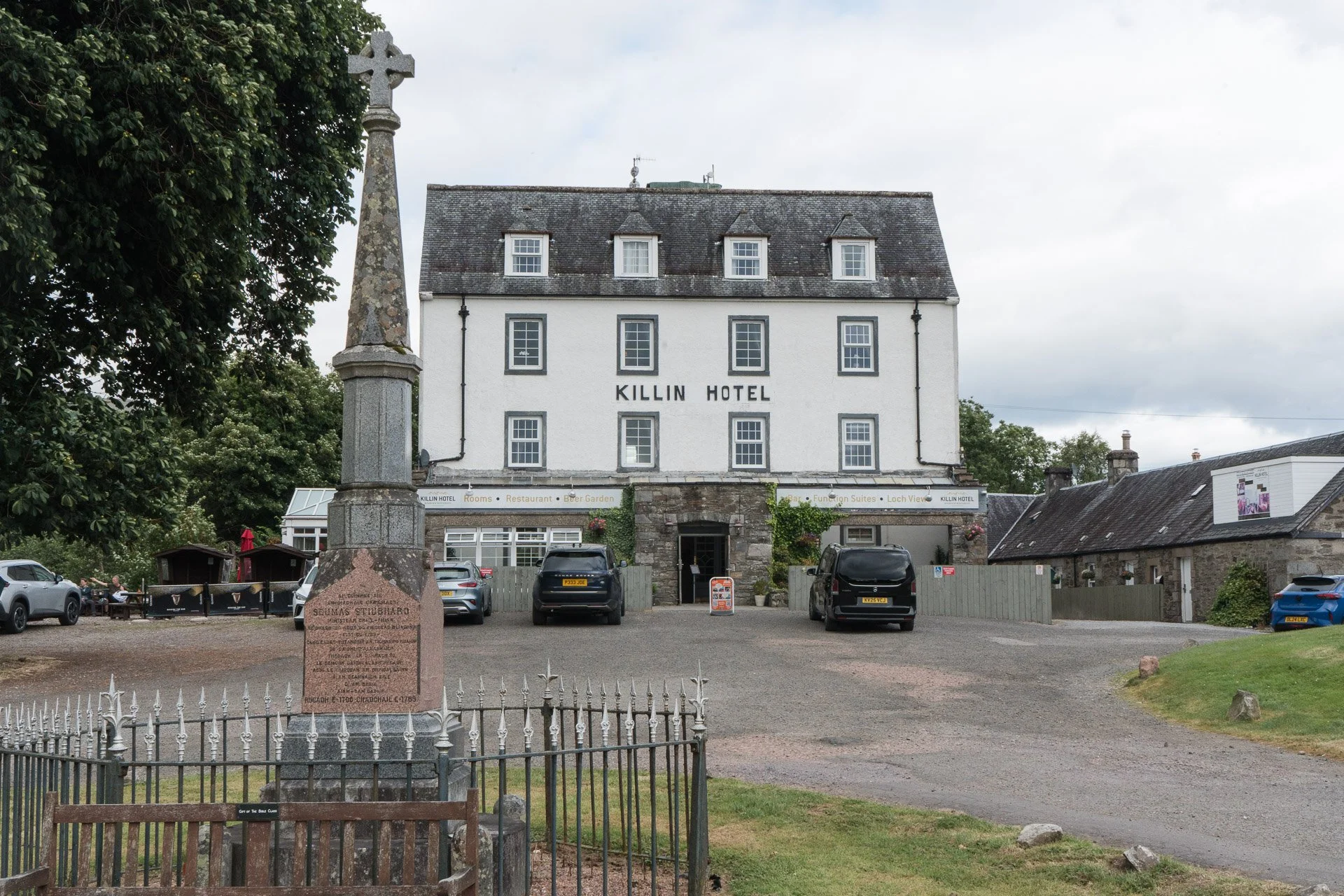
For more than 300 years, the Killin Hotel has welcomed travellers to the village. The original Street House stood here in the seventeenth century before being rebuilt by Lord Breadalbane in 1725. More than simply an inn, it once housed the local Sheriff's Court and even a small prison. As tourism grew during the Victorian era, the hotel became one of Highland Perthshire's best-known coaching and sporting hotels, attracting anglers, walkers and visitors from across Britain.
Dances and village life
Stuart Christie remembers his parents playing in a dance band and travelling around the district:
“My mother and father played in a small dance band, and they would be out playing ceilidhs all over the district. Most weekends, there would be a dance somewhere. The school hall would maybe have a community dance once a month, and people would travel to Killin, where famous Scottish dance bands like Jimmy Shand or Ian Powrie would come and play. There wasn't much entertainment in the house in those days, so people went out and made their own entertainment.”
He also describes the loss of gatherings and venues he knew in Glen Dochart. Margaret Taylor, who belonged to Killin’s Young Farmers club, stresses the importance of getting involved:
“I think if you move to a small village, then you really have to be a part of the community and get involved. I think no man is an island. We need our neighbours.”
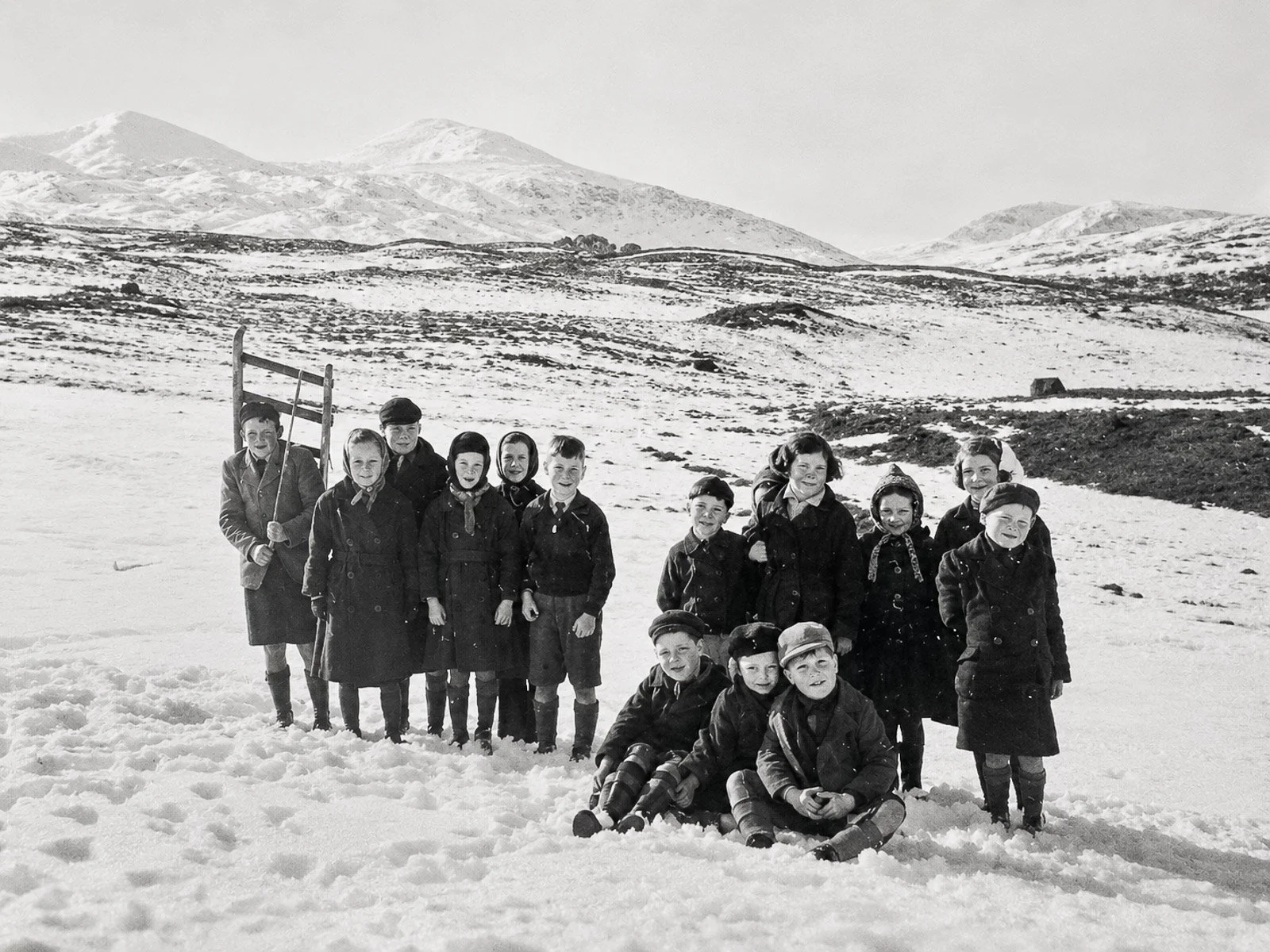
Glendochart School in 1940s: sledging in Glendochart (Supplied anonymously)
Neighbours helping neighbours
Donald McLarty remembers the response when his house in Killin caught fire. Offers of practical help arrived almost immediately:
“Within eight hours the following day, I had offers of accommodation, food, beds, you name it. Everything was offered almost immediately. It means a lot to me that when something happens, you can rely on people from Killin and the surrounding area to back you up and help you in any way they possibly can.”
If you have a connection to Killin and a story to share, we would love to hear from you.
Thank you to Killin Media Team for allowing us to share interviews from their archive.